
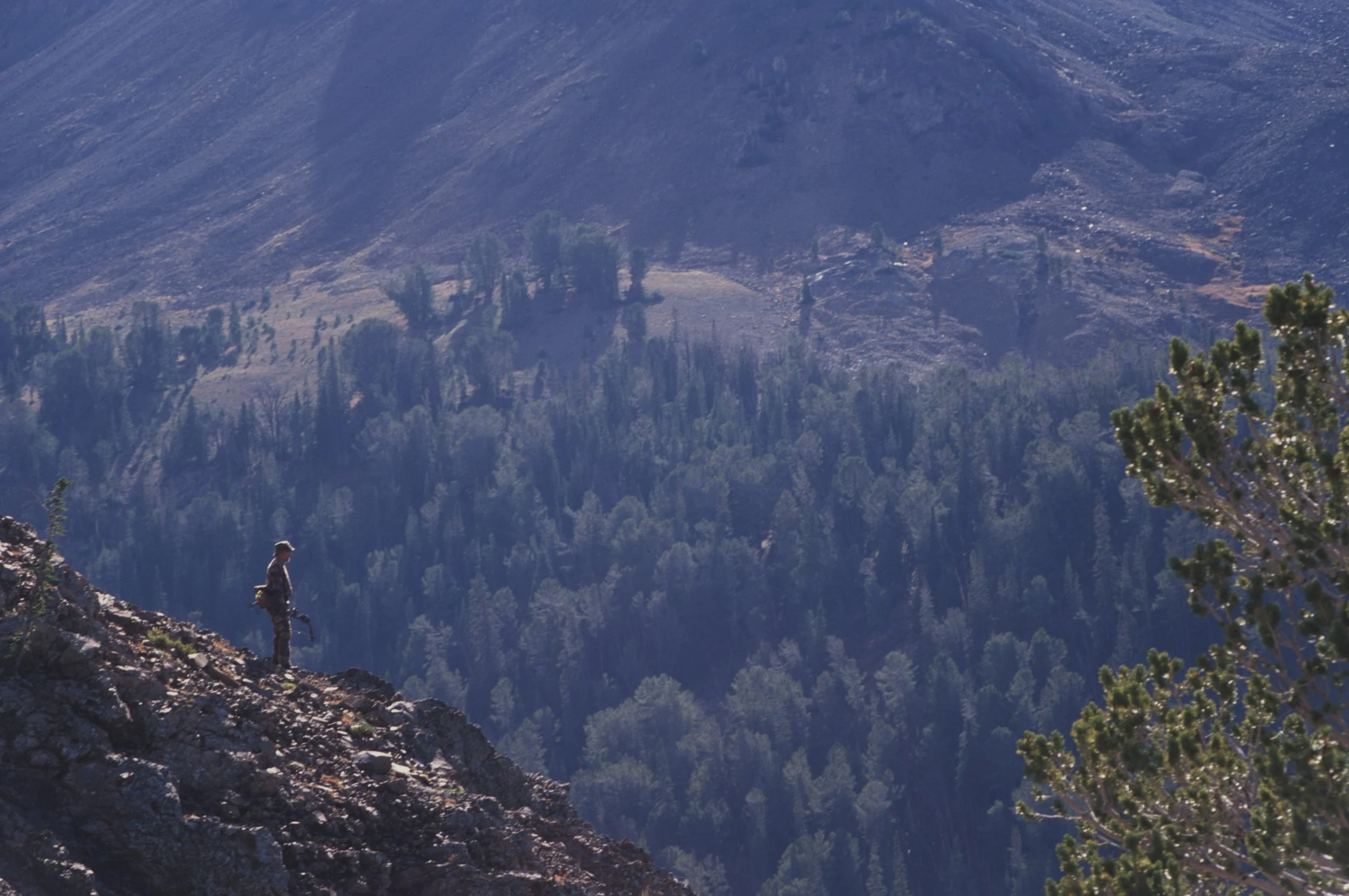
Jim Daniels, Elk Hunter
Following an unsuccessful elk hunt near our home in Central Idaho, my son Andrew and I were following a rutted dirt road, when we saw Jim Daniels standing in a grove of bright yellow aspens. Greeting him from our old truck, we learned that Daniels was camped in a nearby draw. He had devoted the morning to glassing a trophy bull. “Did you see anything?” he inquired.
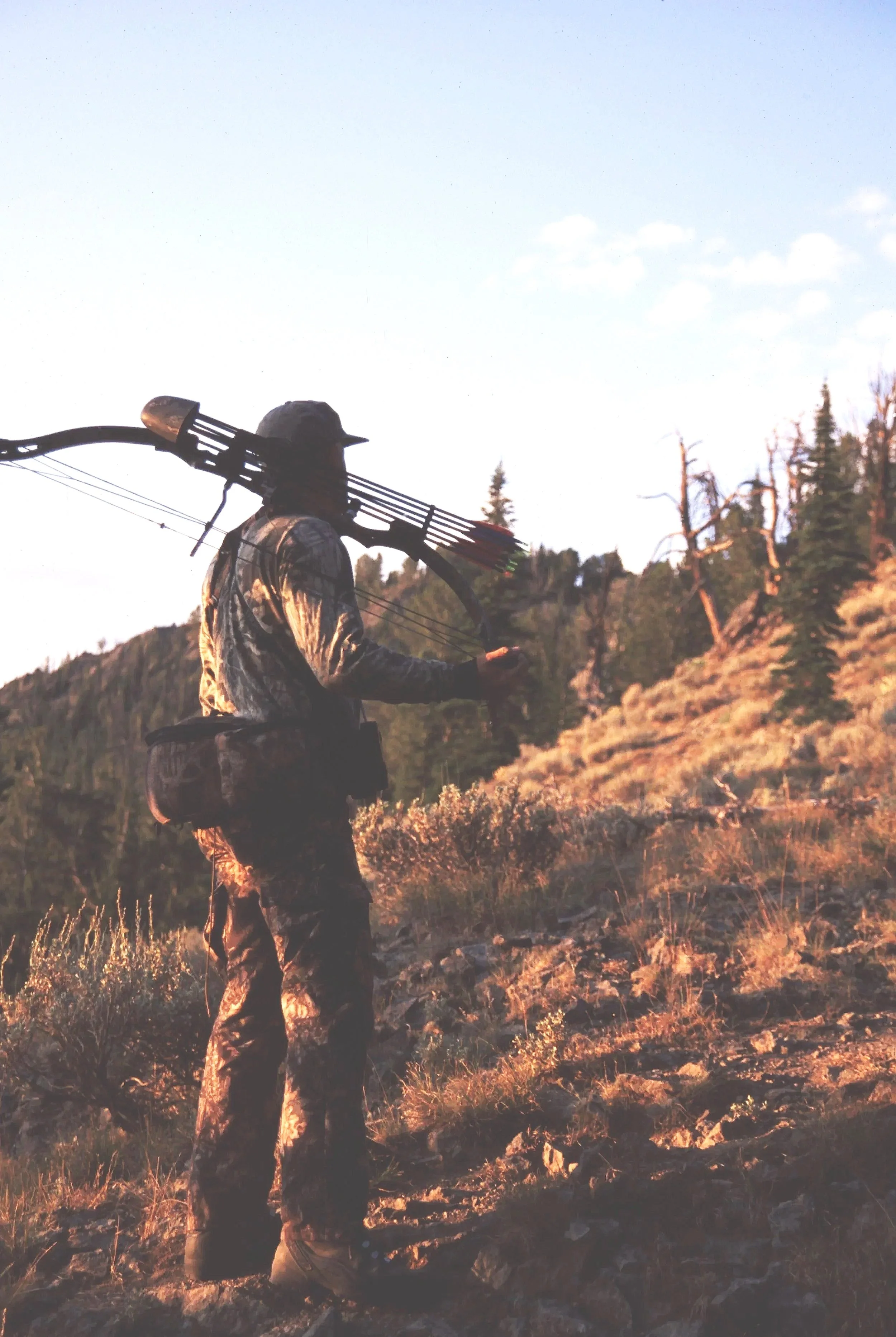
This, forty-seven-year-old Southern Idaho heavy equipment operator started bow hunting while still he a junior in high school and in the time since had killed thirty elk . . . the majority of which were trophy bulls.
Raising his voice above the storm, Daniels related how mice were not only eating the bedding and paper towels but had tried to nest in his hair twice last night.
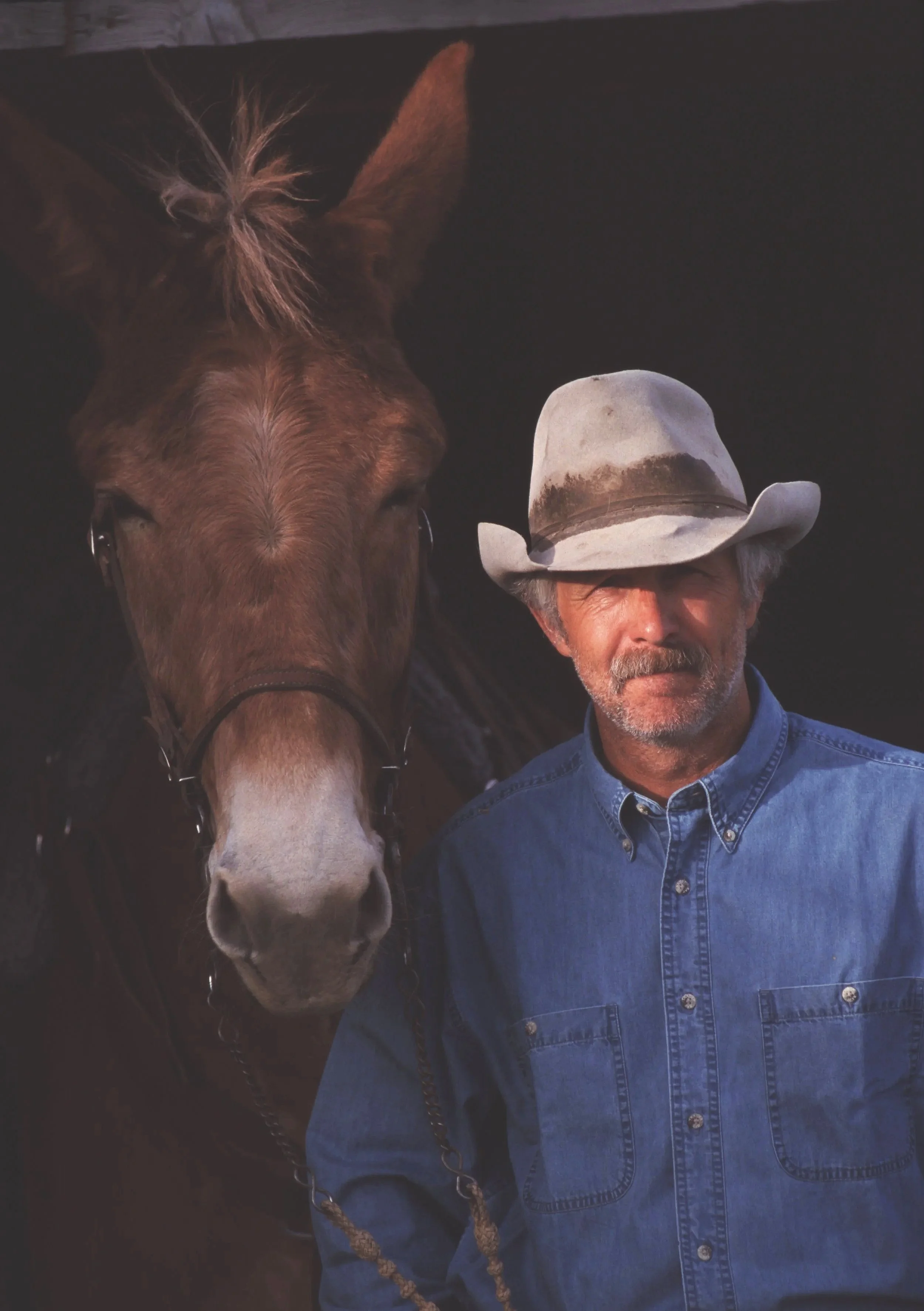
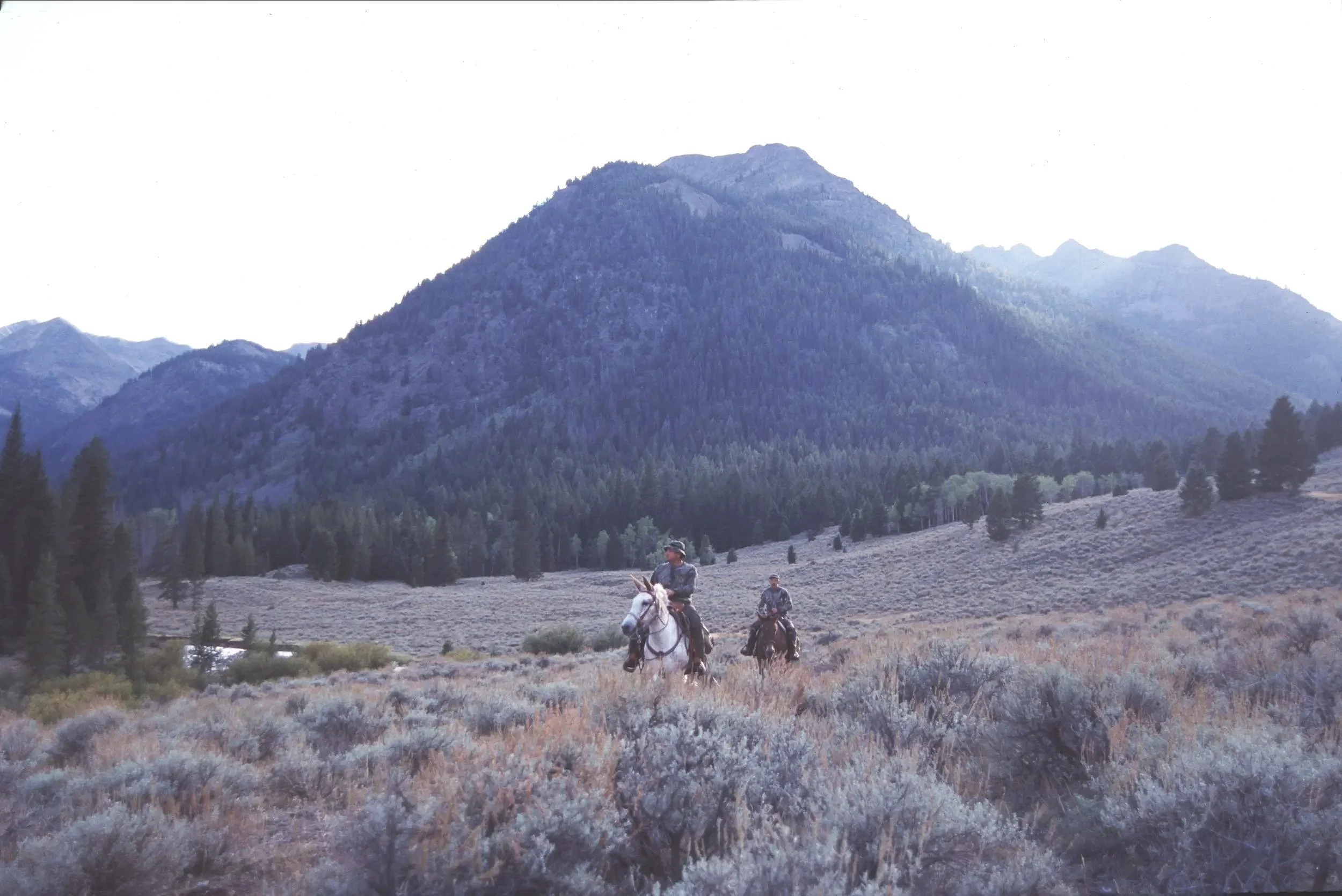
Daniels once hunted off horses but too many wrecks had prompted him to switch to mules. One favorite was Murdock, a beautifully marked dark brown, white stocking John mule, Daniels could either load into a pickup bed or cover a four-foot wire fence with his duster and jump him over.
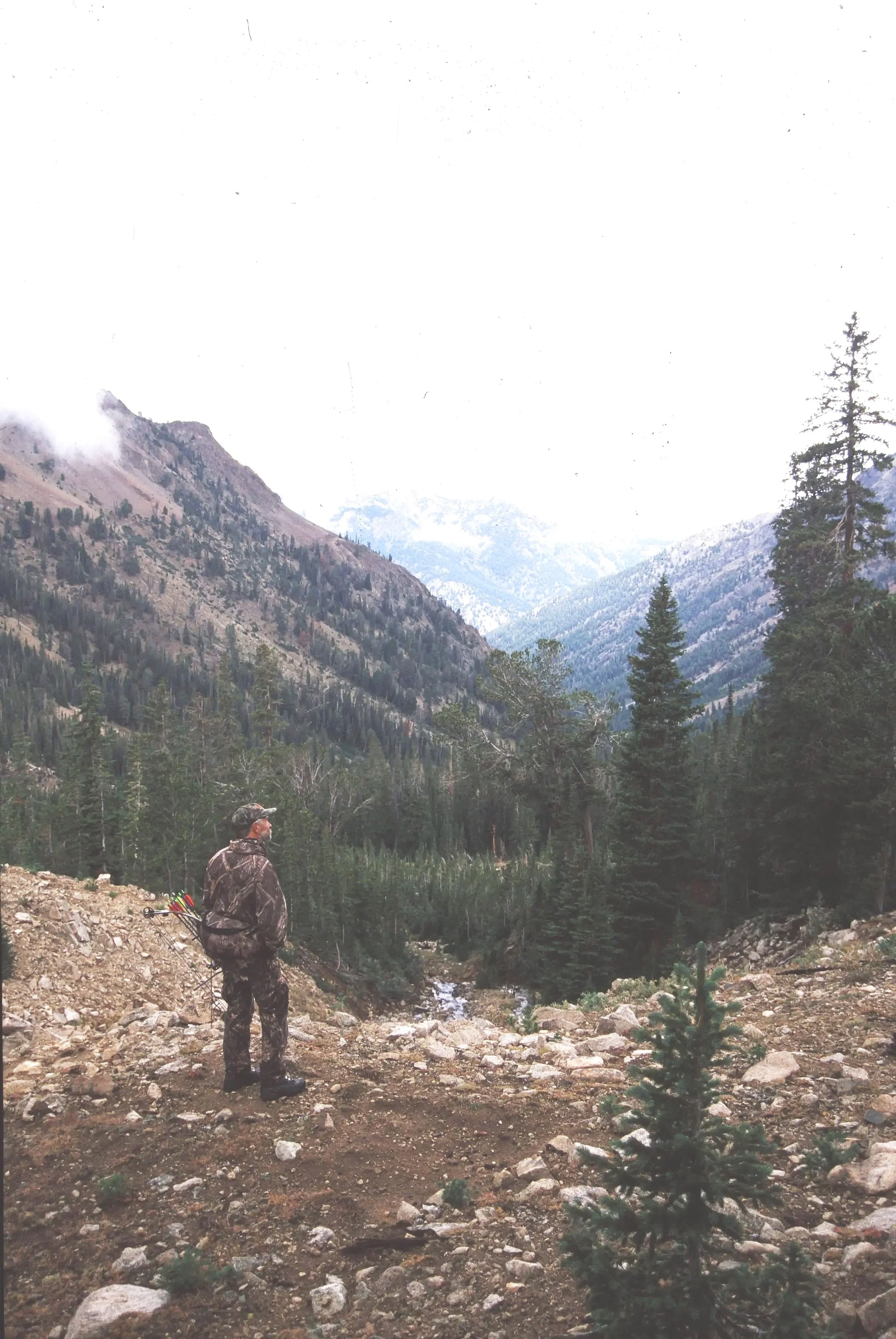
People don't anticipate where the elk are going. They don't try get in front of them but too often just chase after them. For me, elk hunting is a game of interception.
“I was probably six hundred yards away when the cows started lifting their noses into the air, then one stood up and the whole herd took off at a dead run.”
“Sometimes you'll have thirty cows below a bull. That’s a lot of eyes and if the thermals are blowing downhill, you can’t get above them. That's what makes a herd bull so horrendously difficult to sneak up on.”
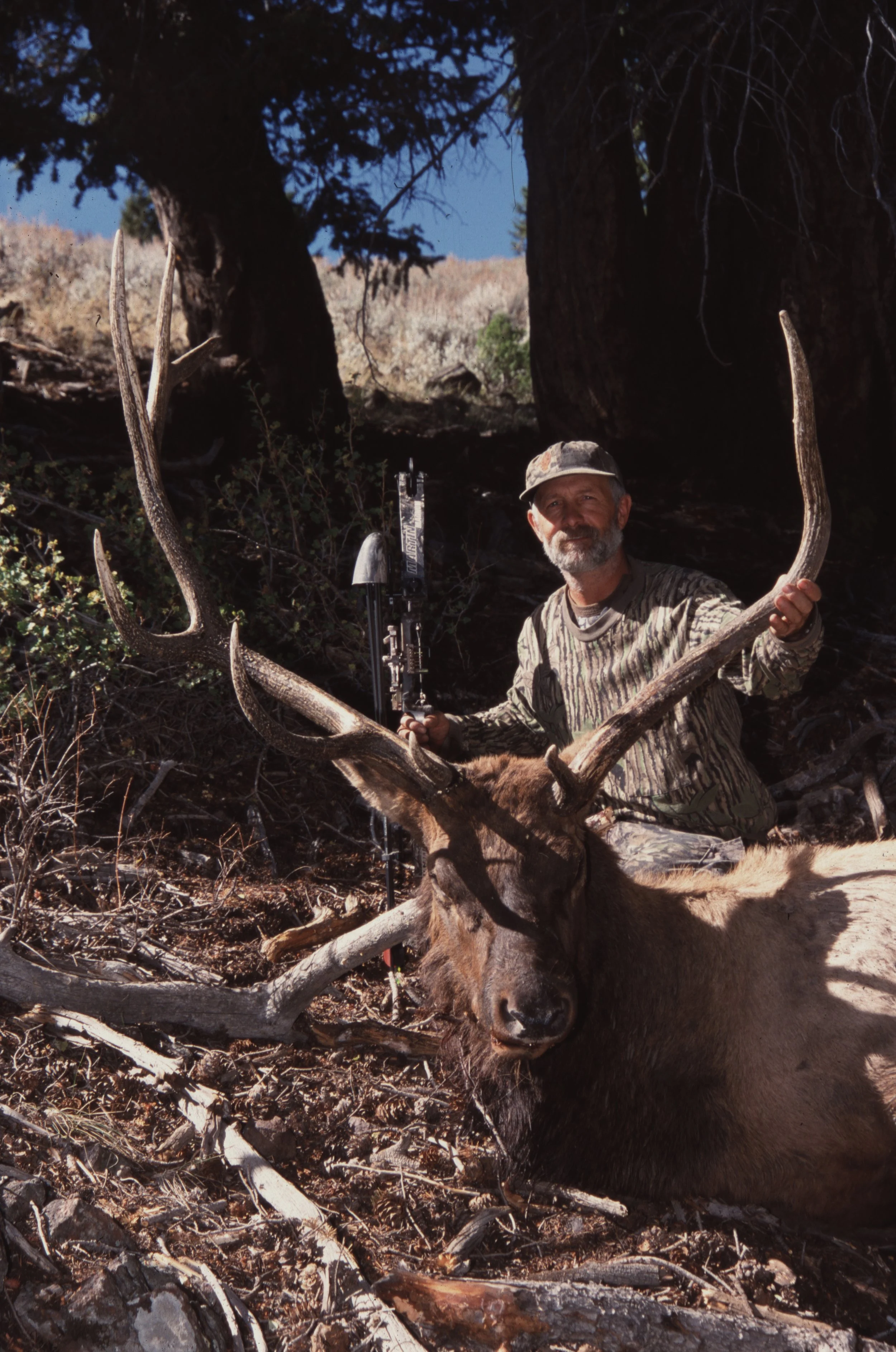
Two days later Daniels intercepted a large nontypical six point that was moving to water in the late evening. Daniel’s arrow struck just behind the rib cage and the bull traveled less than a half mile before it died.
"Just a few cows on the tree line at dusk, “ Andrew said.
Bow hunters are not generally broadcasters, but Daniels surprised us by pinpointing the location of two six-point bulls that were hanging out in separate, but nearby drainages. He did not brag about his success but during the following hour, revealed an encyclopedic knowledge of elk--their migration routes, how and when they breed, where they water, the use of wind, artificial scents and where the big bulls bed down.
We also learned that this, forty-seven-year-old Southern Idaho heavy equipment operator started bow hunting while still he a junior in high school and in the time since had killed thirty elk . . . the majority of which were trophy bulls.
Daniels, in fact, has never shot an elk with a rifle and claims that it takes far too much work to gut, quarter and pack it all out to simply blow one away with a seven-millimeter mag. In Idaho, shooting an elk with a bow is not impossible but depending on how many hours you scout and how hard you work during the season you may average one elk every five years. It’s not only Daniel’s preseason scouting, but the trails he maintains in order to lead six mules to an elk camp on the back side of a nameless Idaho mountain range that contributes to his success.
When I asked if he is simply passionate about bow hunting for elk, or obsessive, Daniels shook his head and confessed, “I’d say I’m just passionate.” then hesitates and adds, “ But if you’d ask my wife Doris, she’d say I was obsessive.”
During the long winter months, Daniels builds his own arrows and shoots in a basement range he excavated beneath his home.
The story of Daniel’s basement offers an insight into his determination. When his sixty-four year old two story house required a new foundation, he decided to add a basement den/bedroom/shooting range as well. In those days when dynamite was readily available, Daniels had experience with the explosive and by limiting the charge to one stick at a time, he was able to both loosen the rock-hard soil and spare Doris’ china above. Still, Doris, his son Remington and daughter Jessica exchanged concerned looks as each blast rumbled from below.
Today the finished basement encloses son Remington’s bedroom (painted green, black and tan forest camouflage) and Daniels bow range. All of the Daniels family shoot and Doris recently killed a buck that took first prize in a local big buck contest. On winter nights after work, Daniels makes his own arrows out of Easton ACC shafts, matching the weight of each fletch to ensure that the arrow flies straight. He will then number, repeatedly shoot and paper pattern the best until he has reduced as many as 24 to half a dozen arrows, ranked from one to six which he will take into the field.
Compound bows had not been invented when Daniels started hunting and though he believes he could still take a bull each year with a recurve, because a recurve’s range is shorter, it wouldn’t be the bull he wants. Daniels consistently shoots Martin Bows four days a week, year-round in his basement. To this regimen, he adds two days a week in a local bow league where he shoots eighty arrows a night from November through March. He admits the indoors winter league helped cure his bad habits. “I'm not especially steady and tended to drop my bow arm after release.” he says.
When he is not practicing he travels to Idaho, Nevada, Wyoming or Utah competitions where if he does not win, typically finishes in the top three.
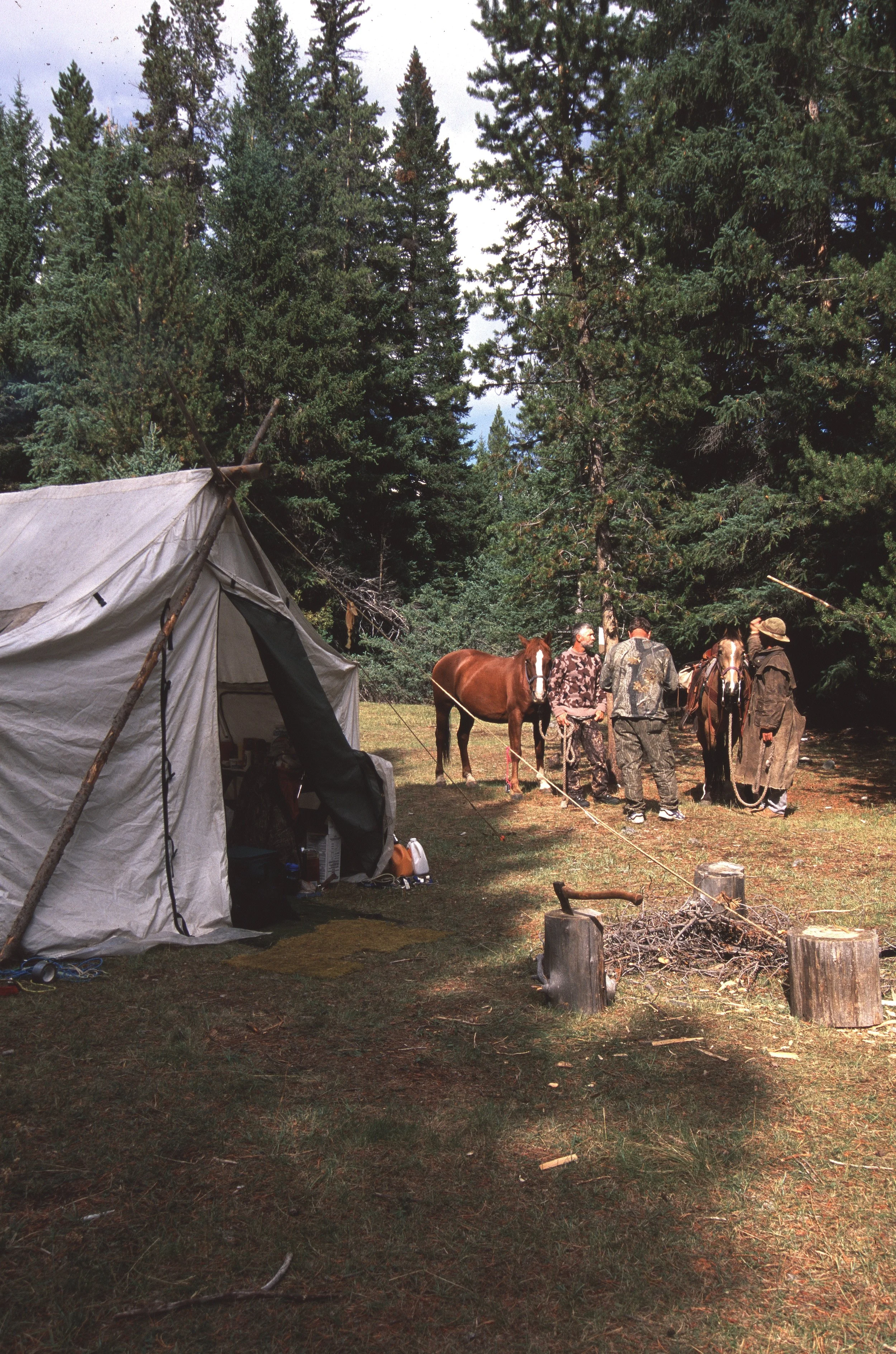
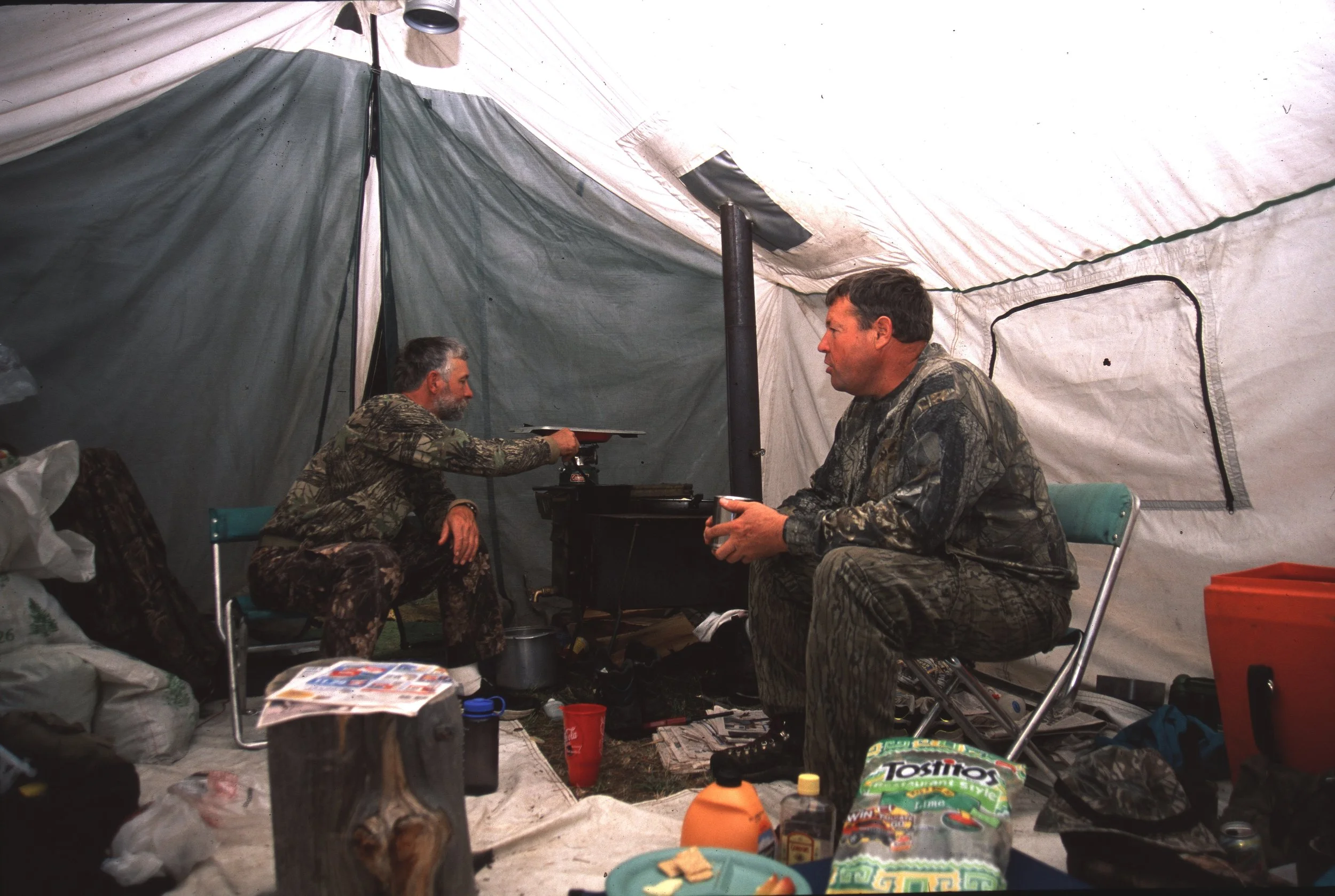
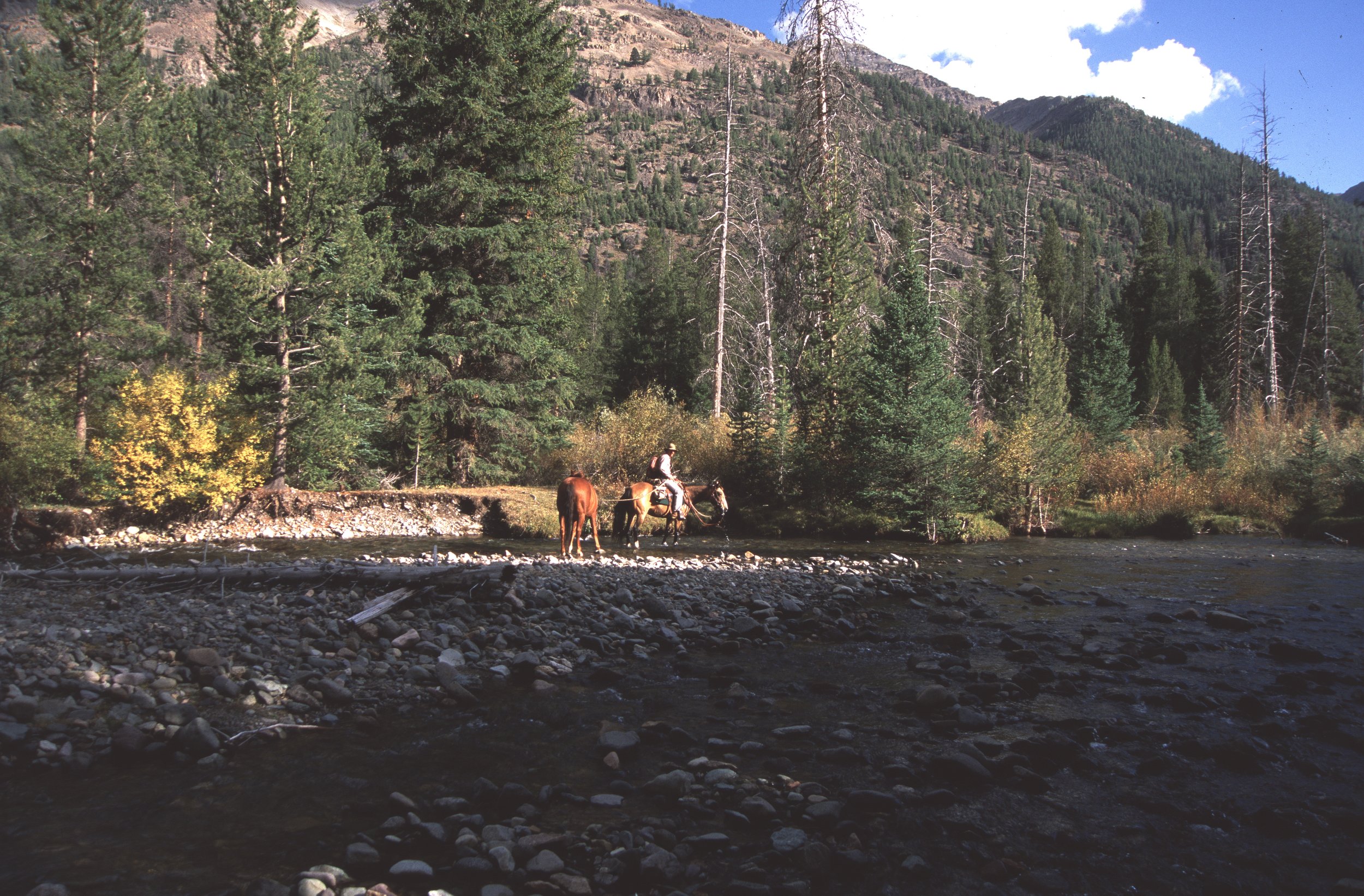
Daniels elk hunts exclusively with friend Fred Schiffler, a road construction contractor who has known Daniels since the two were in high school. I was lucky to be invited to their hunting camp the following fall and arrived in the late afternoon beneath a gathering storm. Half a dozen mules were tied to a high line strung between two trees next to Daniels and Schiffler’s wall tent. A wood burning stove Daniels welded together now heated the tent and we had just finished dinner, when lightening arced onto the high surrounding ridges. A minute later winds lashed the trees and marble sized hail pounded down with an insensate fury.
Raising his voice above the storm, Daniels related how mice were not only eating the bedding and paper towels but had tried to nest in his hair twice last night. While the lightening flashed, and thunder exploded around the tent Daniels and Fred moved from mice to mules. The two once hunted off horses but too many wrecks had prompted them to switch to mules. One favorite was Murdock, a beautifully marked dark brown, white stocking John mule, Daniels could either load into a pickup bed or cover a four-foot wire fence with his duster and jump him over.
As the fire died in the stove and we slipped into our sleeping bags, Schiffler observed that this had been one of the poorest seasons he’d seen. “The numbers are down and the hunting pressure is up which pushes the bulls into the high basins or forces them to leave the open hillsides sooner.”
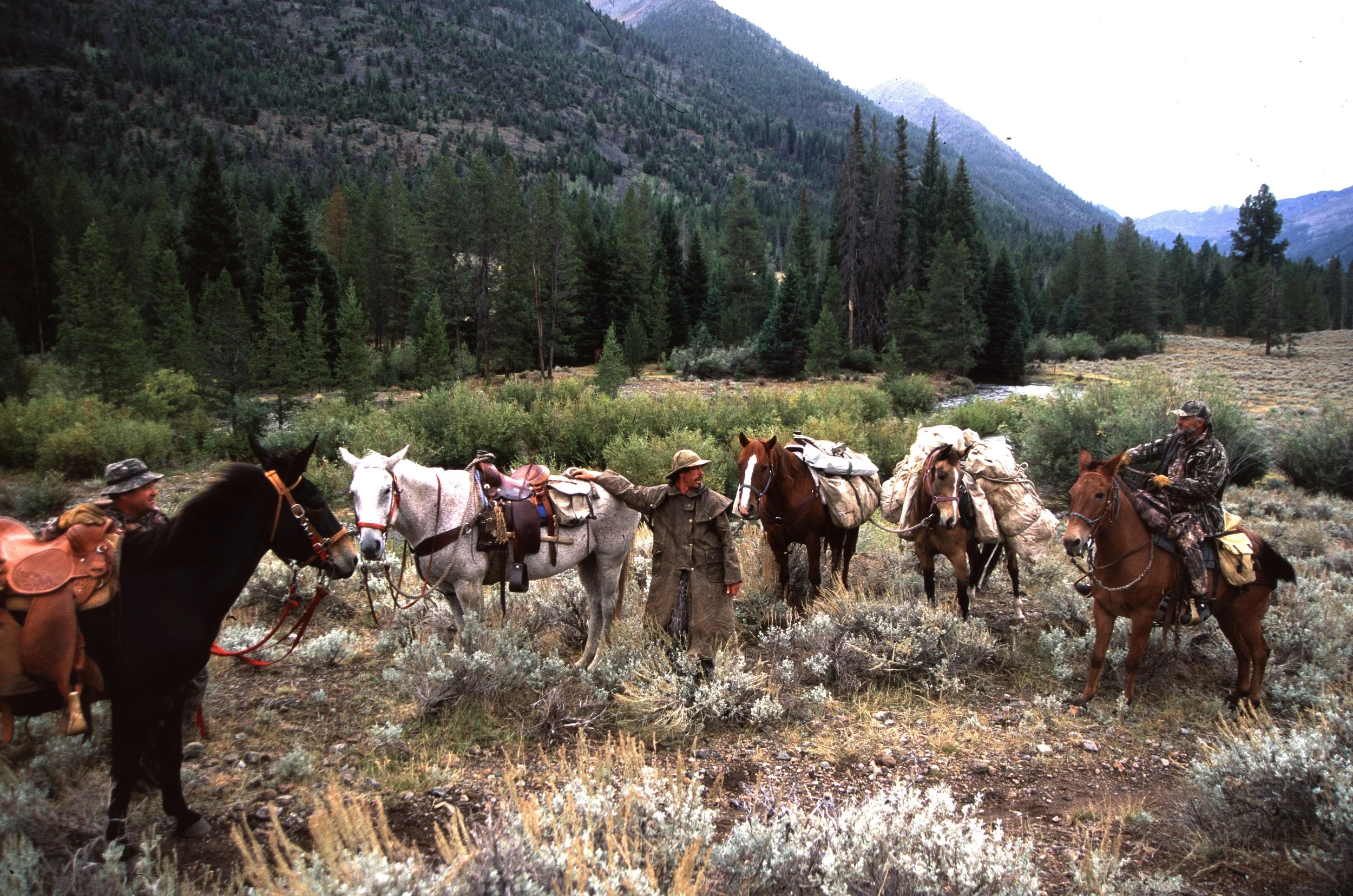
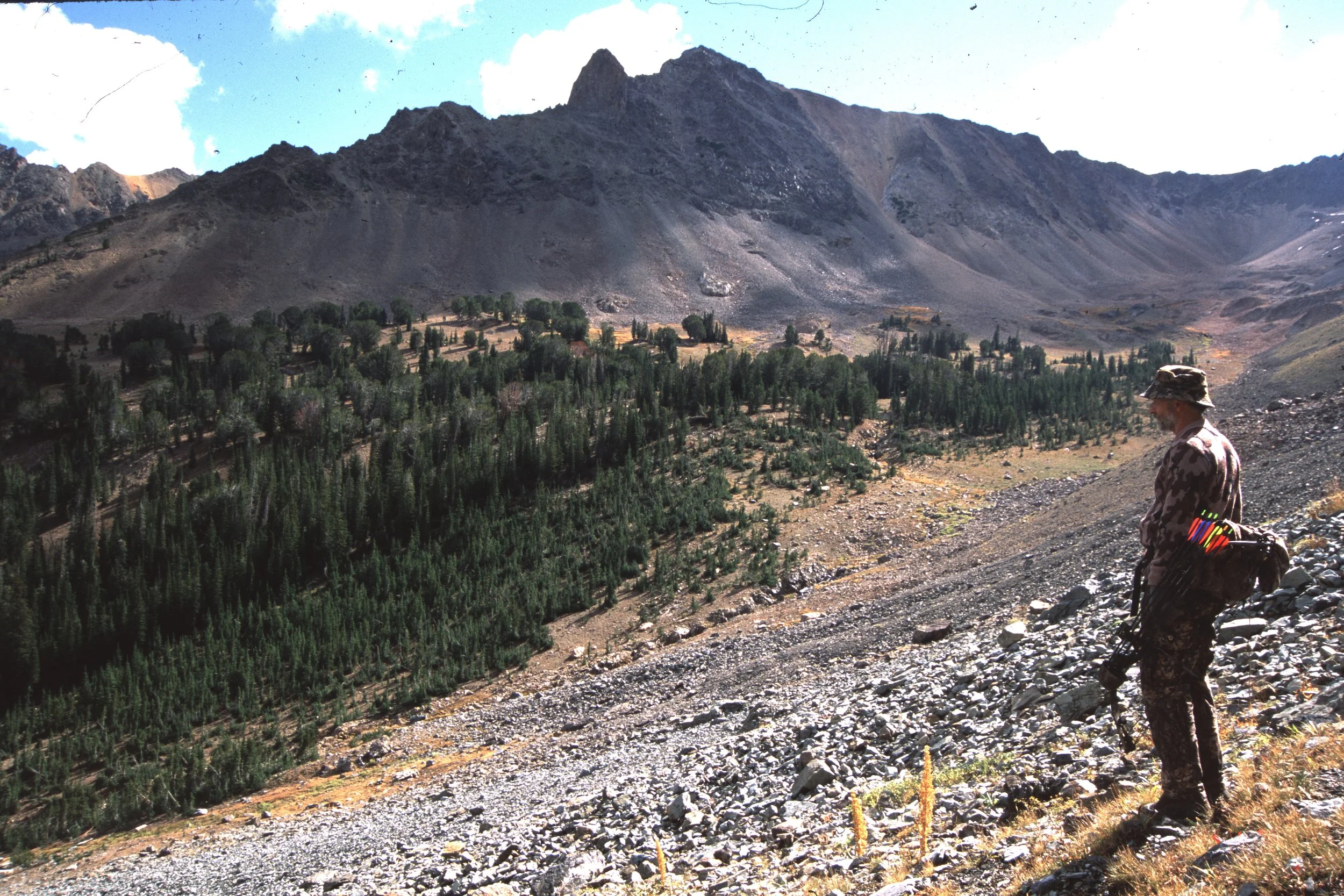
The following morning, we saddled the mules at 4:30 and started along the creek toward a thickly wooded valley that climbed to a high basin. An hour later with a faint dawn lighting the eastern ridges, cleared a high saddle where we tied the mules to trees. Pausing to glass an avalanche chute, Daniels related, how on a good year he would see five or six trophy bulls in the surrounding drainage but the combination of rifle hunting and evidence of wolves harassing the herds had exacted a toll. Speaking in a whisper Daniels admitted, “We have seen wolf sign in the upper basin, but winter is when the wolves do the most damage. The elk they don’t kill outright, they drive off their winter range. The Elk have no place to go but back up into the snow where they die.” He compared the situation to running over a nesting hen pheasant with a harvester. “You don't only kill one but ten.”
That morning Daniels spotted two five-point bulls feeding across an open meadow. The wind was blowing down canyon, all he needed to do was position himself for a shot. Daniels, however, shook his head. Motioning for me to back quietly down the trail, he whispered, “Neither are the bull I’m looking for.”
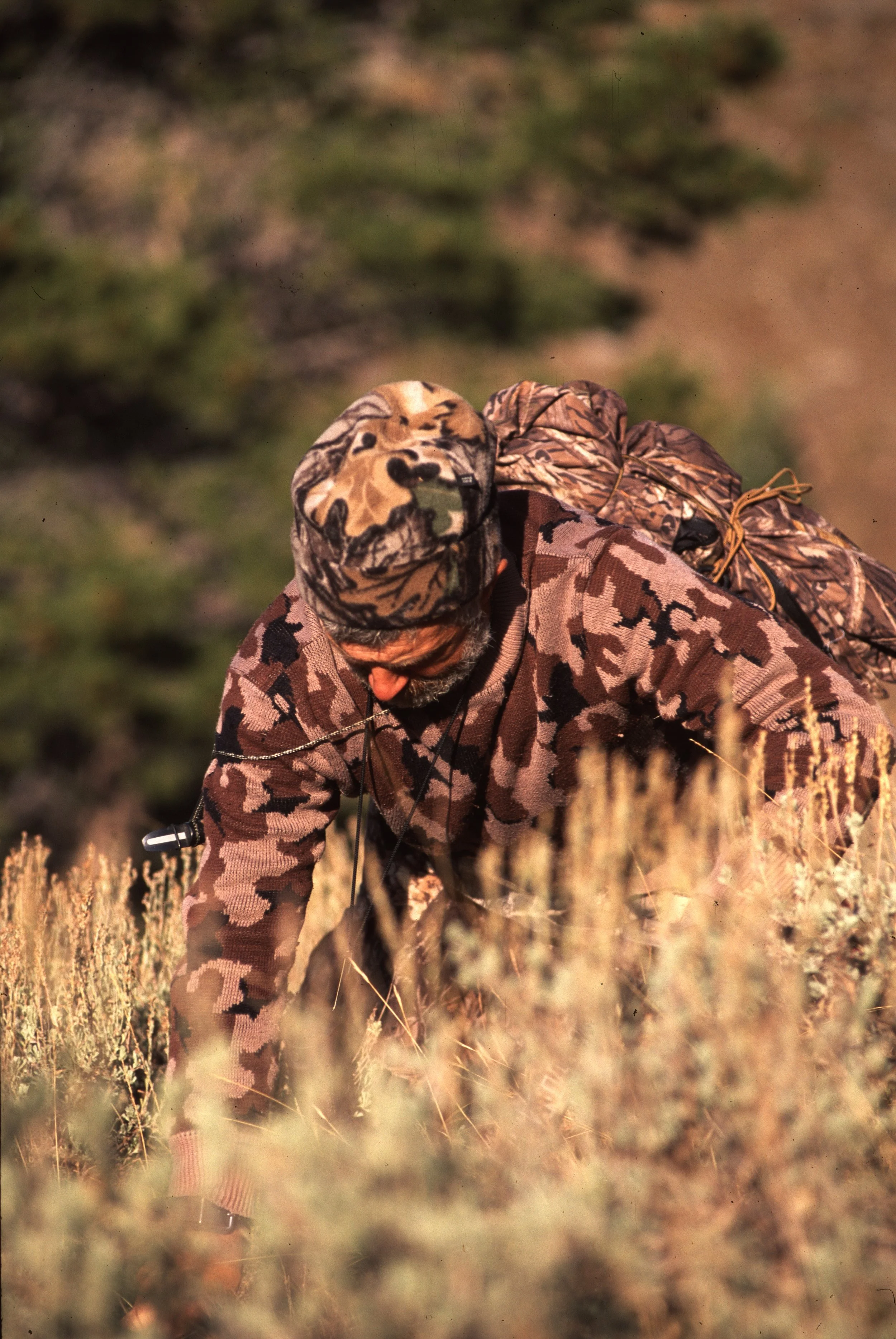
Later that same day he would crawl within twenty-five yards of a nice five by six, before the wind turned, the bull scented him, exploded out of its bed and crashed downhill through the thick lodgepole.
Daniels basically ambushes elk by first locating them, then moving quickly to intersect them as they pass through a saddle, or down a gully or into the trees.
He believes. “Elk are attracted by water and greener areas and will travel two or three miles every night, often in groups of fifty or sixty head.
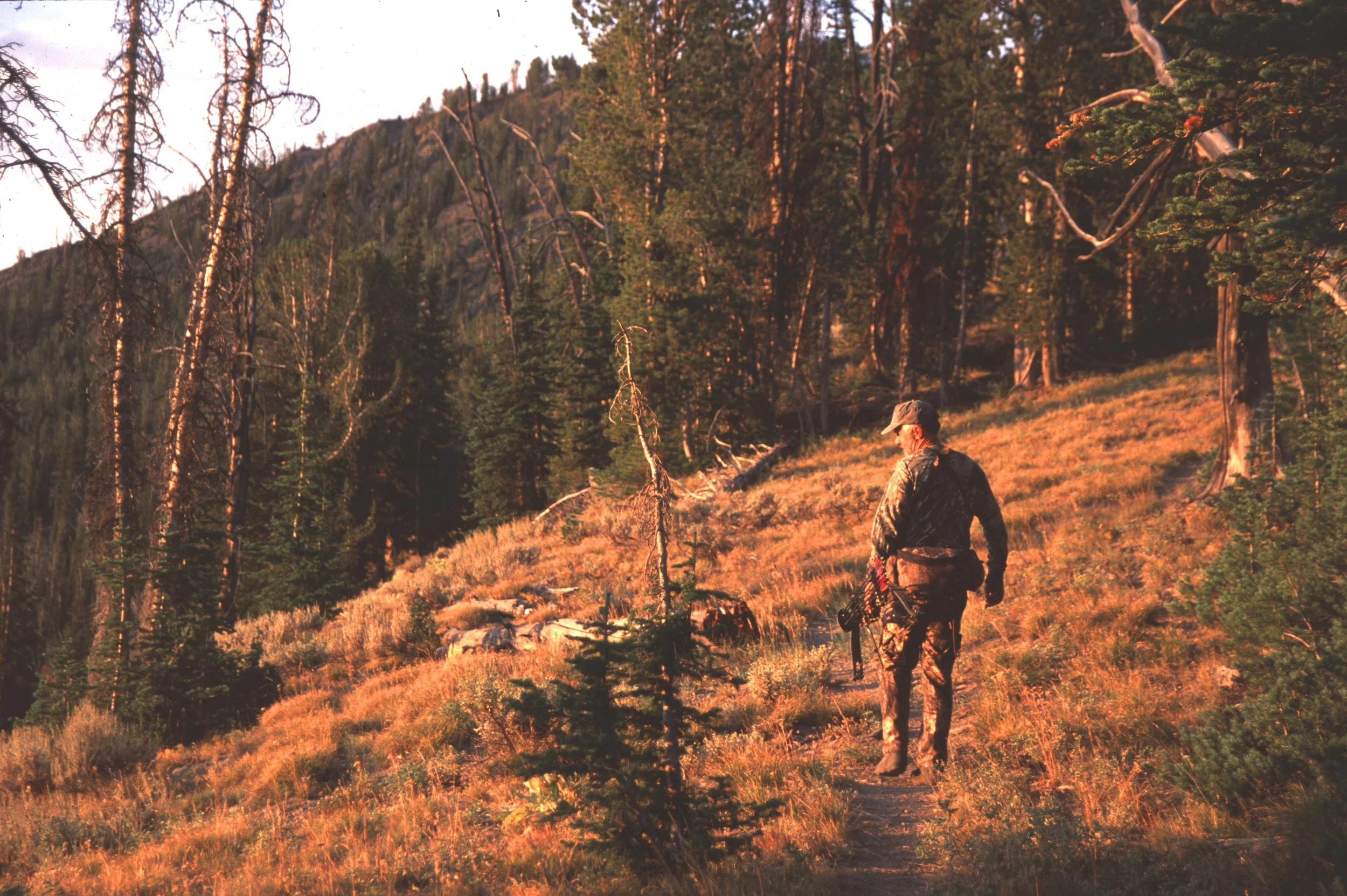
If left alone, they’ll feed in the valleys or south slopes at night and then move back into the north facing timber during the day.” Even in this high, rocky country, the difference amounts to a scant five hundred vertical feet and less than a mile. Daniels observes, “Once in a while when you get hail or heavy snow they'll stay in the valley but that’s rare.” Waiting until dawn’s first faint glow he will follow a low trail until he cuts the rounded, four-inch-wide print of a big bull then will try to determine if the herd has moved into the timber or is still feeding on the south slopes.
Daniels is confident that at some point the elk will move back into the north slope timber and notes, “Elk will cross year after year after year in the same area, but you have to be there at first daylight. If you’re twenty minutes late too often they've already crossed.”
Though Daniels often waits in the valley, hunting pressure force Elk to change their patterns. “Hunting pressure or ATVs running up and down the trails make them extra cautious. Big bulls don’t like to be out in the open and you can hardly be early enough. Many times, when a big bull is moving with his cows you'll bugle three or four times and he'll hustle right off those south slopes onto the north faces. You must adapt your hunting techniques to the conditions.”
Daniels admits he can't put his finger on when bulls start to rut. “I believe its dependent on when the cows come into heat and whether a bull is around cows or not.” He then quickly adds, “But I don't know if cows look for bulls or bulls look for cows. In this canyon there might be less than twenty cows and whether the bulls need the cows to trigger the rut, or its cold weather, I couldn't say. If you want you could talk to a commercial elk operation to find out when the elk come in to rut and when they don't. Hunters also disrupt that pattern by pushing bulls over saddles. You may not find a bull in this drainage one day and three or four the next.”
Daniels has witnessed a dramatic increase in the number of hunters who call elk. He notes, “ A six-year-old bull knows the difference between a call and another bull! For that reason, he rarely bugles and when he does it’s only to locate a bull. “When Elk are really, really heavy into the rut, you might get a big bull to respond to a bugle but it’s a poor shot because he’ll come in facing you.” Daniels believes it takes two hunters to bugle effectively--one to blow the call and the other off to the side to take the shot.
Once he locates a big bull he won't bugle again because, in his own words, “I’ve had too many just run on me.” While he has had virtually no success attracting a big bull by cow calling, he admits cow calls will attract frustrated lesser bulls that have been pushed out by the herd bulls.
According to Daniels there are special circumstances where several bulls have been teasing each other and if you can get close to one and blow a bugle, it will come after you.
According to Daniels there are special circumstances where several bulls have been teasing each other and if you can get close to one and blow a bugle, it will come after you. Daniels once held Idaho’s High School 110 yard hurdles record and moves quickly through areas where he knows elk are not holding. He uses streams to cover his sound and says, “I believe the art of stalking has been lost. People don't anticipate where the elk are going. They don't try get in front of them but too often just chase after them. For me, elk hunting is a game of interception. When it's cool and there is no breeze, elk are out feeding, and you must hurry through bedding areas and move slowly through feeding areas.
Once he locates a decent bull he slows to a crawl. “It's very hard to work through cows to the bull.” he says. “Sometimes you'll have thirty cows below a bull. That’s a lot of eyes and if the thermals are blowing downhill, you can’t get above them. That's what makes a herd bull so horrendously difficult to sneak up on. Even if you think you see all the cow there's always one you won't see.
Daniels is convinced the key to success is to be where the elk are in the cool of the day when the cool air is flowing down hill and you don't have to worry about your scent pattern. He says, “If Fred and I must hunt a long way out, we’ll get up at three thirty to be there at first light.
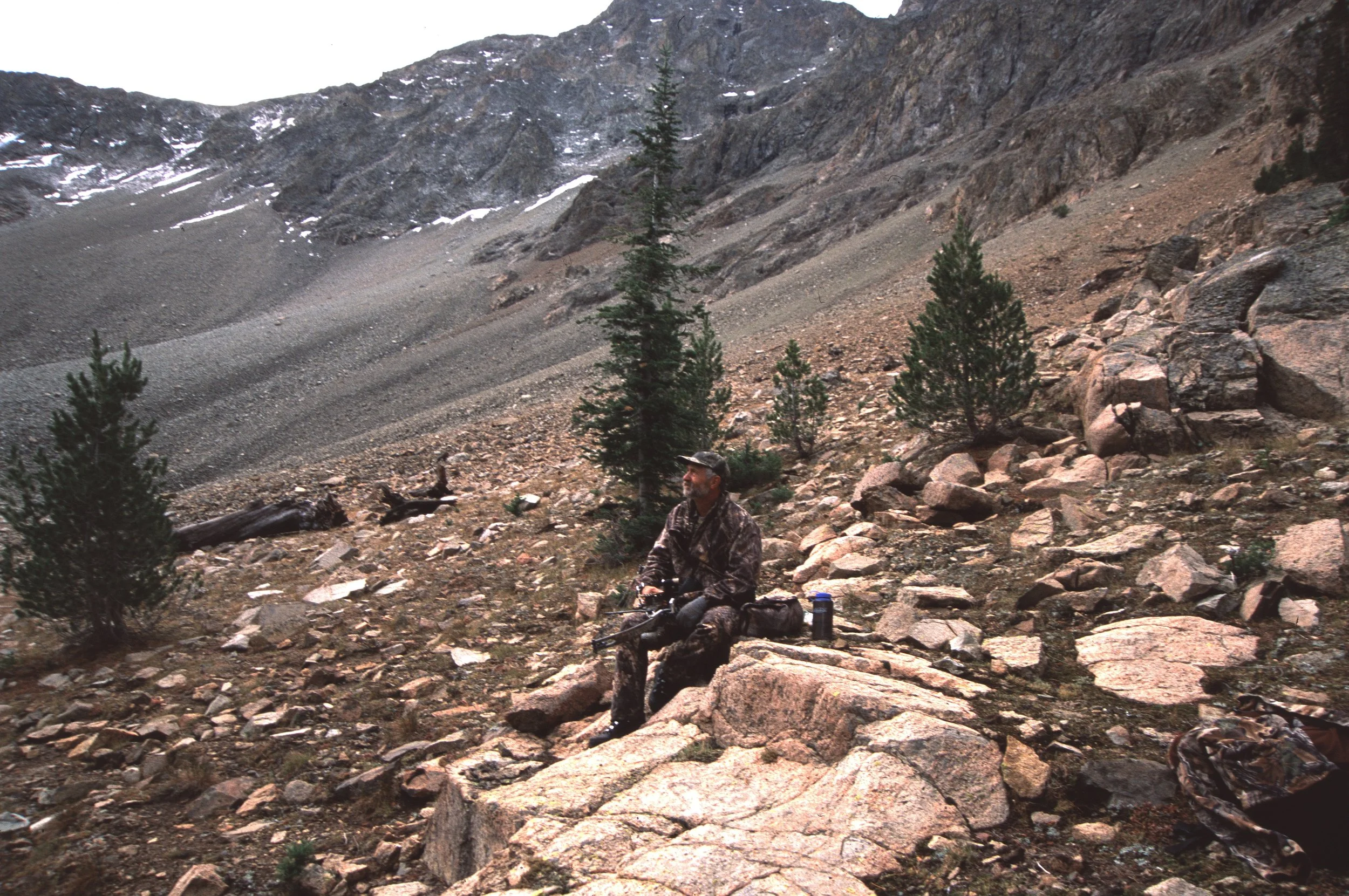
Once the sun touches that hillside and the currents start rising uphill, your chances drop dramatically. If you're walking through trees with the wind at your back, you’re just driving animals in front of you.”
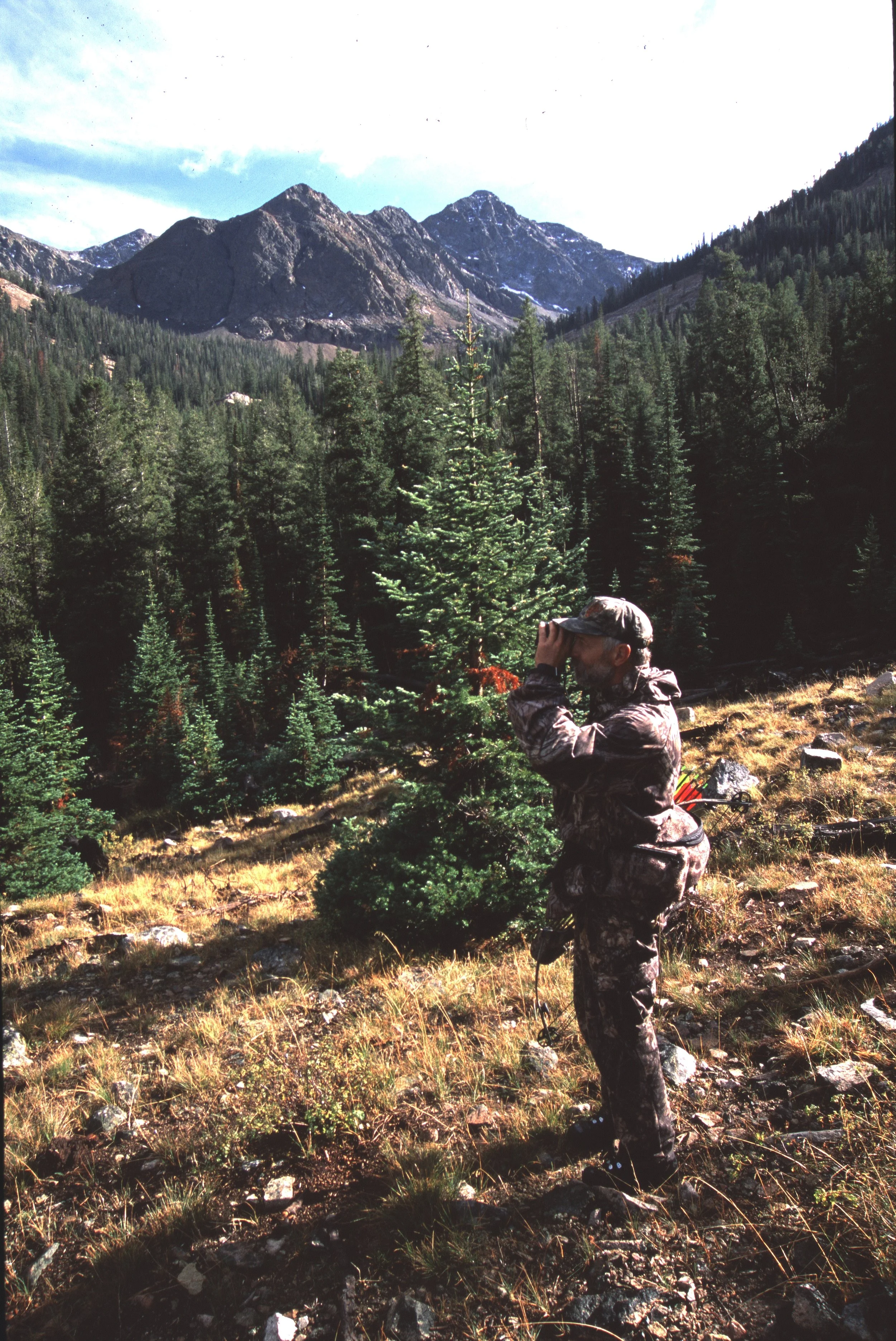
Daniels remembers, “I was watching a herd through binoculars when the wind quickly turned around to my back. I was probably six hundred yards away but a minute later the cows started lifting their noses into the air, then one stood up and the whole herd took off at a dead run.”
When Daniels hears a bugle he tries to determine which way the bull is traveling and which way the thermals are moving. Depending on when the sun hits the creek area, the wind can change and rather than spook them out of the basin and lose track of them, he will often just return to camp in the mid-day. He believes that once a trophy herd bull is bedded down in the timber surrounded by a dozen cows the chances of getting a shot are remote. In this case, he’ll return the following morning to try and intercept him as he crosses the trail.
Because of the work and time required to set up camp, Daniels typically takes two weeks in mid-September to hunt. He uses the time to locate and pursue a single trophy bull. This year when he and Fred Schiffler failed to cut the track of a large animal in six days of hard hunting, they moved two drainages and thirty miles south to a heavily trafficked canyon. Two days later Daniels intercepted a large nontypical six point that was moving to water in the late evening. Daniel’s arrow struck just behind the rib cage and the bull traveled less than a half mile before it died.