
Climbing Idaho’s Mount Borah
Climbing Mount Borah was Stevie Wonder’s idea. “Wonder” wasn’t really Stevie’s last name, more of a description that spoke to his other worldly strength and endurance. Stevie Wonder typically placed within the top five in Sun Valley’s annual Baldy Hill Climb, Boulder Mountain Marathon and Galena Grinder as well as a variety of local Ironman, 10k and back country races. He was also an expert telemarker, fly fisherman and hunter. Add J.C. who was, in all respects an Ironman from Duffy Witmer’s Pioneer Saloon and I was more than mildly flattered when they called to ask if I’d care to join them on a training climb up Mount Borah––Idaho’s tallest 12,662 foot peak. Named after William Borah, Idaho’s Senior Senator who served twenty-seven years in the U.S. Senate and located across Trail Creek and Copper Basin on the east side of the Lost River Valley, from trailhead to summit Mount Borah rises 5,262 feet in 4.1 miles and is something of a rite of passage for the Wood River Valley’s twenty to fifty somethings.
At the time Stevie called, I had just finished the Alpen Brevett, Switzerland’s 106 mile, 16,000 vertical foot suffer fest and figured climbing Borah would provide a pleasant diversion from my day job paneling Elktown Condos. It was now late October and a winter storm had passed through the week before. Stevie predicted if the snow was too deep, we would simply turn back.
“Can I bring Till?” I mentioned my five-year-old black labrador retriever.
“If she was my dog, I wouldn’t,” Stevie’s reply served as a warning for what was to come.
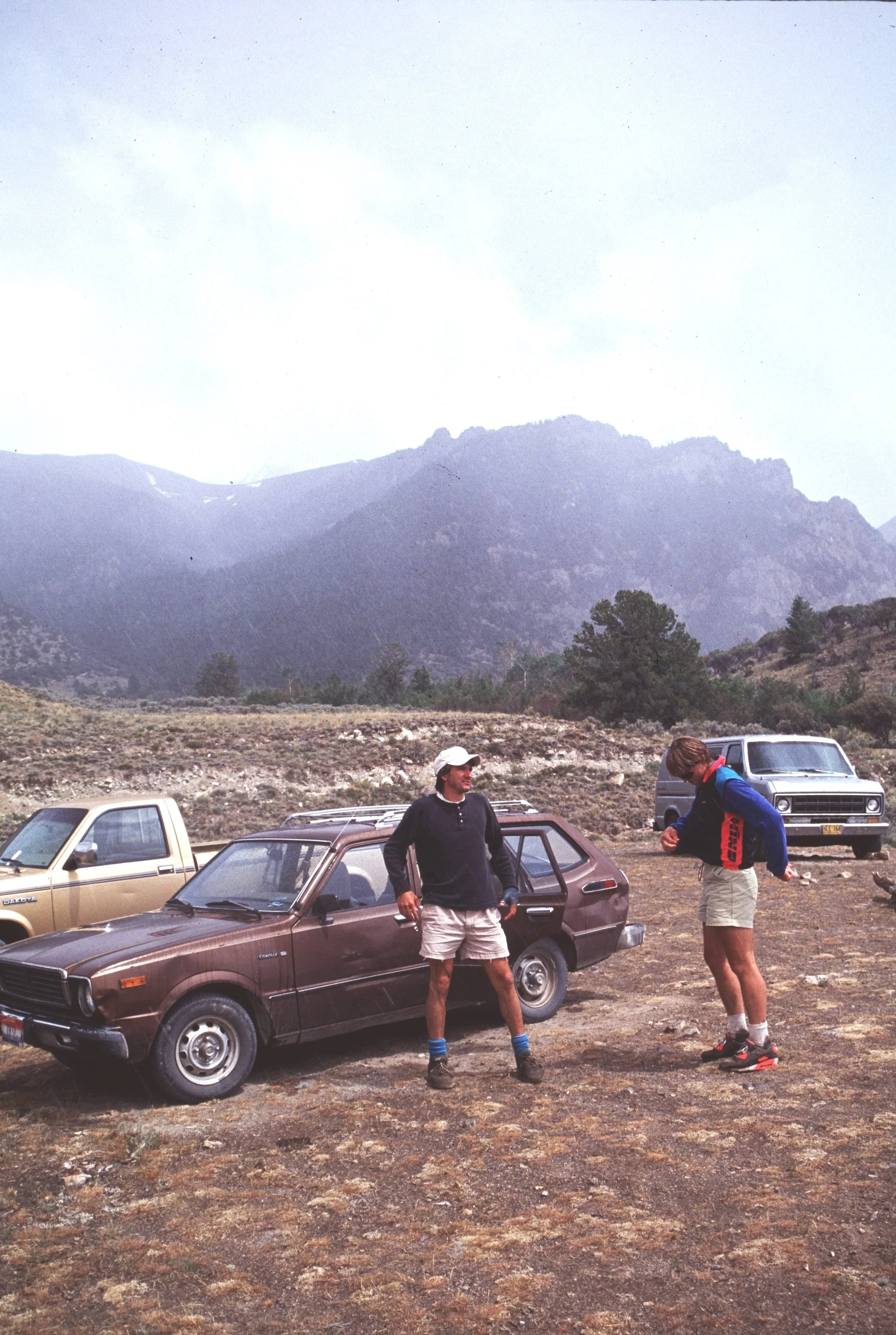
Stevie Wonder and J.C at the Borah Turnout
Neither Stevie, nor J.C. was winded and pointing to the spring fed streams that braided the Lost River Valley below J.C. asked, “Have you ever fished the Lost?”
“Once. Most of it’s private property. I count myself lucky to be invited.”
He nodded. “That’s why it still holds huge rainbows.”
There was no need to add how Idaho was changing or how the honey holes that we’d fished, or hunted, would soon be hidden behind barbered wire fences and No Trespassing signs. And rather than mourning a future when I’d find a fly fisherman casting to a secret, spring feed pool, we were grateful to have the mountain to ourselves.
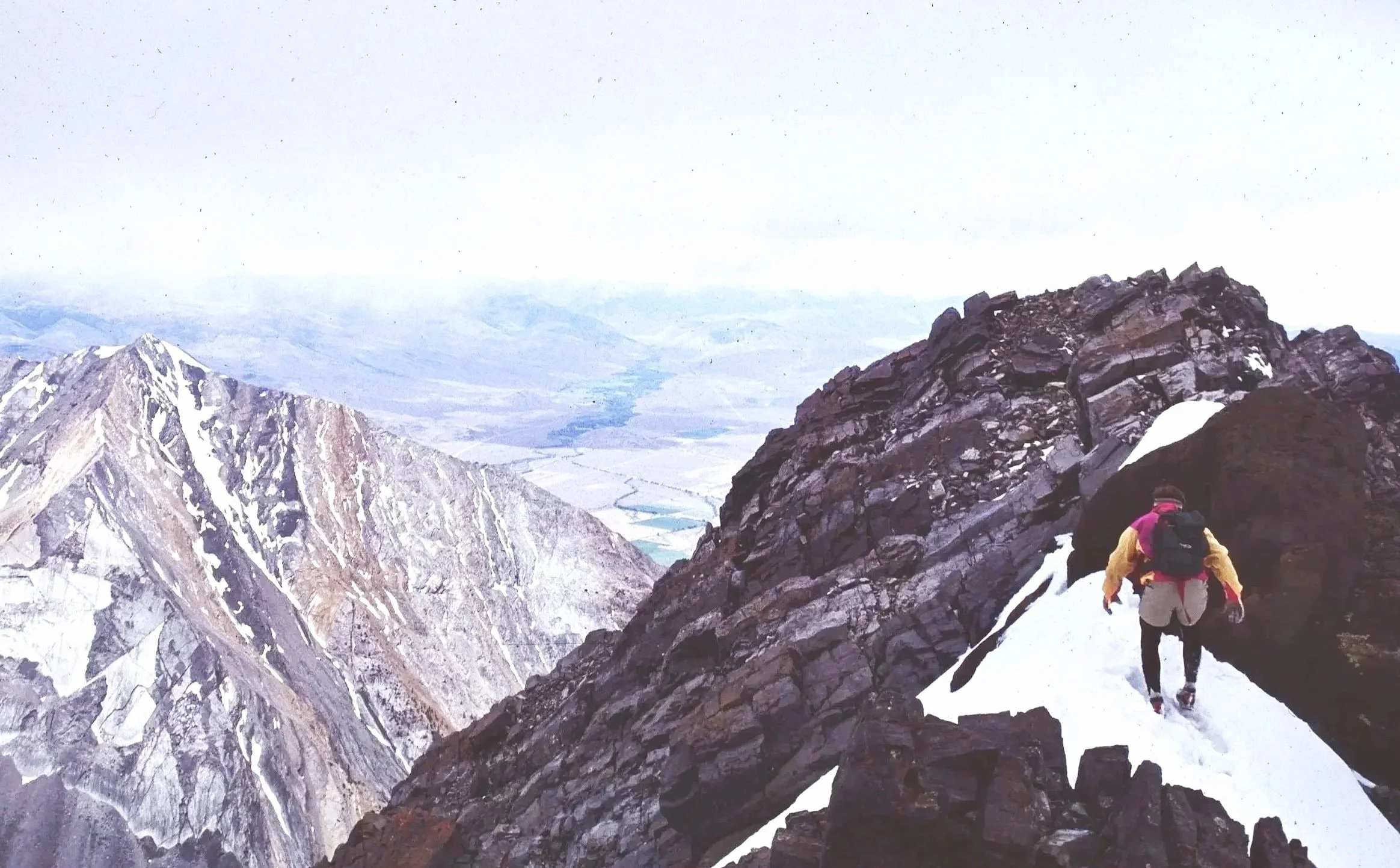
Bending to the grade, one step at a time, we followed the ridge route until we reached the famous, or lately, more infamous Chicken Out Ridge. That morning it bore a sobriquet for danger. Narrow, rocky, blanked with snow on both the west and east faces, one misstep could result in serious injury or, in the case of three recent day trippers, death.
Stevie Wonder did not caution us to pay attention only nodded once then picked his way across the exposed rock ridge.
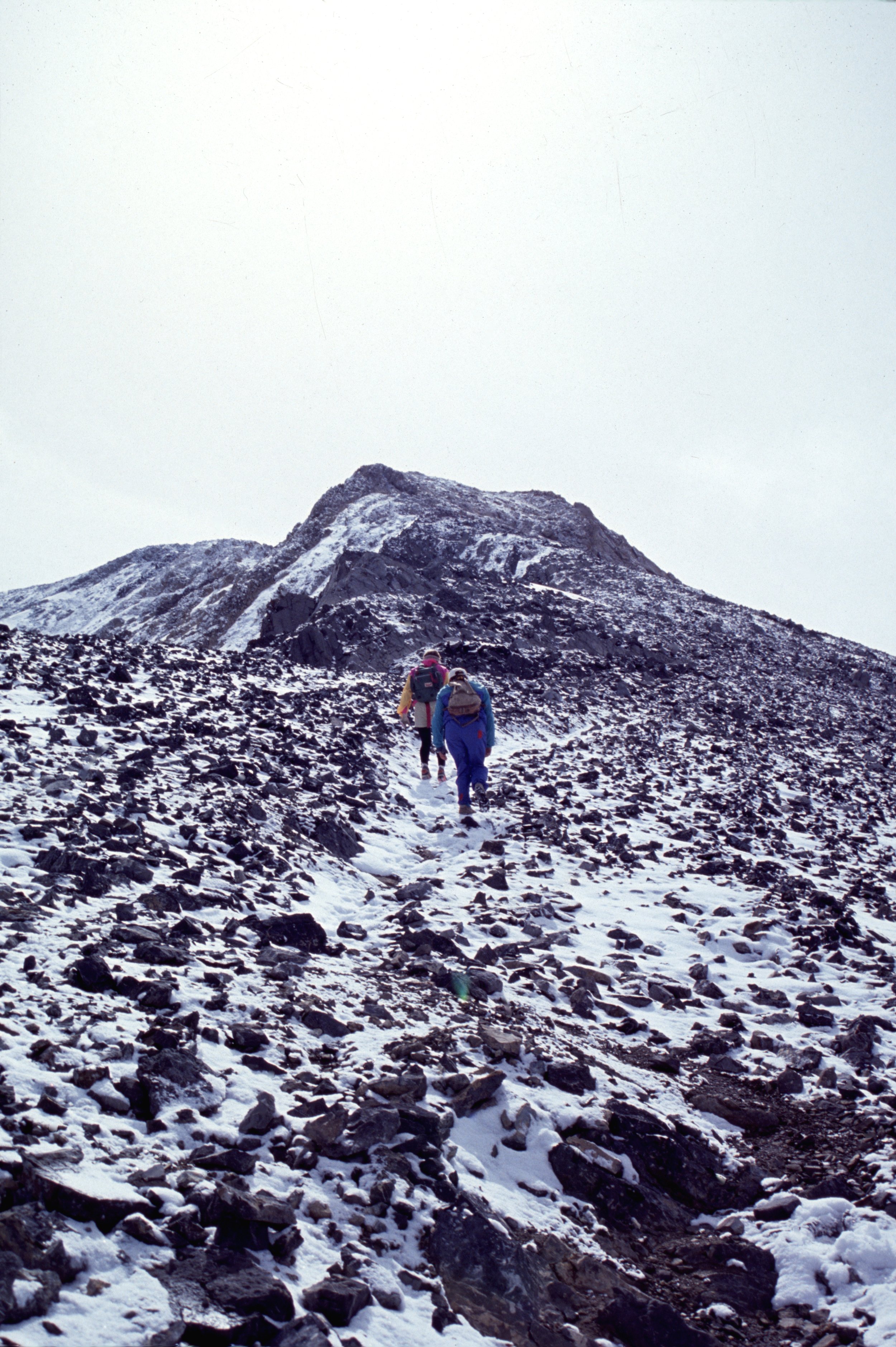
J.C and Stevie Wonder Halfway to Summit
Stevie, J.C. and I met at seven in a dirt turn out where a gravel track rose toward Borah’s west flank. Unlike other Forest Service climbs this was no “getting to know you” path that led to a pleasant, low angle hike. The Borah trail started fast and didn’t let up. Rising thirteen hundred feet per mile for a 24% grade, the only respite was when the trail switched back across a sheer fall line.
The path first snaked through sage and scrub then transitioned into a doug fir forest where a track, that was only a shade lighter than the surrounding rocks, wound through the trunks until it eventually opened onto a snow covered open scree and shale face. While I was climbing in my elk hunting Whites and J.C. was outfitted in a boot that offered ankle support, Stevie defaulted to a light hiking shoe that suffered when the trail crossed a snow covered side hill. Prior to Borah, I believed that I was in fair, perhaps even good shape but couldn’t match J.C.’s or Stevie Wonder’s pace and was a minute behind when we broke out on the ridge that snaked toward the summit.
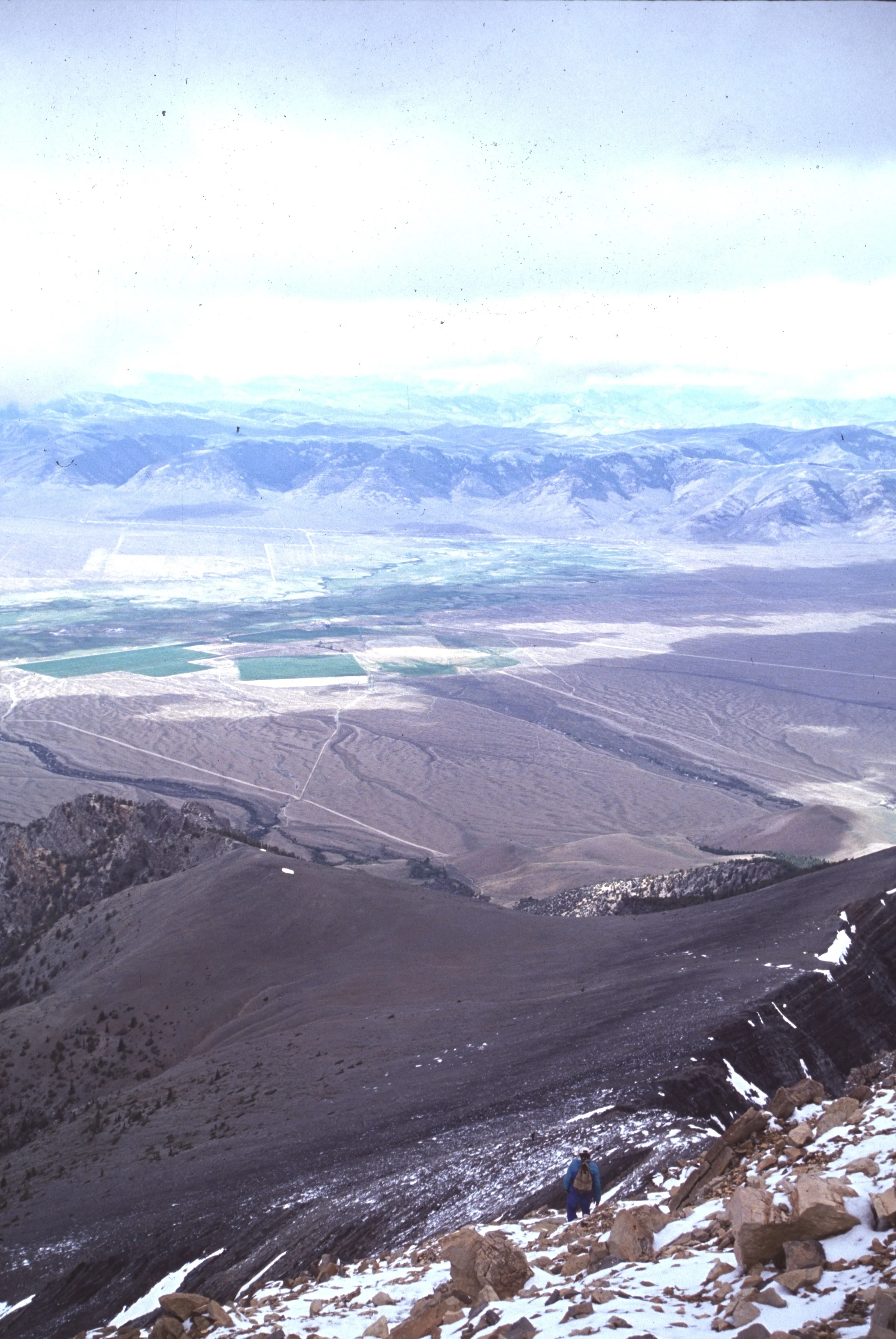
Lost River Valley
Grateful for both my youthful balance and my hunting boots, I reached the opposite vertical face a step behind him. Though steep, the ridge continued to climb to the “Snow Bridge.” Formed by the winds of last winter’s low pressure systems the “Snow Bridge” had survived the following spring and short summer. We followed a trail through the snow that was set by previous climbers and were halfway across when a harsh wind nearly pushed us off the cornice. One careful step after another carried us off the snow onto a rock and ice path that continued to climb upward to the summit.
If I harbored a certain conceit over my leg strength, Borah exacted a price. Each step was incrementally harder than the one before and adhering to a shouted statement I once heard during a raging snowstorm, I repeated, “you can’t make it too tough for me,” and labored upward.
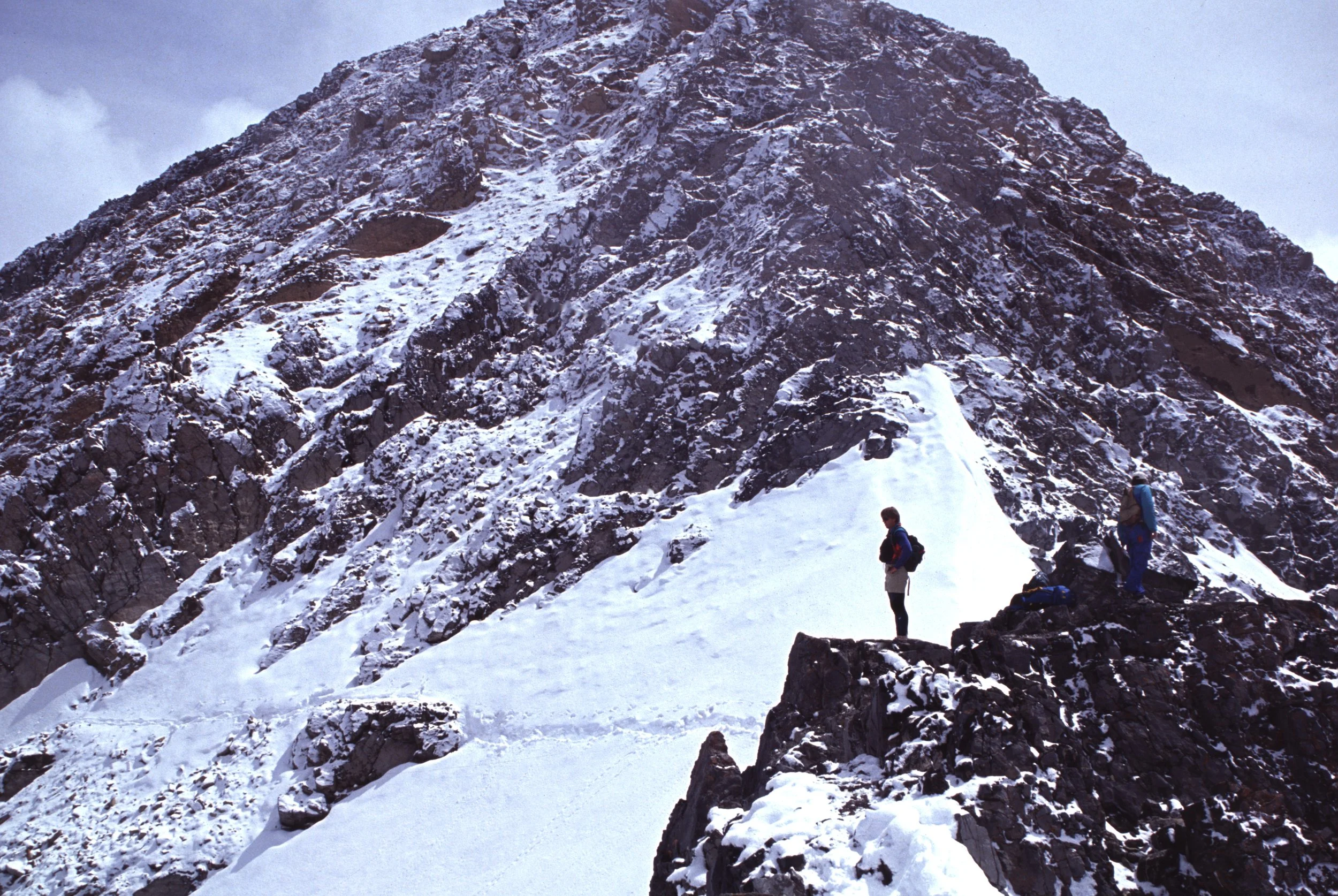
J.C. and Stevie Wonder Below Chicken out Ridge
We reached the Summit shortly before eleven o’clock. Despite the cloud cover, the view south into the Arco Desert, west to Copper Basin, the Pioneers and Trail Creek and north toward the Salmon River drainage paid the effort, and danger, in full.
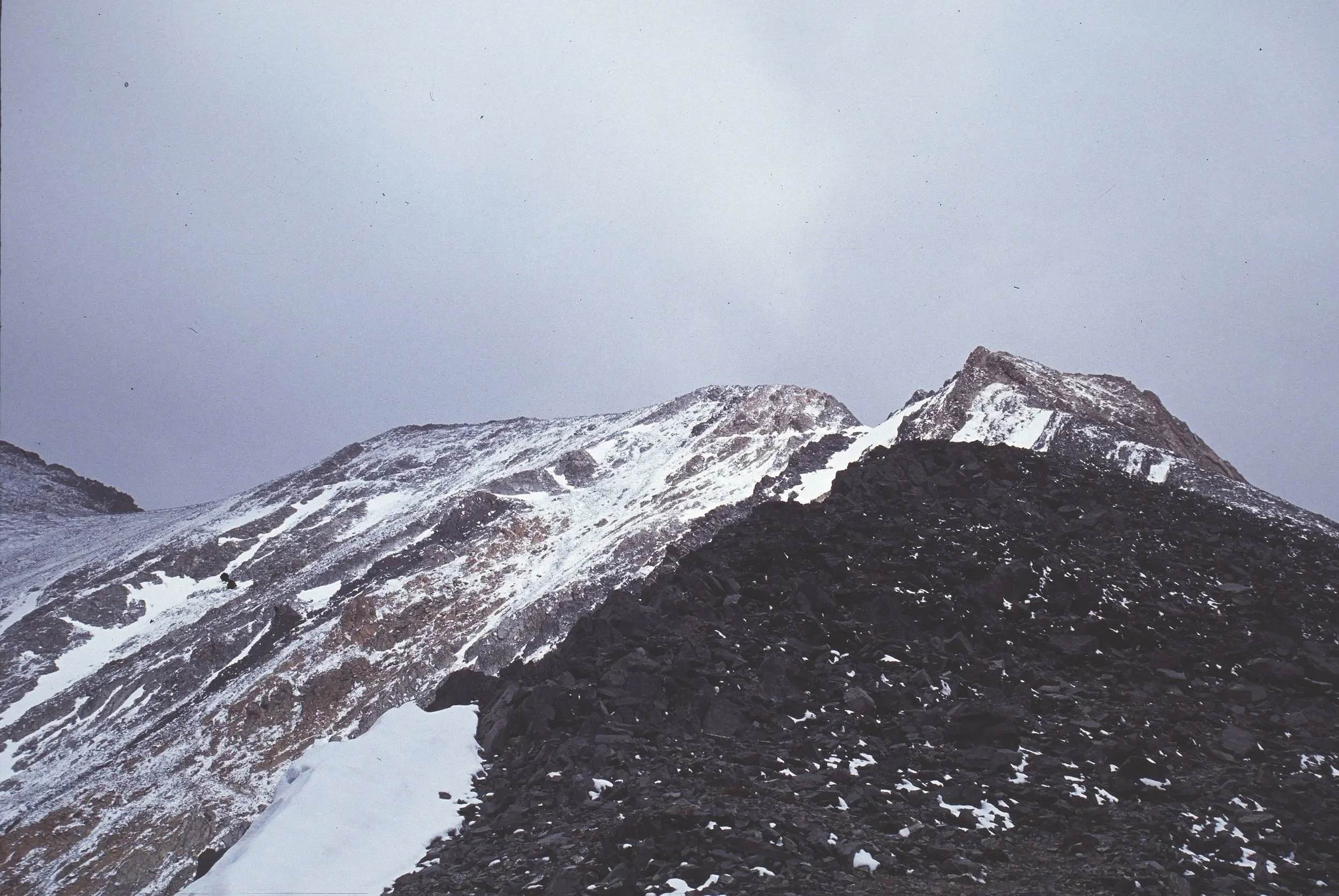
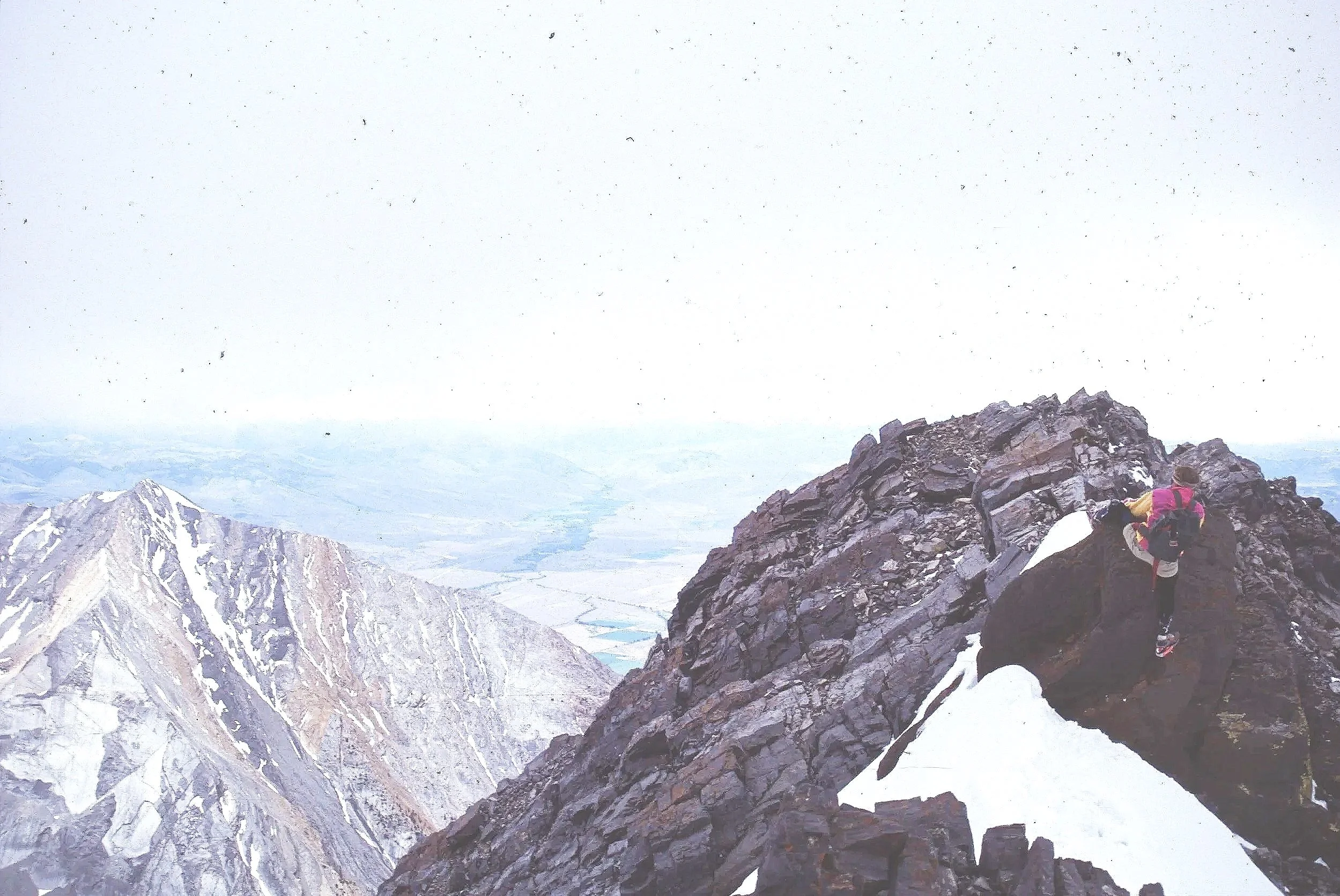
J.C Crosses Chicken Out Ridge
Though the down climb back to the turnout lacked major surprises, no stumbles, rock fall or mountain goats, holding the brakes on for five thousand vertical feet and four miles took a toll on my toes, calves, knees and thighs.
Still wearing his tenny runners Stevie Wonder appeared unfazed by the side hills and steep grades. “I love this climb,” he confessed. “It’s a shame the sun wasn’t out. Do you think you’d want to do it again?”
“Sure,” I said. “Give me a call.”
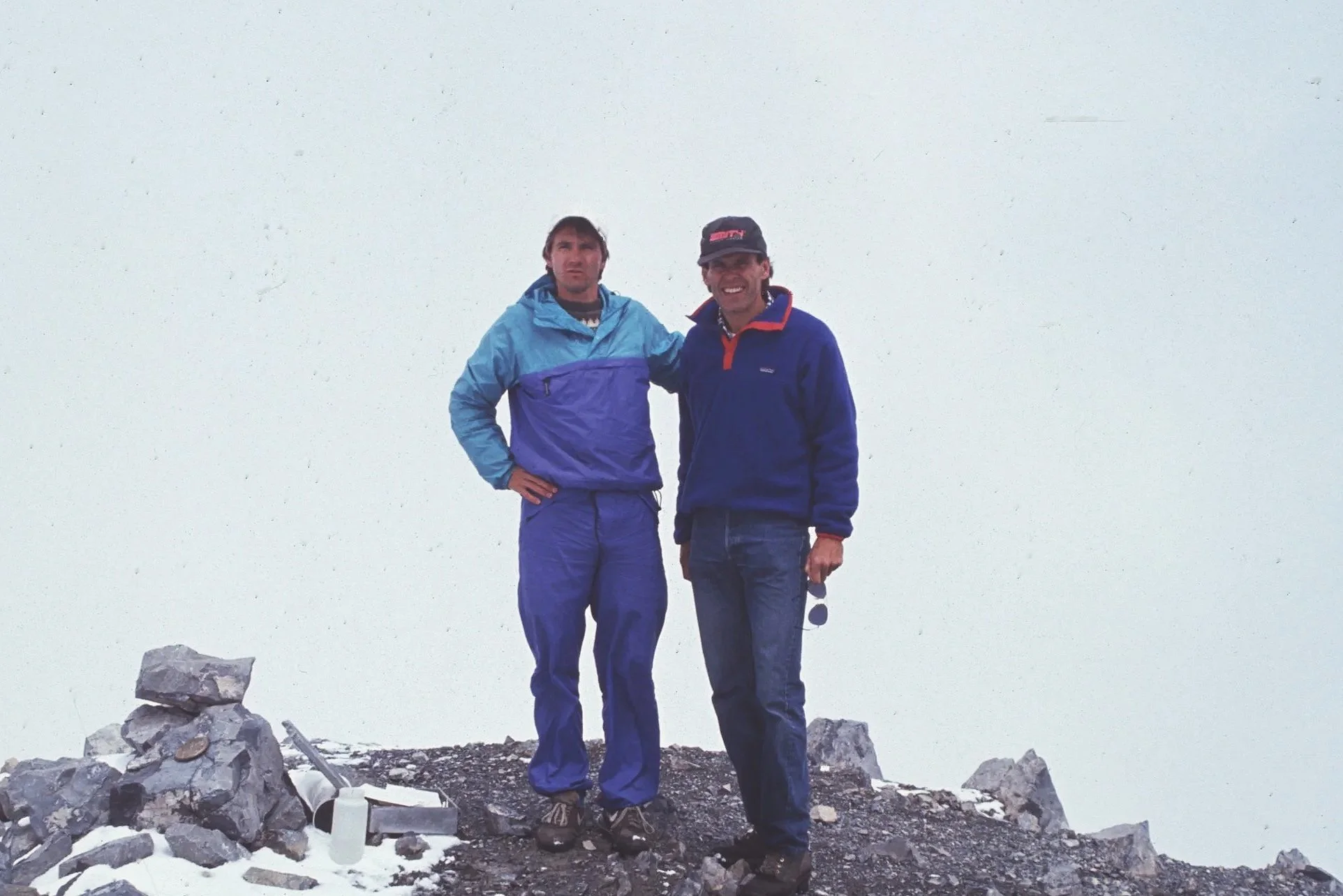
Stevie and andrew at Summit
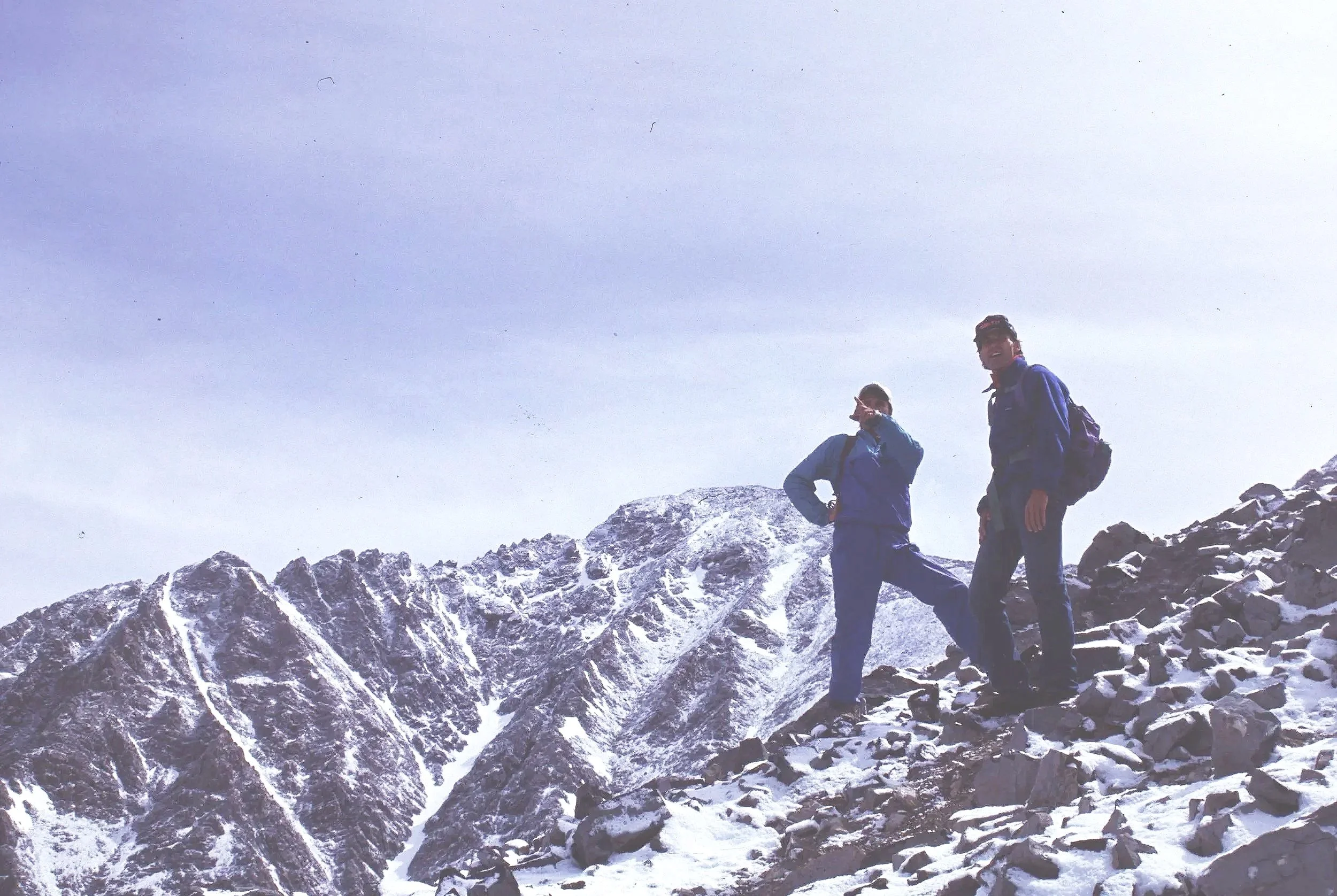
Stevie and andrew Halfway to Summit
Before that could happen, I heard Stevie Wonder was accepted to grad school. Oregon? California? Washington D.C. Doctor, Lawyer, Software Engineer, CEO of a Silicon Valley Company? I never learned.
As for J.C, he continued to work at the Pioneer, ski Bald Mountain, fly his Cessna tail dragger and gracefully age into one of Ketchum’s most beloved locals.
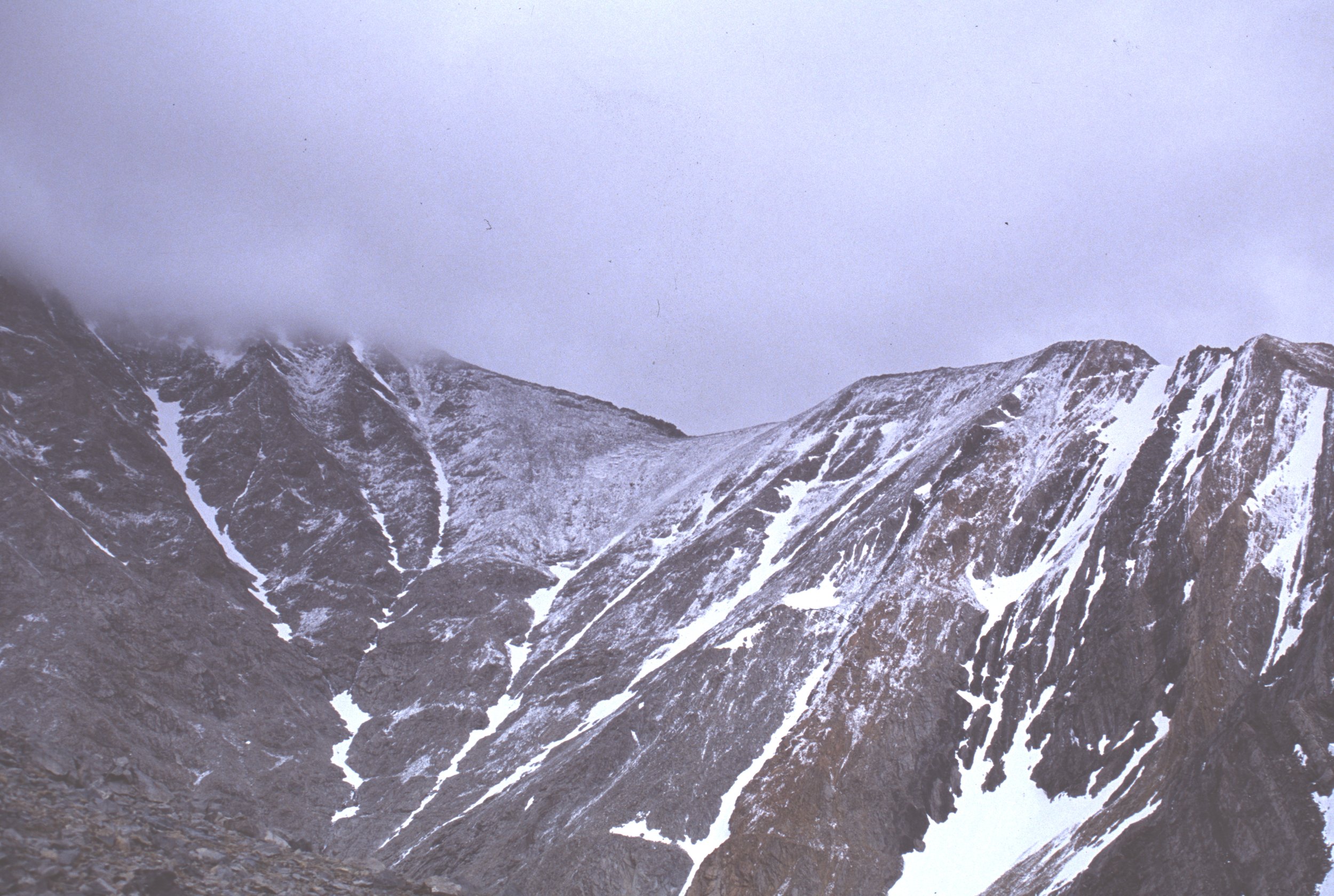
Mount Borah Ridge to the Summit