
Turner’s Hidden Beauty
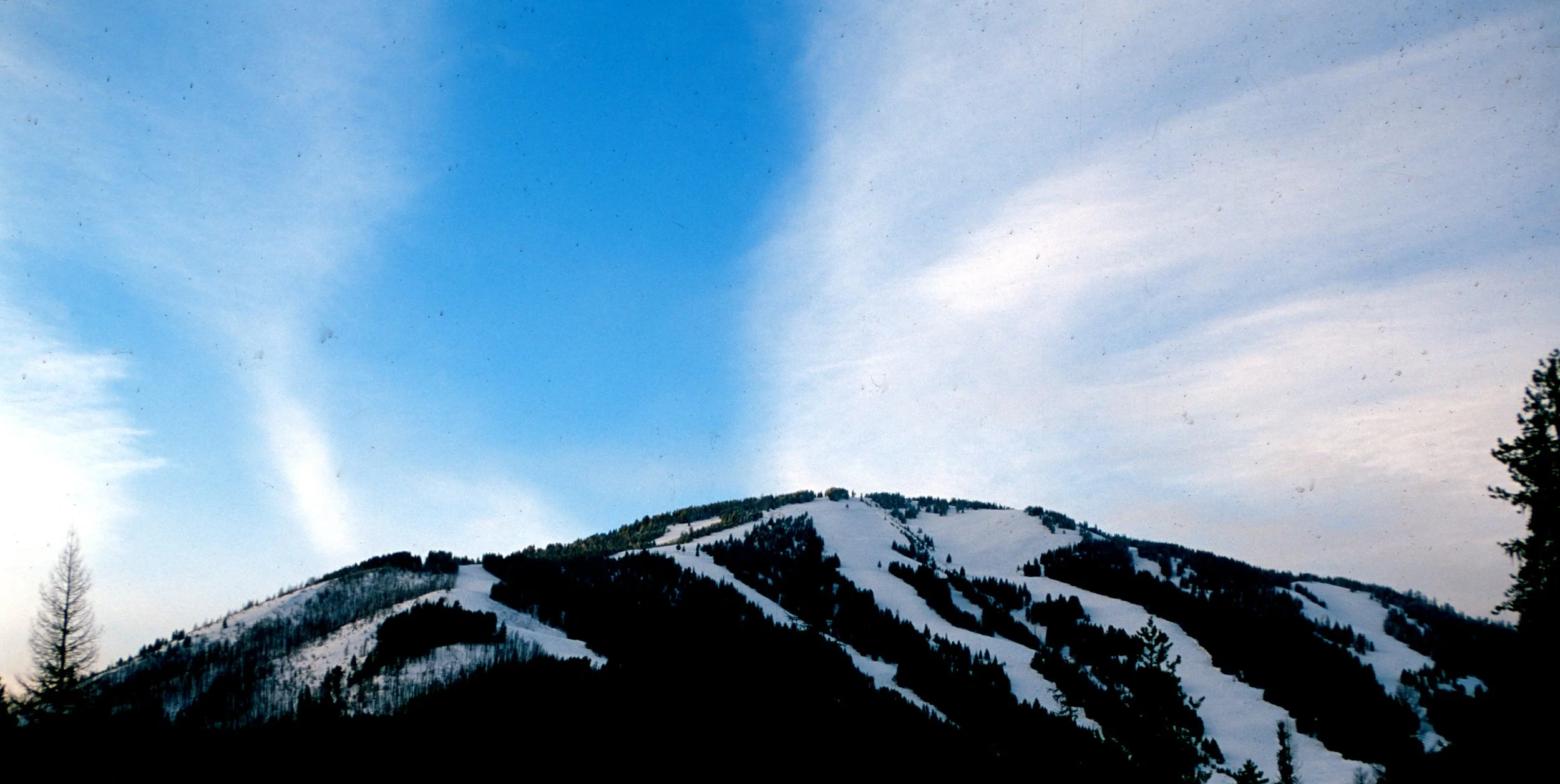
If you did not know to turn on Pipe Creek Road you could easily miss Turner Mountain. Set equidistant between the Red Dog and Dirty Shame Saloons on a forested knob that is alternately caressed by moist maritime fogs and pounded by deep powder storms, from the diesel powered generator to the volunteer labor to the bring your own toilet paper economy, Turner is completely independent and totally self sufficient. Add a single, mile long Riblet double chair, pitch perfect terrain, one hundred skiers per day, a $45 dollar lift ticket and it comes as no surprise when friends wonder aloud “Are you sure you want to write about this place?”
David Redman alternates summers spent fighting fires for the Forest Service with ski patrolling at Turner Mountain. Boarding the Riblet to the 5952 foot summit, he offers compelling ‘you should have been here last week’ testimony.
“The snow was thigh deep last Friday,” he comments in the off handed manner of someone who has been spoiled by too much of a good thing.
With 70% of the terrain rated black diamond, Turner is a steep, demanding mountain and yet, according to Redman, a snowboarder first had to cut a track down “Main Run” for following skiers. “You’d get going in the track then break out for a few turns until you slowed down.” Redman related. “Then, when you were just about stopped, you’d jump back in the track for more speed. It took us two days to beat that storm down.” Rising out of a wooded defile between Northwest Montana’s Cabinet and Purcell mountains Turner sits squarely in the path of deep lows that sweep off the Gulf of Alaska. Storms are regular and deep, and yet outside of Lincoln County, Turner is virtually unknown.
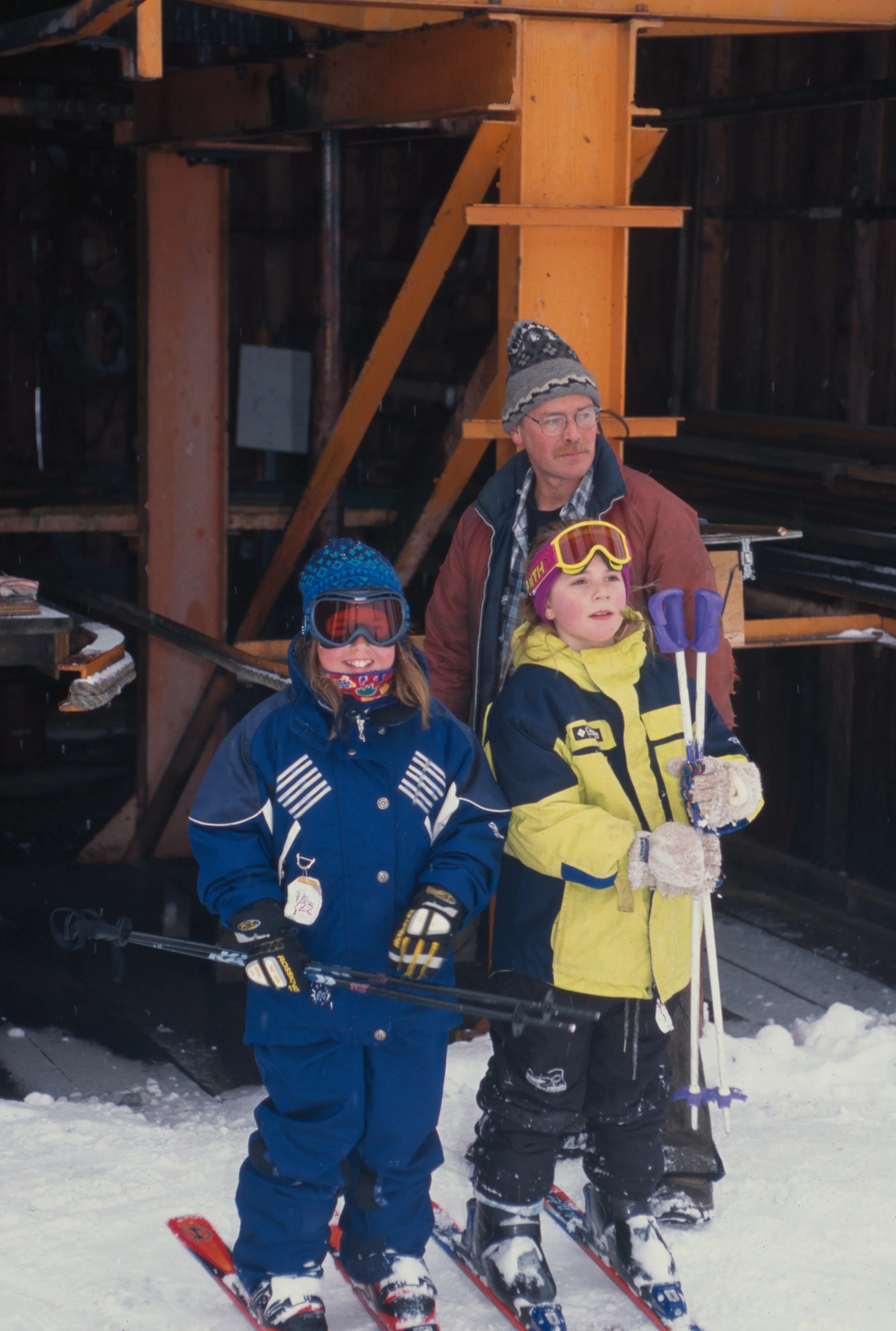
BIologist Gary Altman Catches a t-Bar
Part of the problem is there is no direct route to Turner--none of the flights, ski and sleep packages or shuttle buses that cater to larger, more famous Northwest resorts. Figure 165 miles from Spokane, Washington and 190 from Missoula Montana, the distances have worked to preserve and depress this forty year old ski area. With 1000 acres of terrain and uncounted back country lines, Turner still averages 80 to 100 skiers per day. Multiply that by a season that runs from December 15 through April 1 and the area boasts 5000 skiers per year--something less than 20% of a single day at Vail!
Straddling the junction of Montana Highways 2 and 37, Libby doesn’t look much like a ski town. Other than the Snowshoe Sport Shop and the Norwegian sweater store, it has the air of a blue collar logging town fallen on hard times. Before demand for vermiculite dried up and clear cutting was halted, Libby depended on mining and lumber. In winter, aside from Turner Mountain, there is little to draw tourists to Libby’s hand painted signs, sculptures of Bald Eagles or store side murals of bugling Elk. Snow lies heavy on Libby's roofs, parks and roads; beat to hell pickups far outnumber new SUVs and local businessmen play to area strengths by combining gunsmithing and real estate.
And yet, despite it’s frayed downtown, Libby is rich in natural beauty. Named after the Kootenai Indians who were originally called the "People of the Standing Arrow,” the surrounding Kootenai National Forests are filled with rivers that cry to be fished, forest and lakes that call to back packers and wilderness peaks that offer incredible back country skiing. Rising against the eastern horizon, Glacier National Park is the big draw, but Libby, the Cabinets and Purcell Mountains are typically overlooked by the big diesel buses full of Germans and Japanese.
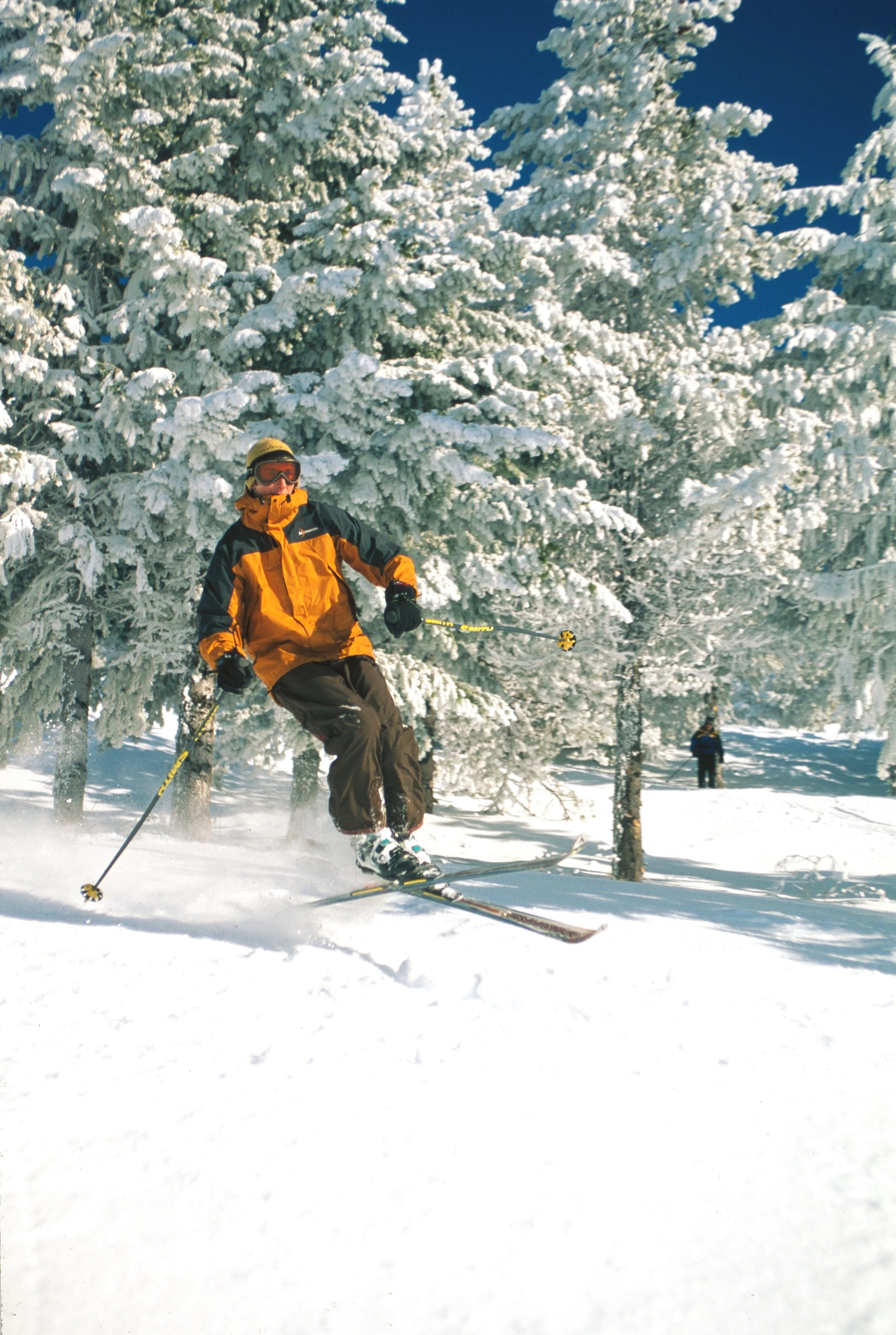
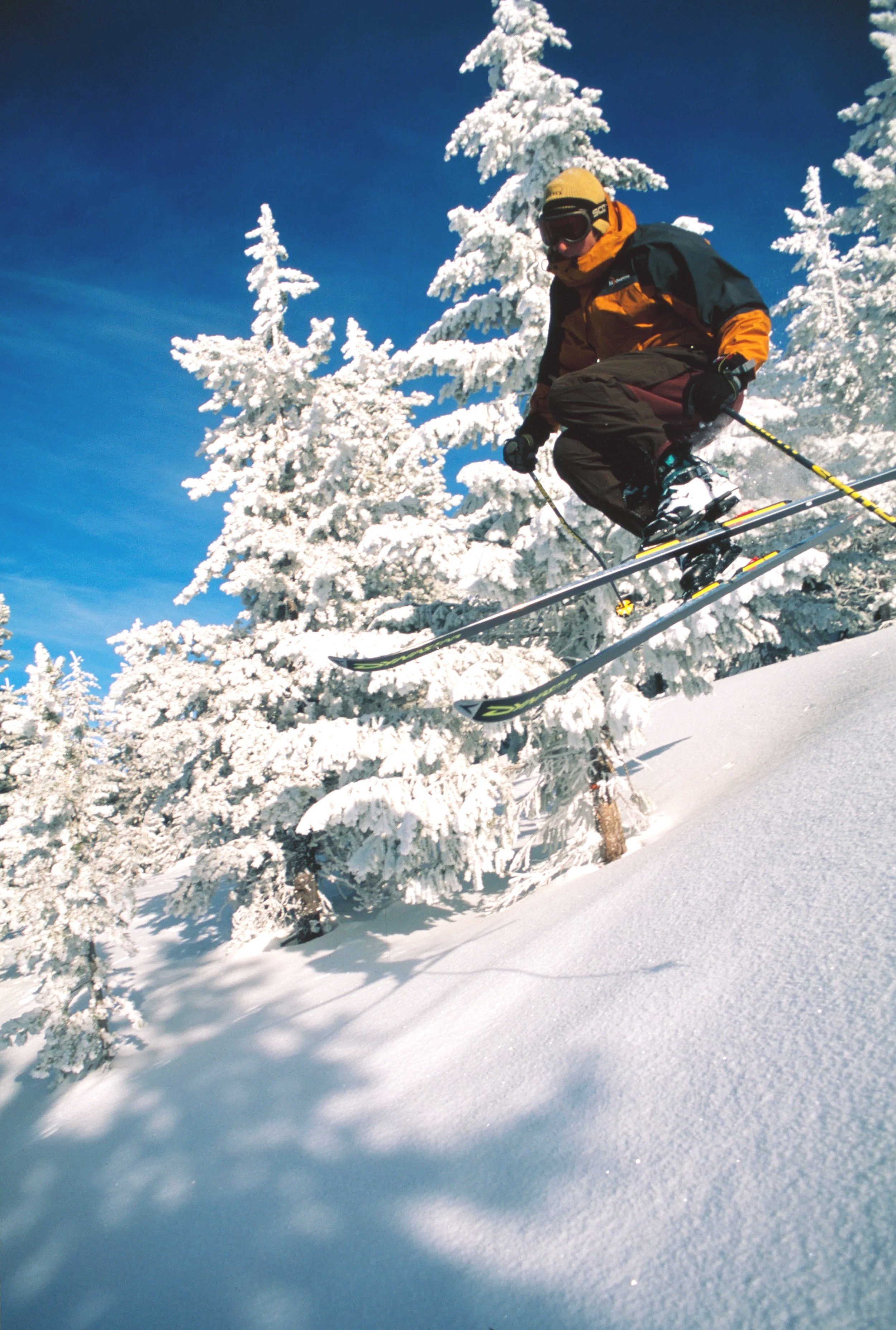
Because Turner is run by volunteer labor who hold down day jobs in Libby, the mountain is only open on Friday, Saturday and Sunday This combination of a four day break and a consistent maritime flow allows the snow to accumulate and it is a rare Friday indeed when locals aren’t greeted by least a foot of powder. As such Turner might offer the best lift assisted powder skiing in the U.S.
One grizzled local points out, “A few complain if they can’t find untracked on Sunday afternoon.” But it is this same cold powder that causes him to spend more time at Turner than he should. “My wife would like me to be home for dinner on time,” he confesses. “But her father plowed Turner’s access road for 20 years, so she understands. ”
“You’re new here,” Gary Altman said as he catches the T-Bar Between Altman’s wool hounds tooth suit and florid tie you would never guess this bespectacled lifty, makes his living as a biologist for Montana Fish and Game. Before I could admit I was, the T-Bar spring stretched for the 2200 vertical foot ride to the top. Built in 1960, Turners lone diesel powered T-Bar is the longest in the U.S.--a thigh smoking 5200 feet of steel to steel cable, shivs and wooden derricks.
The mile long T-bar to the summit is a fair trade for Turner’s cold, light snow. Runs radiate off the top in a 280 degree semi circle and in succession, I ski the north facing runs of “Mambo,” “Chan’s” and “Main’s” open powder fields that cascade toward Turner’s weathered base lodge. To the east toward the Cabinet Range, “No Go,” “Cornices”and “Pneumonia” gladed lines trace the low angle winter sun.
Cut by skiers, for skiers, these runs speak to the heart, soul and sweat equity of the resort. Running chain saws and weed eaters in summer’s dry heat is grueling work but a season’s pass is the payoff for five, eight hour days spent clearing glades and hacking brush. Or, man one of the T-Bar shacks for two hours and you can ski the rest of the day for free. Given Turner’s snow and terrain, it is not surprising that there is no shortage of volunteers.
Turner’s first board of directors basically wanted to go skiing near Libby and in 1958 Brothers Bob and Herb Neils of J. Neils Lumber Company, Elmer Anderson father of present mountain manager Dave Anderson, Jerry Rawles, Mick Mills and Dick Hennessy started to search for a likely looking mountain. They eventually picked Turner for two reasons. First, Pipe Creek Road skirted the mountain which meant they only had to build a two mile access spur. Then, Turner had burned off in 1910 and again in the 1940s, which facilitated a minimum of clearing. In 1960 the board formed a corporation that sold stock to finance and build a rope tow up one of the present day “Pig Chutes.” It was also agreed that labor would be traded out at a share per day. . One measure of their hard work is roughly 4000 shares are still outstanding.
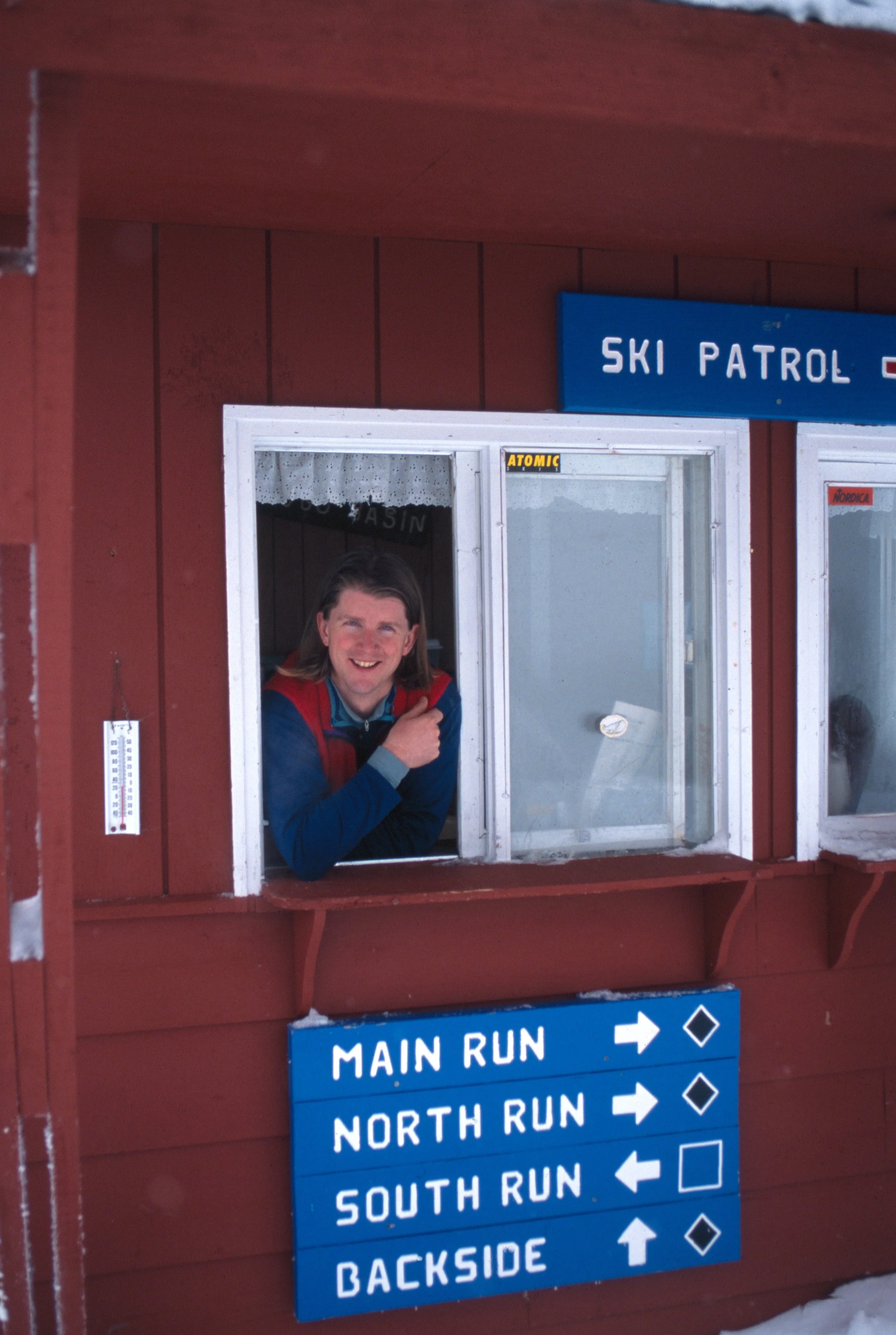
David Redman Wears a Variety of Hats…or none at all
In 1960 Turner’s first Board of Directors were torn between a Dopplemeyer and an E.G. Constam T-Bar--a lift company that has long since gone out of business. Based on the availability of parts, the Dopplemeyer might have been a better choice. Bruce Zwang, Dave’s younger brother and a Libby CPA admits, “The Constam probably won because of cost.” The board helped erect the T-Bar and because electricity stopped (and still does) fourteen miles down Pipe Creek Road, the J. Neils Lumber Company’s donated a spare bulldozer motor to drive the bull wheel, and a bulldozer to plow the road. Turner was in business.
In the sixties sweat equity ski resorts like Turner were common. In the forty years since, however, the majority either grew up or went out of business. Today, Turner’s only paid employee is Merlin Moore, a retired diesel mechanic who takes care of all the motor maintenance. And yet despite low annual skier counts and problematic cash flow, Turner found the means to expand.
In 2000, the T-bar was still sound but it was forty years old. The board of directors knew the T-bar cable needed to be replaced and debated whether Turner should spend $50,000 on a new cable, or a new chair.
Subscribing to the philosophy of ‘if you build it, they will come,” the board hoped a fixed grip double would draw skiers from the surrounding Big Mountain, Snow Bowl, Schweitzer, and Silver Mountain ski areas. After much discussion, in 1997 the board bought and re-engineered bits and pieces from three used double chairs. The problem was finding one 5000 feet long. Turner purchased surplus Riblet Lifts from Snoqualmie Pass, Alpental and Ski Acres then scavenged a drive system from Stevens Pass. Replacing the shiv bearings and adding a new cable, completed the
Transporting the Riblets across the Cascades to Libby proved to be a logistical nightmare but the board wanted to make a public commitment to the mountain and town. When the lift arrived it was stored at the Champion Lumber mill, which promptly collapsed when the owners couldn’t afford to shovel the massive wooden trussed roof.
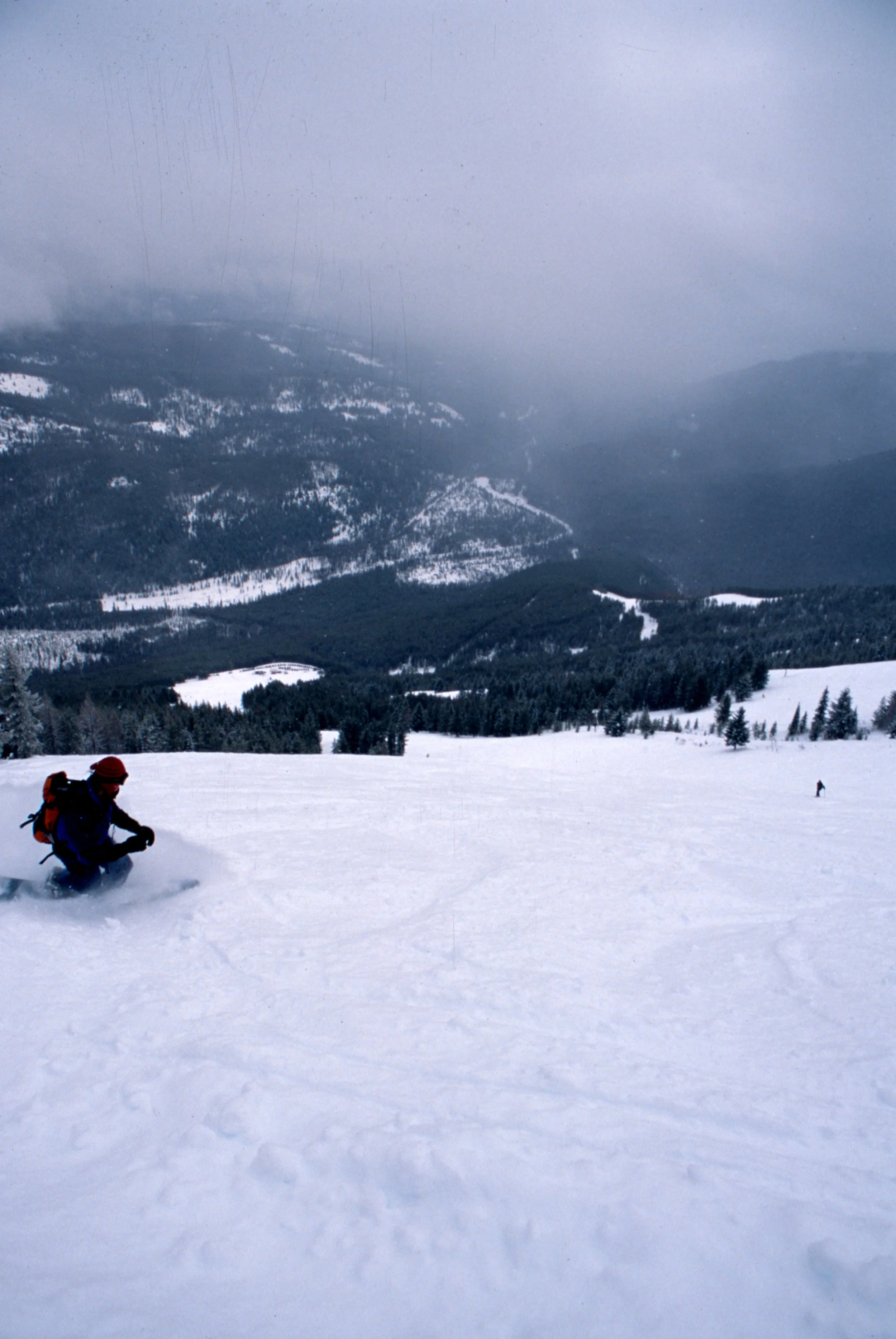
Late Sunday Afternoon Powder
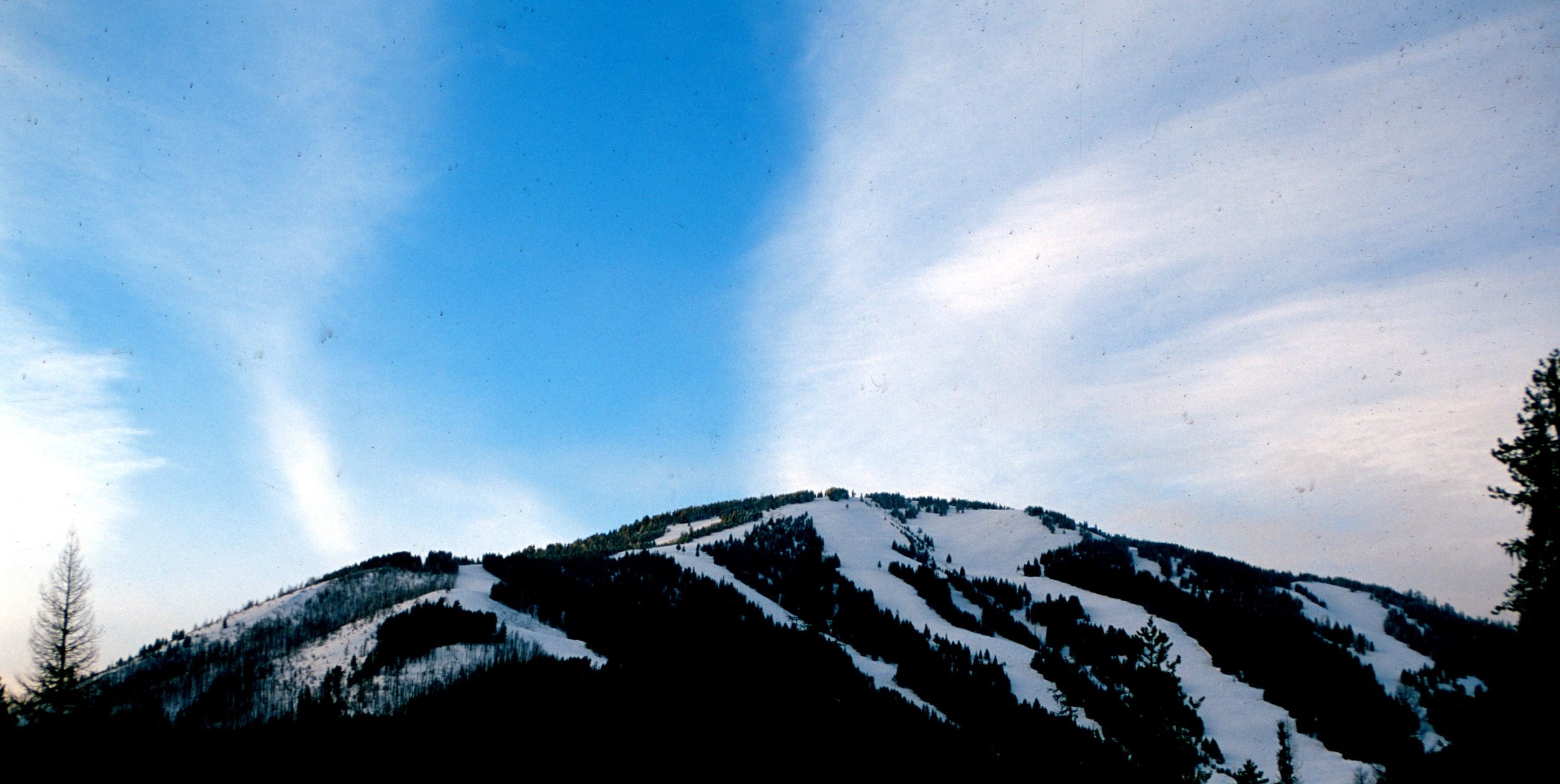
Turner Mountain From Pipe Creek Road
By July of 2001, the foundations were dug leaving the concrete bases, towers and stringing the cable. Most of the board members and skiers spent their vacations on the lift and used a track hoe to set the towers and an old logging forward loader to transport the 58 truckloads of concrete from the trucks halfway up mountain,
It occurs to me that Turner’s greatest asset is not the snow or terrain, but the self reliant men and women who willingly spend their summers driving nails, cutting brush, welding and painting. These are the children, grand children and friends of Turners first, can do board of directors, who simply wanted to go skiing. In hindsight, the Neil’s brothers, Anderson, Rawles, Mills and Hennessy were lucky to stumble upon Turner. But then, the same can be said of every skier since.