
Rusty Squire’s World Record
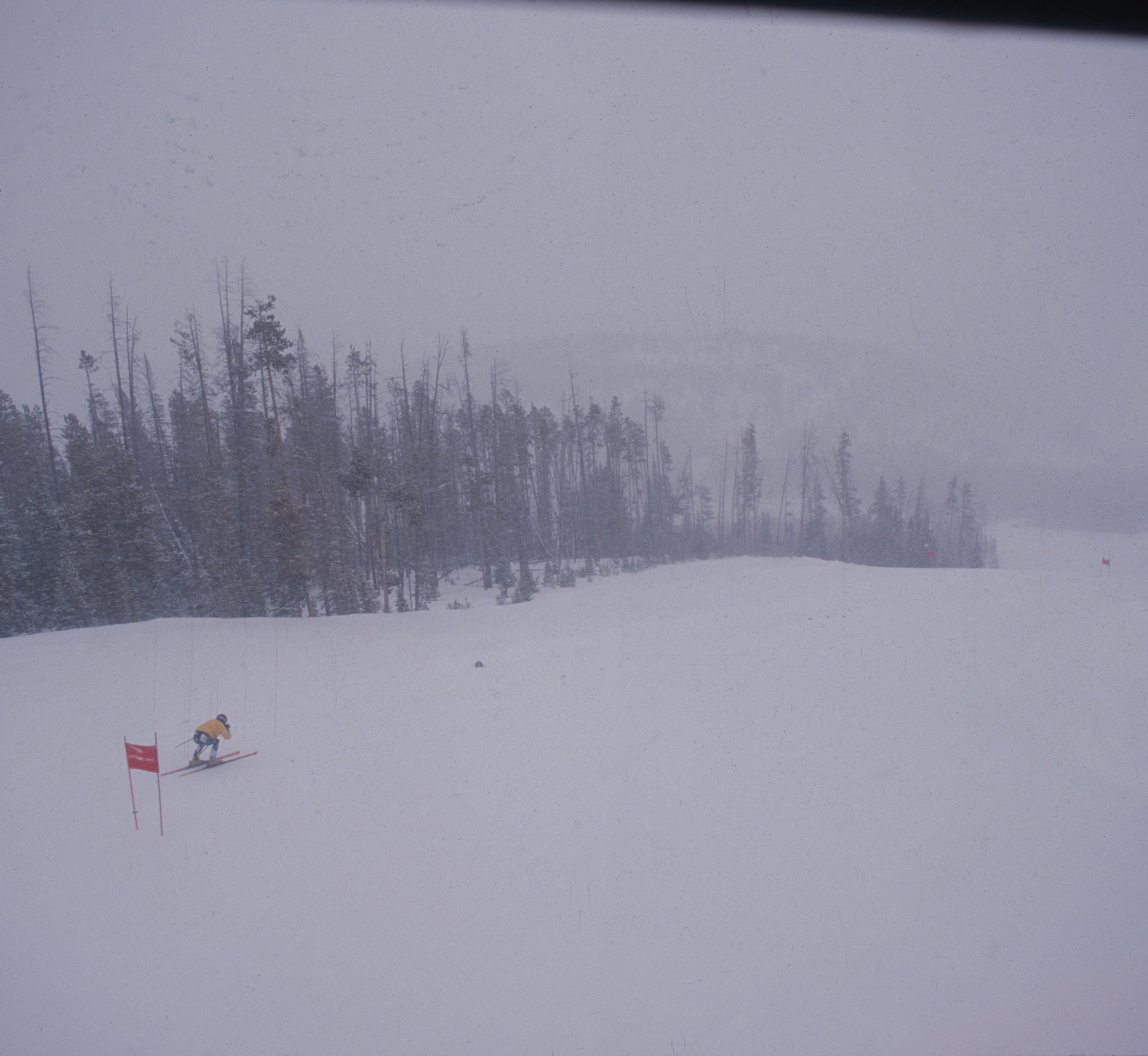
On April 6, 1998 sunrise appeared as a faint orange glow over Yellowstone National Park. A cold wind, heavy with the weight of forecast snow, blew from the south west. On Big Sky Montana’s dark Big Horn Run, sixty volunteers staked out fences, erected a tent, fueled generators and snowmobiles and checked radios. There was little talk as the day promised to be long, cold, snowy and wind burned. What Rusty Squire was about to attempt was at best fool hardy, at worst dangerous for by dark he hoped to ski 300,000 vertical feet.
Breaking the world vertical record speaks both to the heart and pain of downhill skiing. Attempting to ski 300,000 vertical feet in a single day is comparable to trying to high jump eight feet, run a sub two-hour marathon, or a 3:40 mile. It is a form of refined anaerobic torture. One hundred thousand vertical in a day is incredible, 200,000 sick. There is no synonym for 300,000. Somewhere around 250,000, the most superbly conditioned athlete’s lungs go, his back gives out, his concentration fades and his legs cannot hold the ski on edge.
Breaking the world vertical record speaks both to the heart and pain of downhill skiing. Attempting to ski 300,000 vertical feet in a single day is comparable to trying to high jump eight feet, run a sub two-hour marathon, or a 3:40 mile. It is a form of refined anaerobic torture. One hundred thousand vertical in a day is incredible, 200,000 sick. There is no synonym for 300,000. Somewhere around 250,000, the most superbly conditioned athlete’s lungs go, his back gives out, his concentration fades and his legs cannot hold the ski on edge.
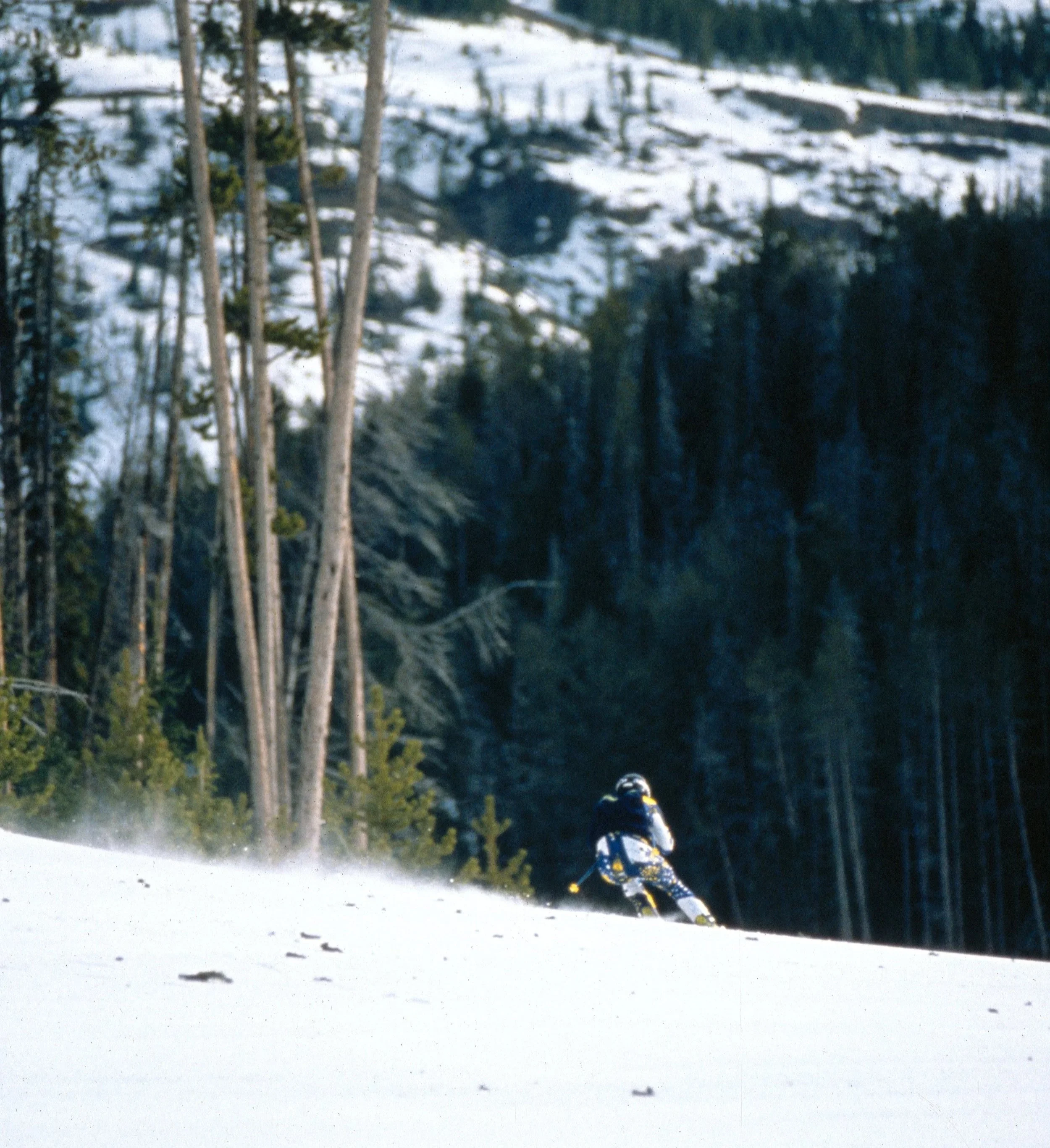
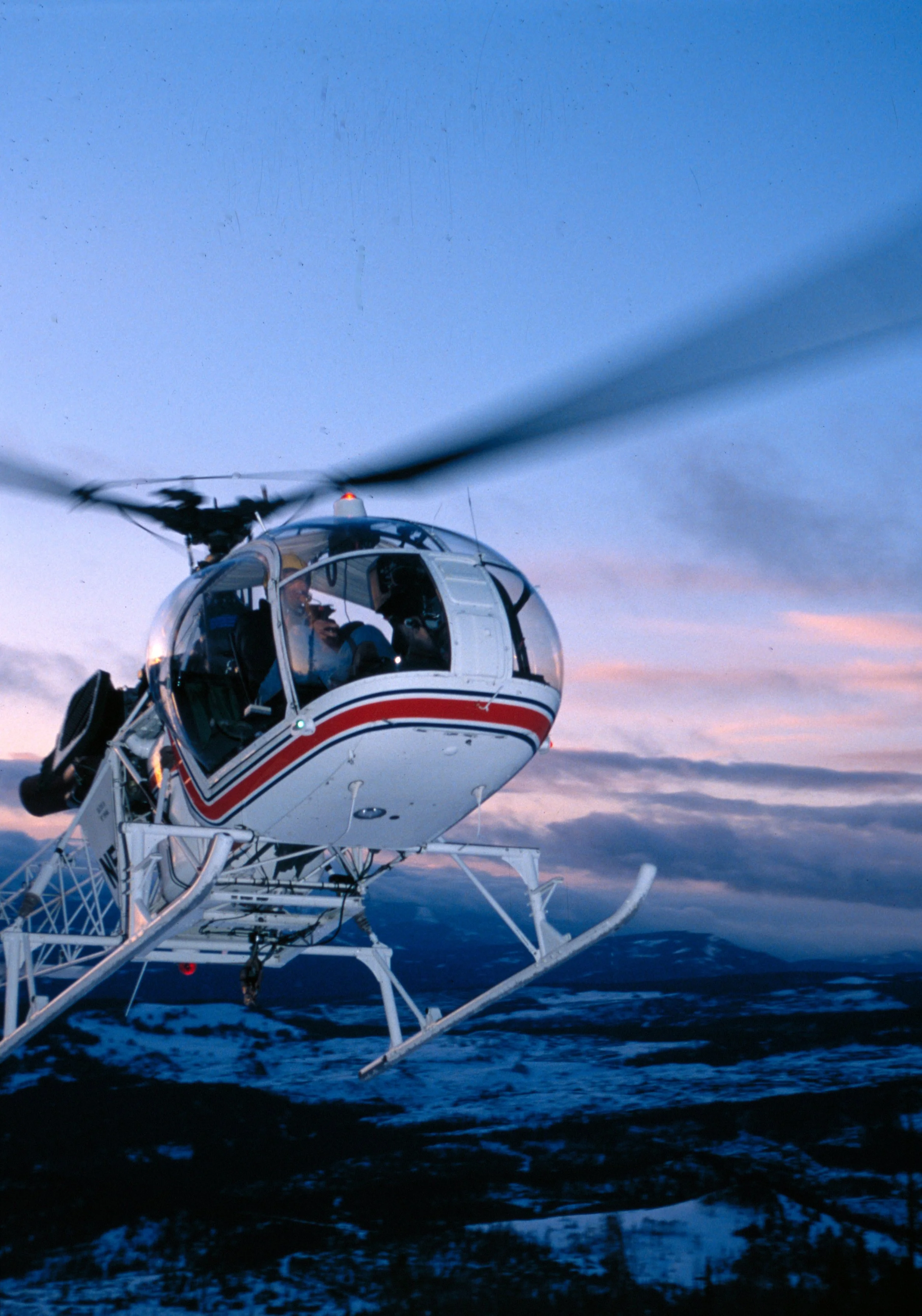
The first gray light had barely touched Big Horn’s groomed east face at 7:00 a.m when Squire started. The first run amounted to a forty mile an hour inspection tour around volunteers who were setting pine boughs to aid visibility. A snowmobile was waiting at the bottom to ferry him back to the top for the first three runs. The Lama landed on the lower pad at 7:15, and the attempt began in earnest.
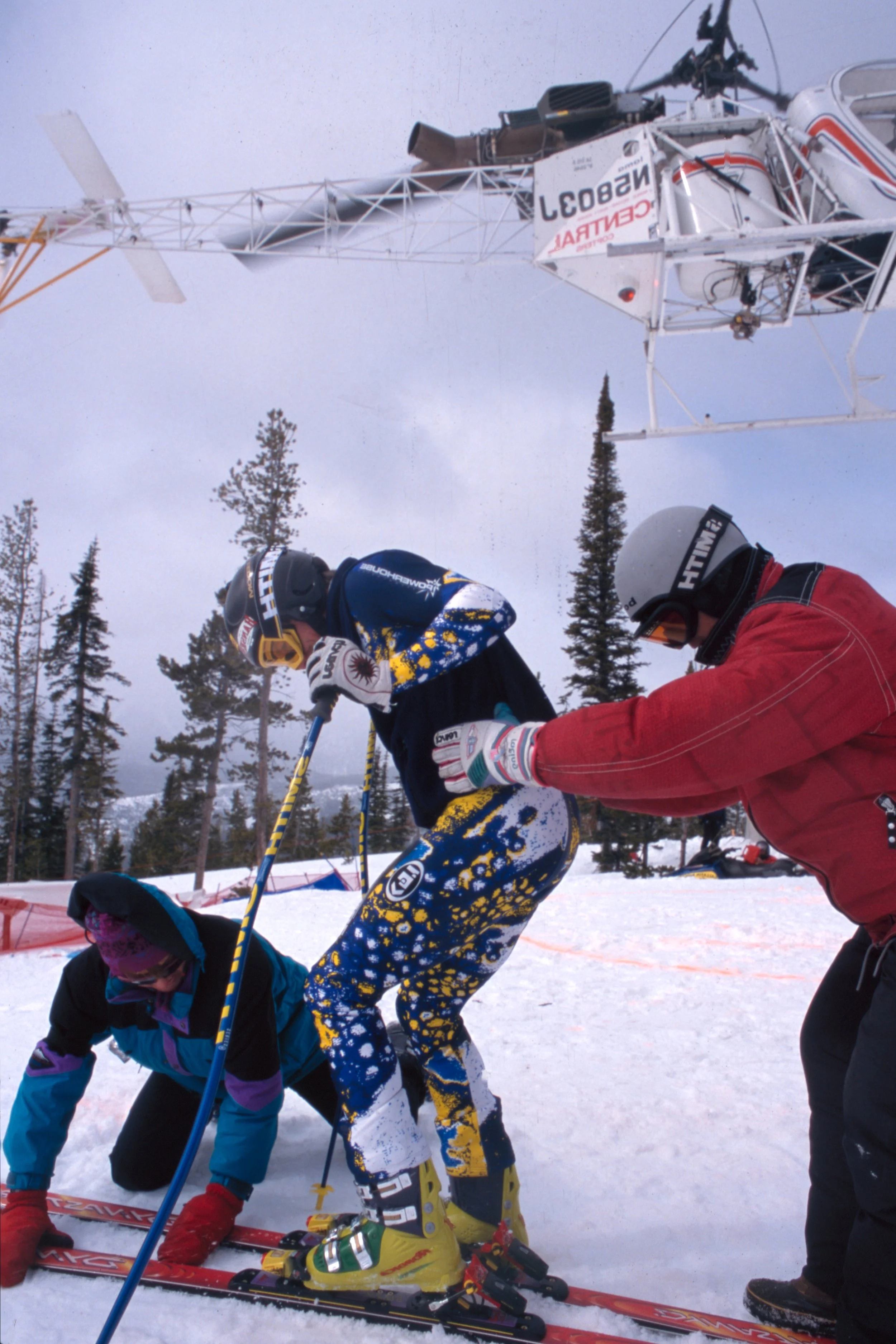
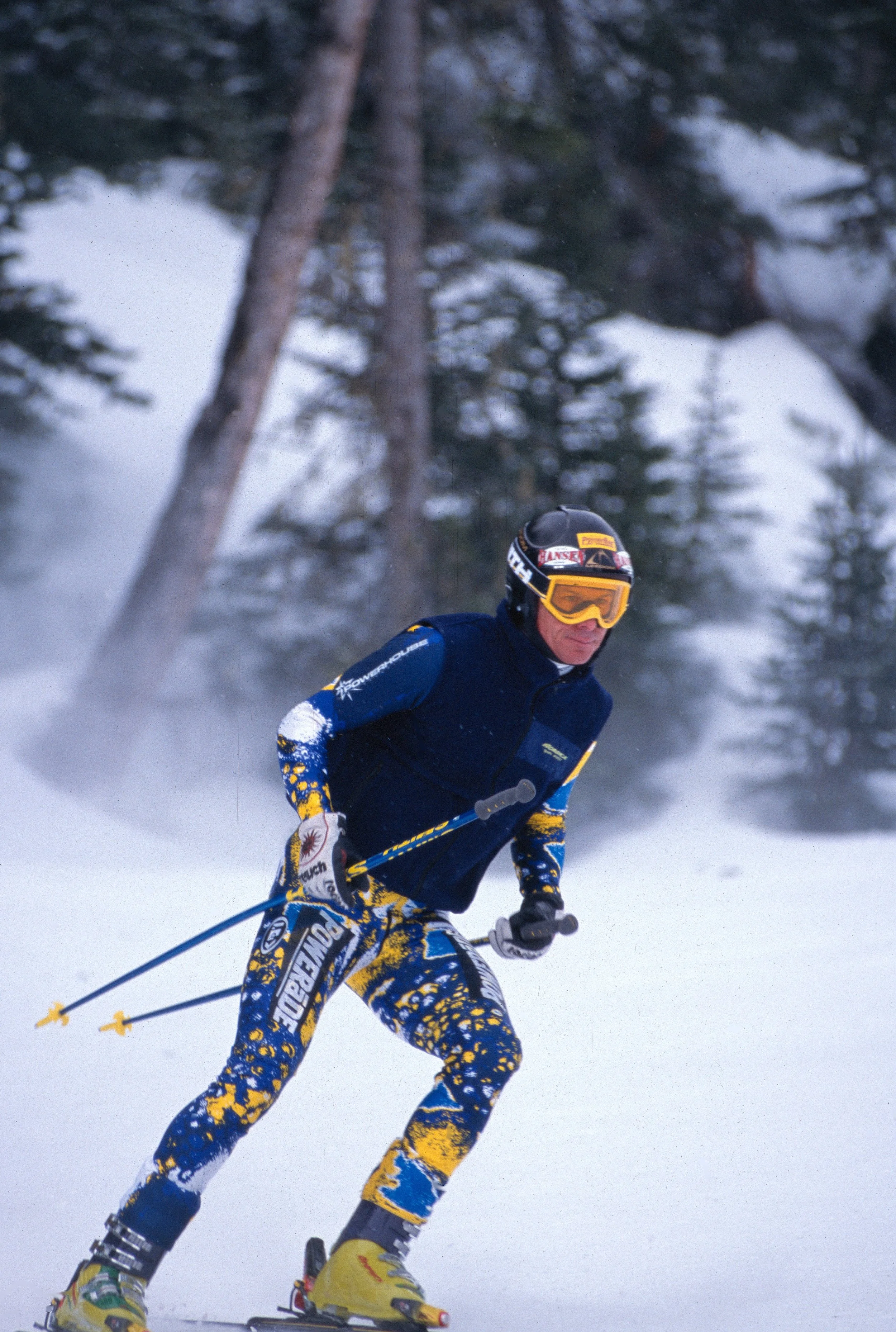
Though Squire devoted much of his twenties to the U.S. Ski Team, for the past decade he has worked as stockbroker. Despite his six a.m. to five p.m. Work weeks, Squire continued to explore the limits of Extreme. During the past two years alone, Squire has skied a dozen hair ball chutes, endoed off a speeding motorcycle and been chased down a granite cliff by two grizzlies.
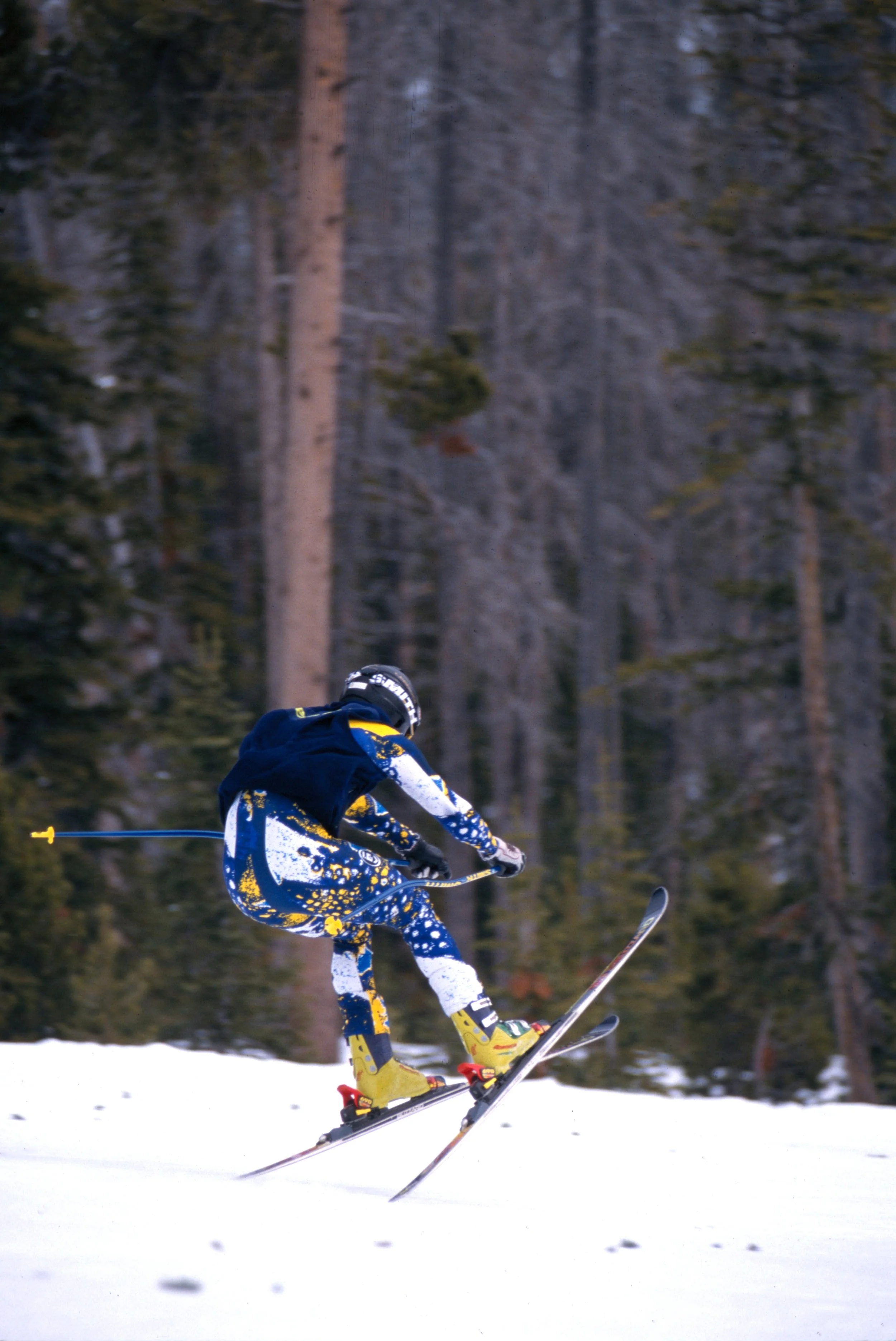
Nothing however, scared him half as much as his third run down Big Horn. Holding an eighty mile an hour tuck down the face, he lost concentration, flew off a bump and rocked into the back seat. At eighty miles an hour, he had a second to think, “It’s over before I even got started.” Then his left ski floated up in his face.
How he saved it is a mystery. It might have been experience, luck, or a guardian angel that forced his hands forward and ski tip back onto the snow. Sinking back into a tuck, he took a shaky breath and accelerated toward the waiting ship. During the next ten runs he tried to memorize Big Horn’s imperfections--the ruts, ice balls or pitch changes that could throw him into his face. By twenty-five, he had started to relax. By fifty he had stopped thinking about anything but the next transition or D.J. Appleman.
When Russ last spoke to the charismatic owner of Scissor Bills restaurant D.J. had less than a week to live. By then the cancer had run its course and D.J. was counting time in hours not days. Before he was diagnosed with liposarcoma, he had devoted much of his time and a large part of his income to helping kids with cancer.
What Russ proposed surprised his fading friend. Taking his years on the U.S. Ski Team, the U.S. Pro Tour, the Iron Skier, 24 hours of Aspen and International Powder Eights into account, he improvised. “D.J. I don’t know if it would help,” he said. “But I want to try and set a world vertical record to benefit Eagle Mount Big Sky Cancer Kids.” (Eagle Mount is a charity which underwrites the cost for kids to come to Montana with their families to white water raft, fish for trout, horseback ride and ski.)
Weakened by the cancer, D.J. managed. “That would be incredible.”
It was the last time they spoke. A week later Appleman died. After the service, Russ was left with little more than his memories and the promise he had made. Without it and his empathy for sick kids, he would never have attempted the record. There was never any question of personal gain. His ego wasn’t strong enough to first start then continue the weight lifting bicycling and Nordic skiing program he would need to beat Mark Bennett’s record. Squire believed, without a financial commitment, he couldn’t make the mental commitment and seeded the fund with his own money. In the months following D.J.’s death, Squires made hundreds of phone calls asking for commitments from sponsors and volunteers. He appraoched Frank Silva, his close friend and Powder Eight partner, to take charge of course safety--the volunteers, helicopters, course conditions and a dozen other details that might derail the attempt. He convinced Ron Hines and Patrice Lynn to keep time and count the runs and Tim Collins, who tunes skis at PHD in Bozeman to wax and file his skis.
It was during run 70 (105,000 vertical) that he nearly quit. Flying off the high speed bump, his stomach revolted. At seventy miles an hour, he hurled a wicked combination of ginseng gel, energy bars, herbs, bacon, eggs, toast and Advil onto the course.
He remembers, “I thought I was ok until I felt a second wave and got sick again. It was as if my stomach suddenly realized we weren’t stopping.”
Squire knew if he continued to hurl there was no way he would reach 200,000, much less 300,000 feet. On the helicopter ride up he tried to saturate his blood by breathing oxygen and managed to drank a little water but, during the next run, while his stomach revolted, he didn’t vomit.
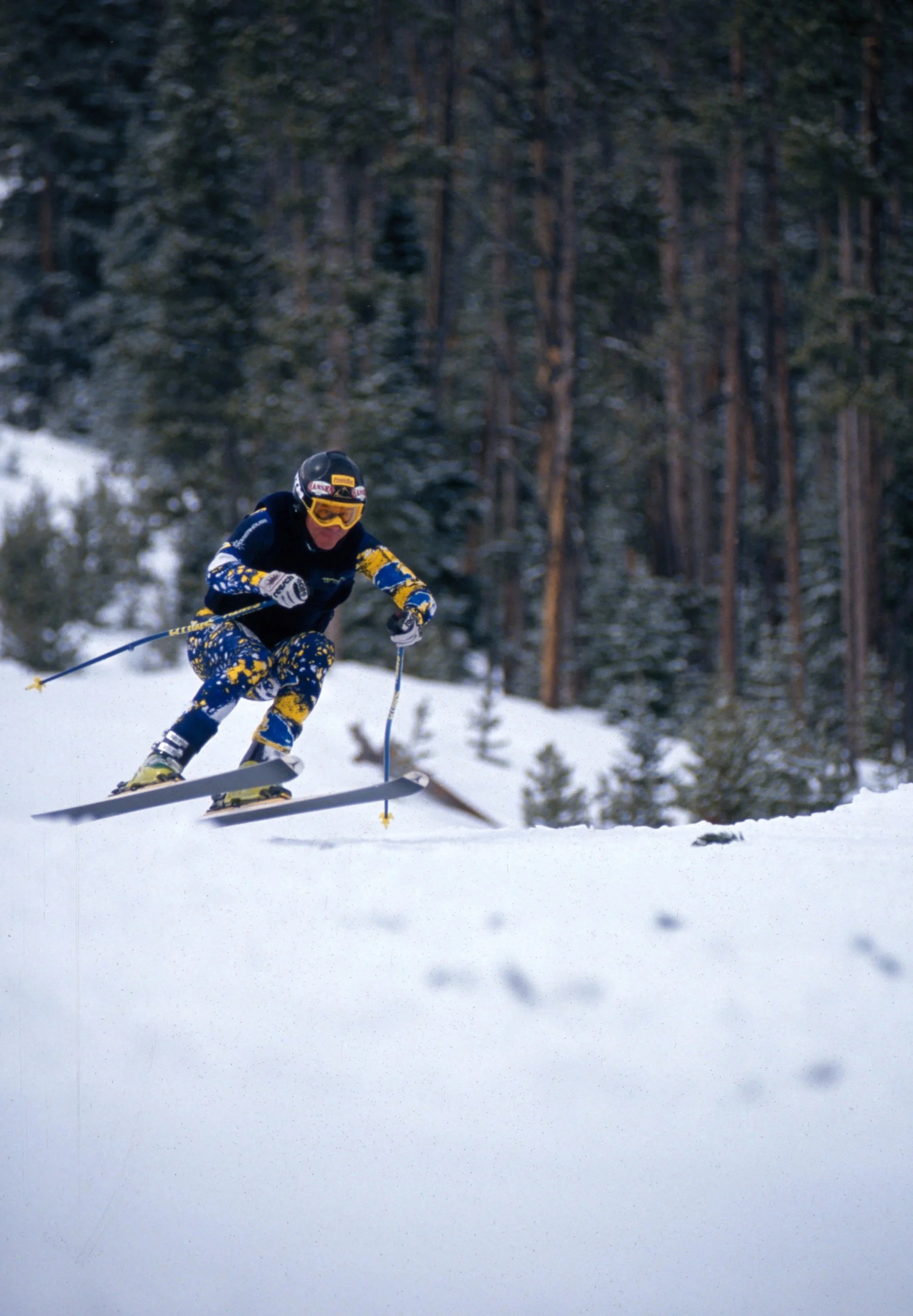
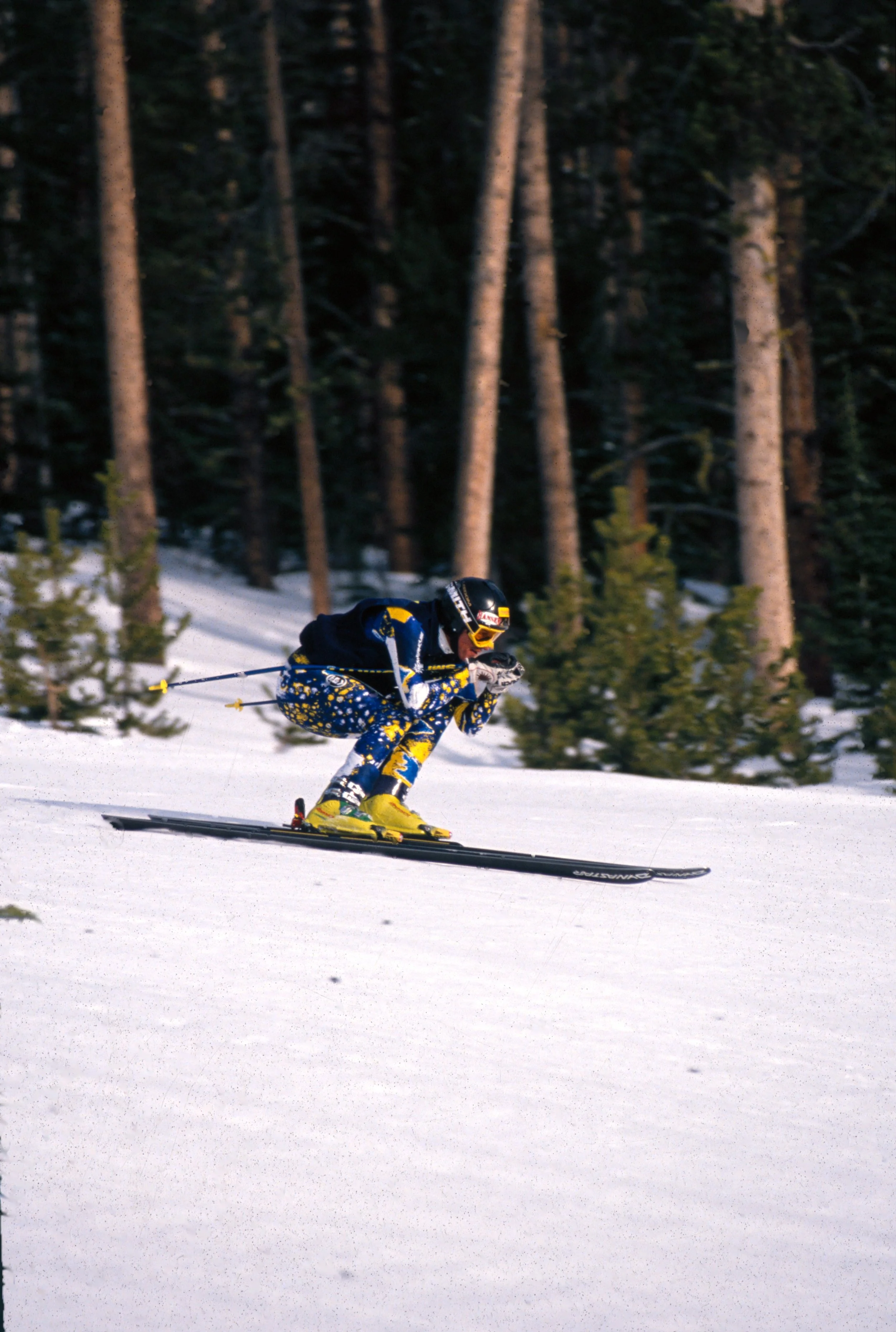
Since little time was saved by poling and skating across the upper flats, he stood to rest his thighs. Then, as soon as he broke over onto the headwall, he grabbed a bullet and within ten seconds was up to seventy miles an hour. The bump came fast. It was the crux--the choke point of the mile course where the wind force him into the back seat. Arcing around the course’s lone big corner, he looked for the smoothest line. Here, where his speed touched eighty miles an hour, a mistake could not only cost him the attempt but send him to the hospital.
Squire knew precision was critical. The tuck, jumps and corners needed to mirror the run before, the one after and the one a hundred laps into the future. At the top of Big Horn, the helicopter settled onto the landing pad, he reached for his seat belt, Steve Figgins and Ross Pfohl opened the door and helped him climb down onto the pad and into his skis. Ten seconds after the Lama landed, he pushed away from the start.
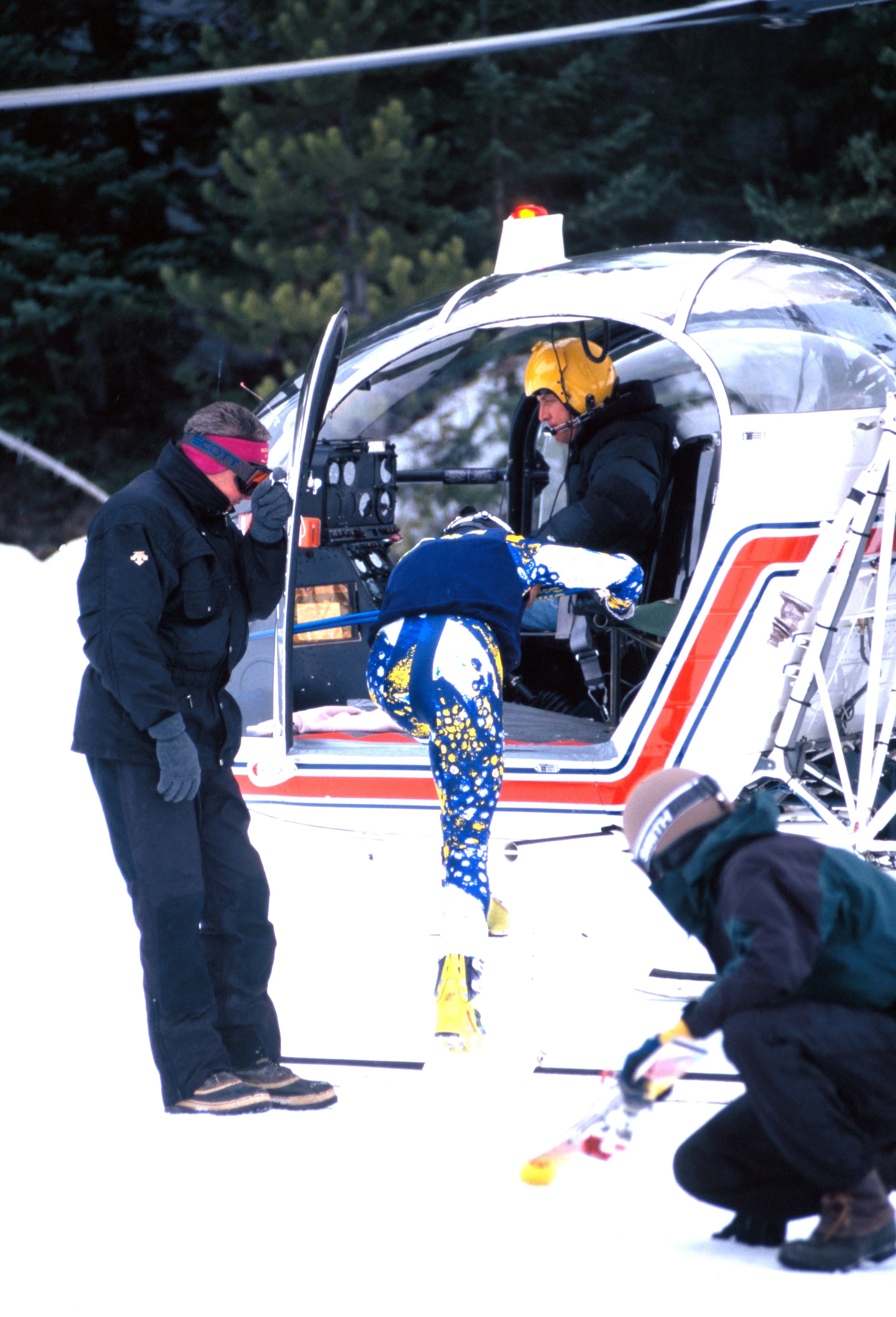
The bottom of the course arrived in a blur and he rose out of the tuck. The wind slammed into his body and he tried to remember which leg he used last to stop. To save strength, he knew it was important to alternate. His thighs burned as he began to turn, the speed bled off and he slid underneath the Lama’s spinning rotor to the skid where Peter Zemlock and Tyler Hiller released his bindings and helped him into the ship. The Lama lifted and in the minute it took to reach the pad, Russ breathed oxygen, took a drink of Powerade and a squirt of Power Gel. Then the ship flared above the pad and he shut off the oxygen, grabbed his poles and as soon as the door opened, climbed out.
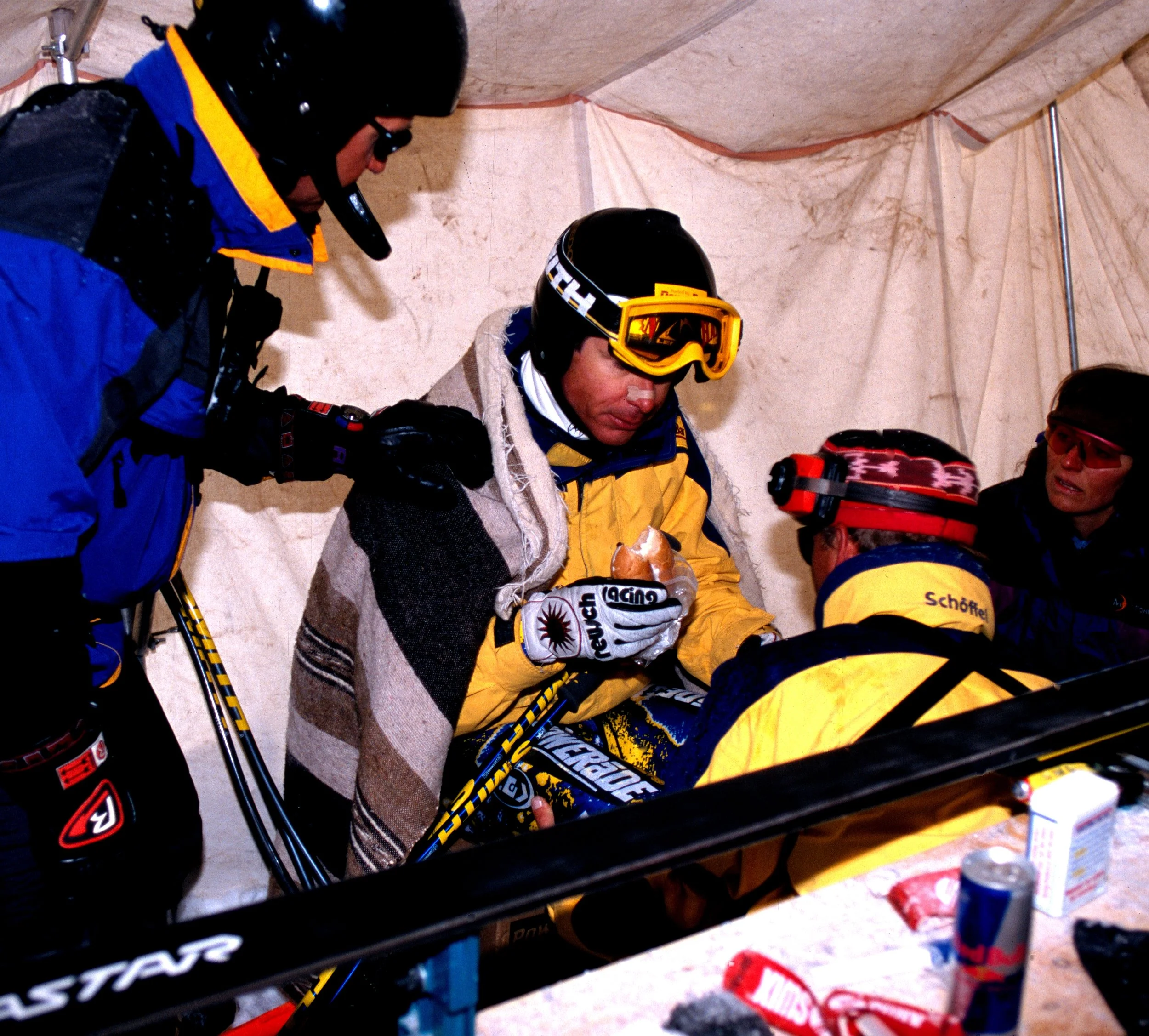
Throughout the late afternoon he maintained 33,000 feet per hour. Shadows lengthened, the wind and snow increased but the number of runs per hour did not vary. The ship would appear out of the swirling clouds and land and Russ would step into his skis and go. Cheers and whistles erupted when he broke Mark Bennett’s record. Stepping out of the ship on his 200th run, he took stock of the situation. The fog, snow, cold and rotor blast had taken a toll on the crew but, by then, the record had assumed a life of its own. After ten hours, he had skied the equivalent of ten Everest's. And maintaining that pace he continued to break records. By then he had skied the most runs in one hour, the most in ten hours, the most in 24 hours. Run 215 equaled 322,500 feet. Before he started, Squire had hoped to ski 350,000. He was now within twenty runs of that goal. Each hour added 30,000 vertical. If he didn’t fall, the light didn’t fail, or the building storm didn’t shut down the attempt, 400,000 feet might be possible.
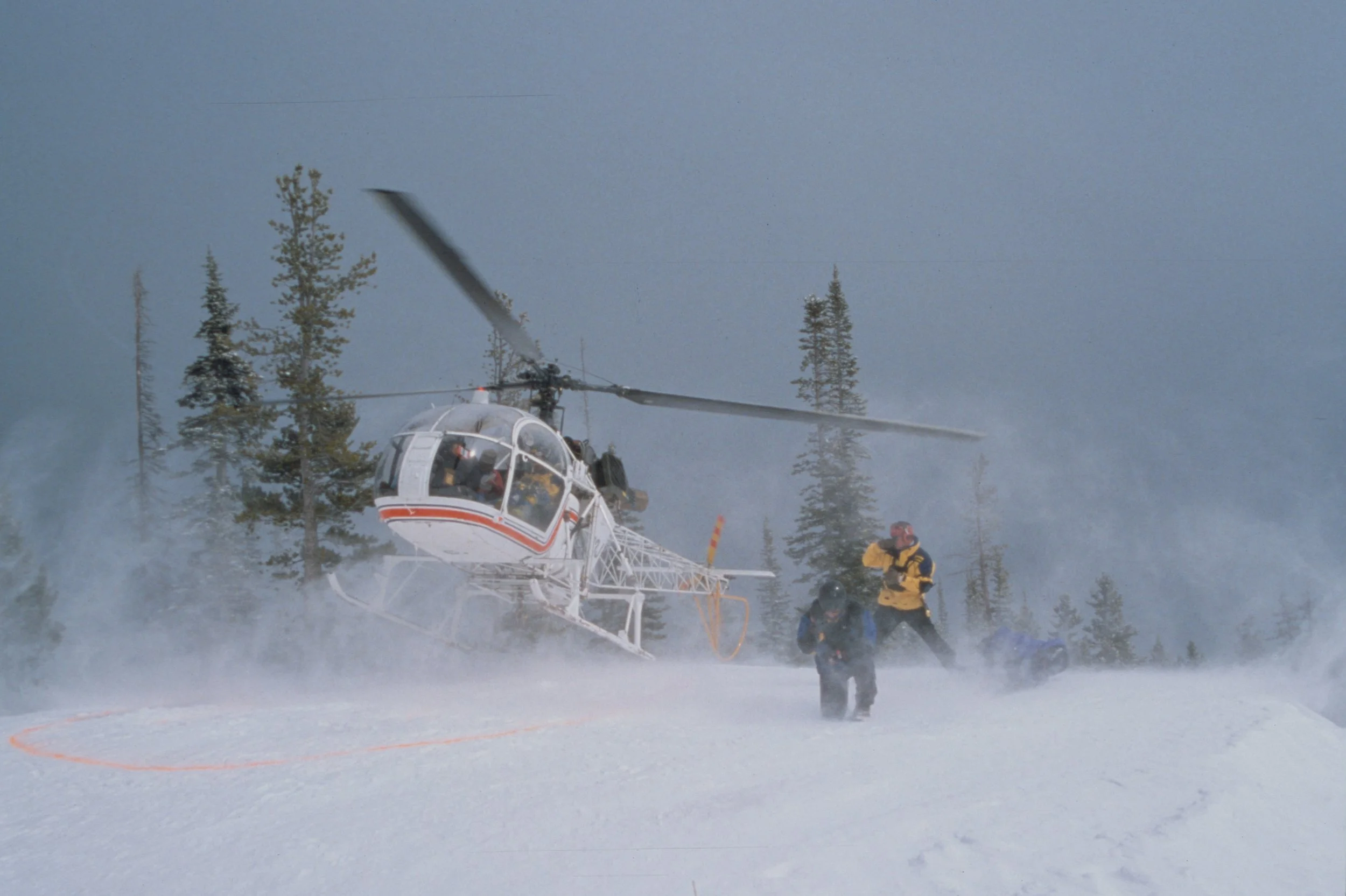
The runs continued. By 200,000 Squires thighs and knees were numb, his back ached and he was having trouble fighting off the cold. Massage therapist Debbie Schope climbed into the helicopter to work on his legs. At 225,000, he took his only break. More than his near crash, or nausea, this moment when he just learned that the Lama’s altimeter calculated the total vertical at 1450 instead of 1500 served as the day’s low point. Multiplied by 220 runs the discrepancy amounted to 11,000 feet. Depressed and hypothermic, Russ shivered in the tent for five minutes while the Lama refueled. Then, at the sound of the approaching rotor, he picked up his poles and stepped into his skis.
By 5:00 p.m., however, the light was gone and Squire couldn’t stop shivering. In the end, it wasn’t his sore legs, the fading light or cold that stopped him. It was the money. It had taken eight months to raise $16,000--$11,000 for the helicopter, $5000 to seed the scholarship. Each hour cost $1000. To reach 400,000 would have require another $2000. It was money Squire didn’t have.
To feed the record, he would have had to raid the scholarship fund. In hindsight, he says, “The attempt was both a memorial to D.J., and a chance to help cancer kids. We had a budget of $11,000. When that was spent, the attempt ended.”
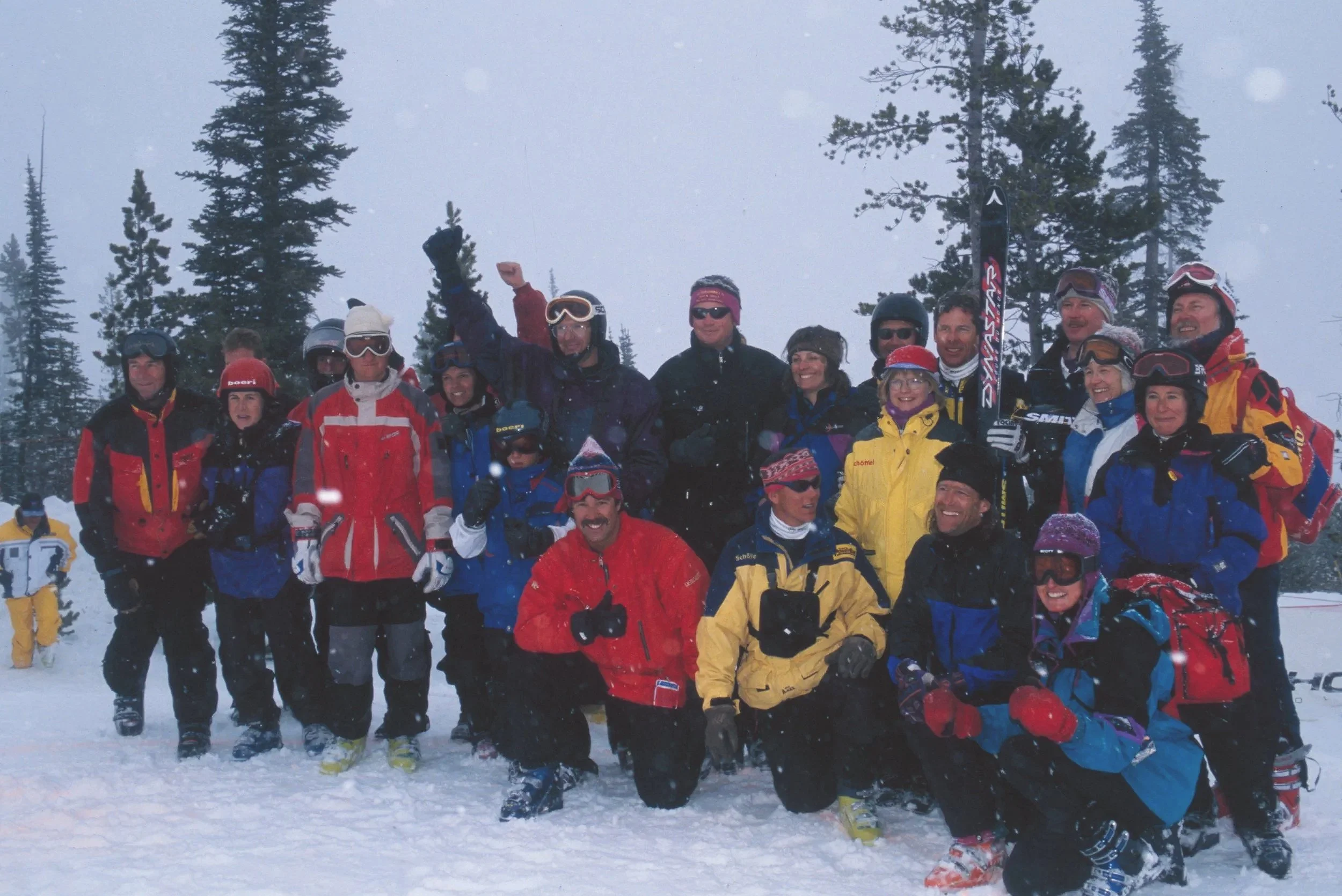
As partial thanks, Squire kept skiing to give the volunteers rides in the helicopter. At 220 Frank Silva, studied the fading visibility and shivering volunteers and called it a day. Russ’ pregnant wife Elaine rode with him on the last flight and the attempt ended as calmly as it had begun. The volunteers stayed to break down the tent and haul away the fences while Russ stiffly climbed to the top of Andesite Mountain and skied down to the Huntley Lodge.
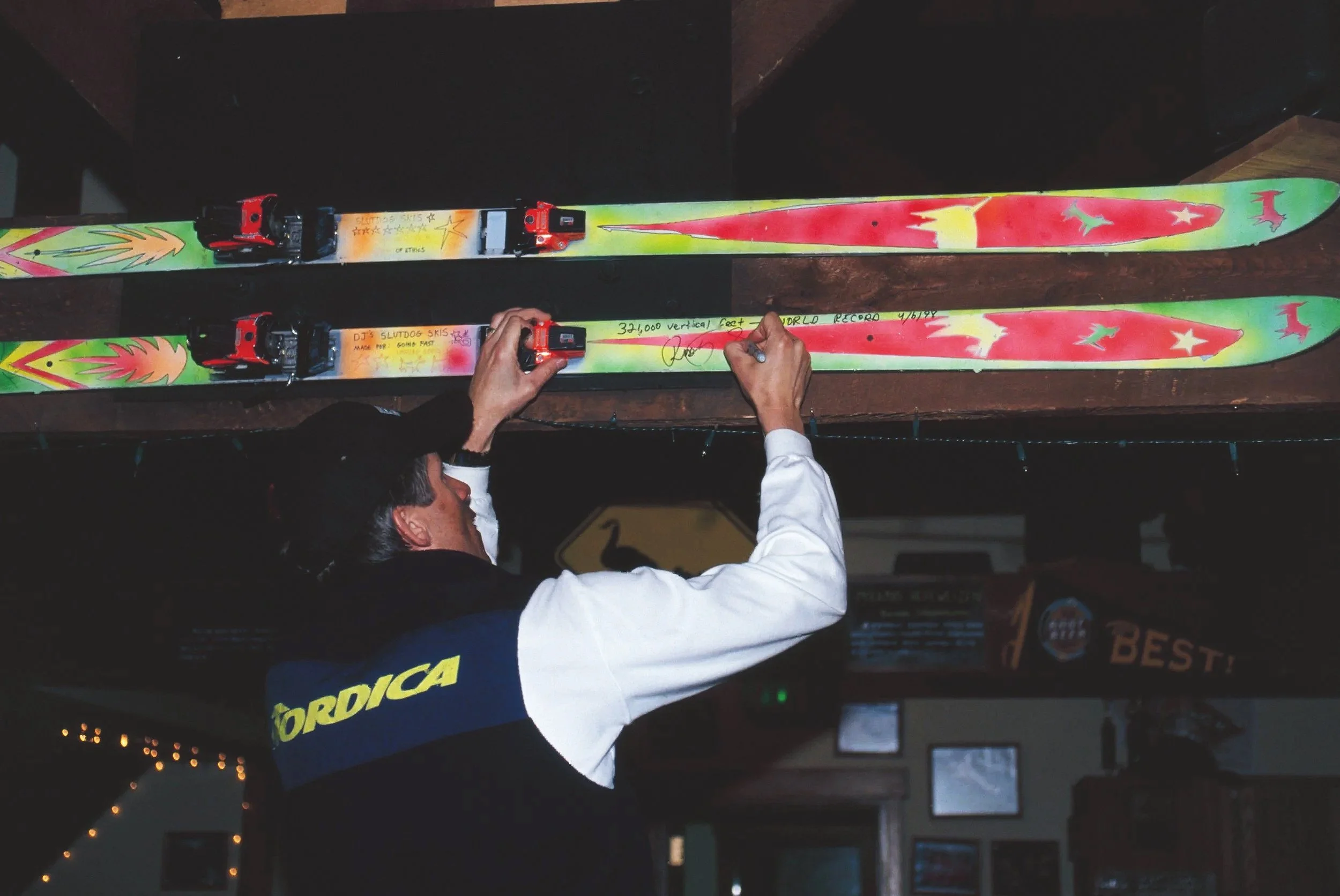
An hour later he appeared at the celebration party at Scissor Bills, D.J. Appleman’s bar and restaurant. Someone pushed a beer into his hand but before he toasted the record, he studied D.J.s skis which were screwed to the wall then climbed onto a stool and autographed them.
To make a donation to Eagle Mount Cancer Kids contact;
Eagle Mount Cancer Kids
C/O Healing Through Love and Laughter
6901 Goldenstein Lane
Bozeman, Montana
59715
Email: eaglemount@eaglemount.org
General Phone: (406) 586-1781