
The Secret of Schladming
Wilfred Hartweger and I are waiting for the sheer faces below Hauser Kaibling’s 6550 foot summit to clear. Here, high above Schladming, Austria a raging storm has pushed the danger of avalanches into the red zone. Above treeline in Central Austria’s Hohe Tauern range, three feet of fresh snow is maintaining a tenuous grip on the underlying layer of sun baked crust. Between skiing the pistes and coveting the waist deep powder on the lee faces, however, Wilfred and I are just about waited out.
It is mid morning when the swirling clouds part long enough to glimpse the “Ostang.” This high steep run plummets down the Ennslingalm in steep, untracked gullies that then stair step through tempting, untracked glades. An ex-racer who now works as an owner/instructor at the local ski school, Wilfred was born and raised in the shadow of Hauser Kaibling, knows when the mountain is safe, and when it isn’t. Reverting to English colored by a faint Australian accent (a souvenir of summers spent teaching at Perisher Ski Resort outside Sydney) he now decides, “It is too dangerous.” Then turning his back to the summit, he muses out loud, “But there might be a place.”
Below Hauser Kaibling’s Krummholzhutte Hotel where the cat track takes a hard sweeping right, we go left--off the lip and up to our waists. Protected by towering old growth fir, we link six turns in a small meadow then fade into the woods where a crumbling log cabin bears witness to the past centuries. What would the superstitious tin miners who shivered behind it’s drafty walls, make of two bright specters flying between the trees? Almost certainly that we were spirits--haunts of the storm up to no good. Even two centuries later, it is close to the truth and with the snow blowing over our heads we explore a second untracked meadow then skirt a cliff band and slip back onto the groomed piste.
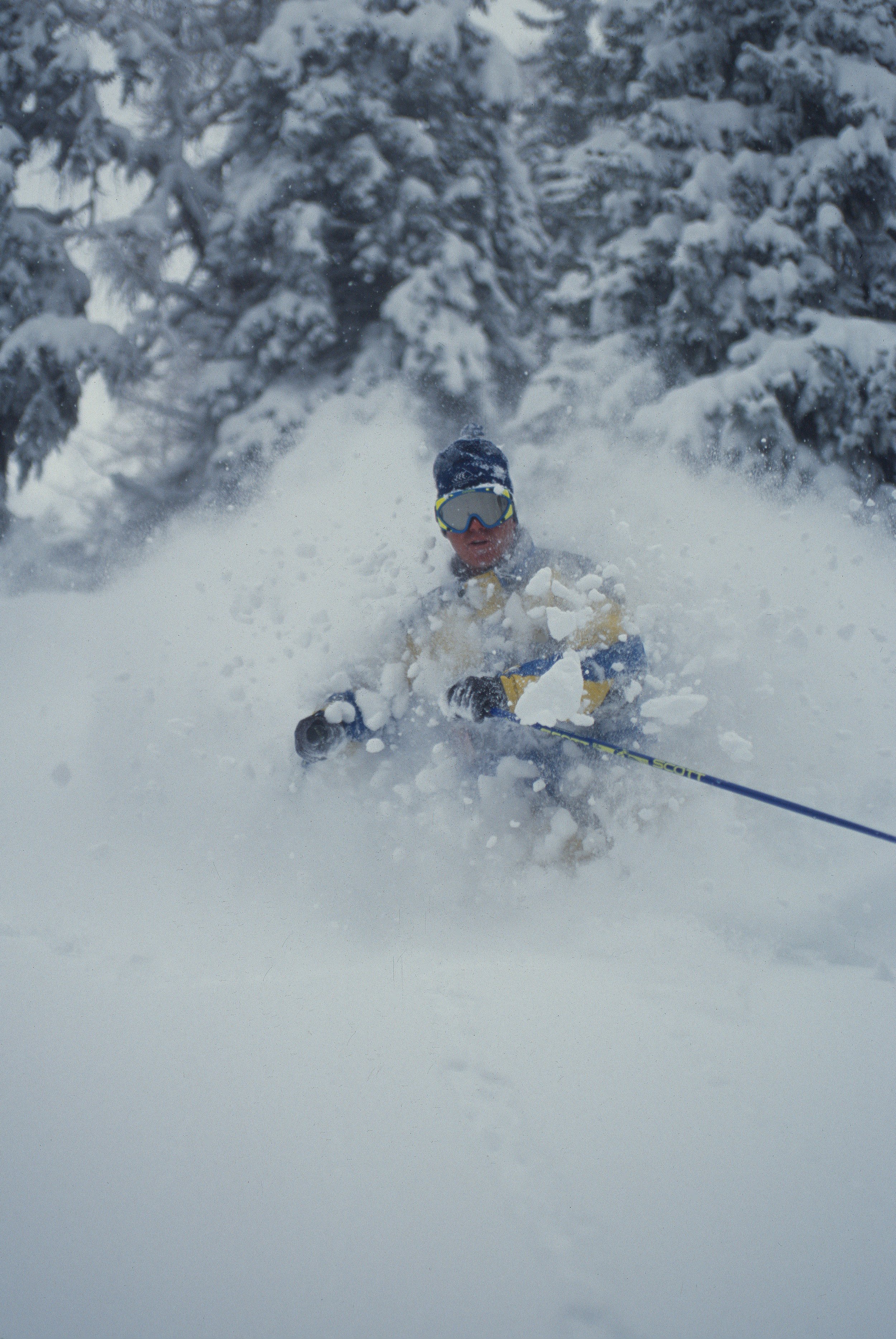
Wilfred Hartweger’s Secret Stash
Brushing the snow from his hat, goggles and ski suit, Wilfred inquires, “You will not give any directions to this run? It is,” he searches for a word, then picks second best. “Private.”
“No, of course not,” I promise. “Can we can ski it again?”
“That should not be a problem,” Wilfred nods in agreement.
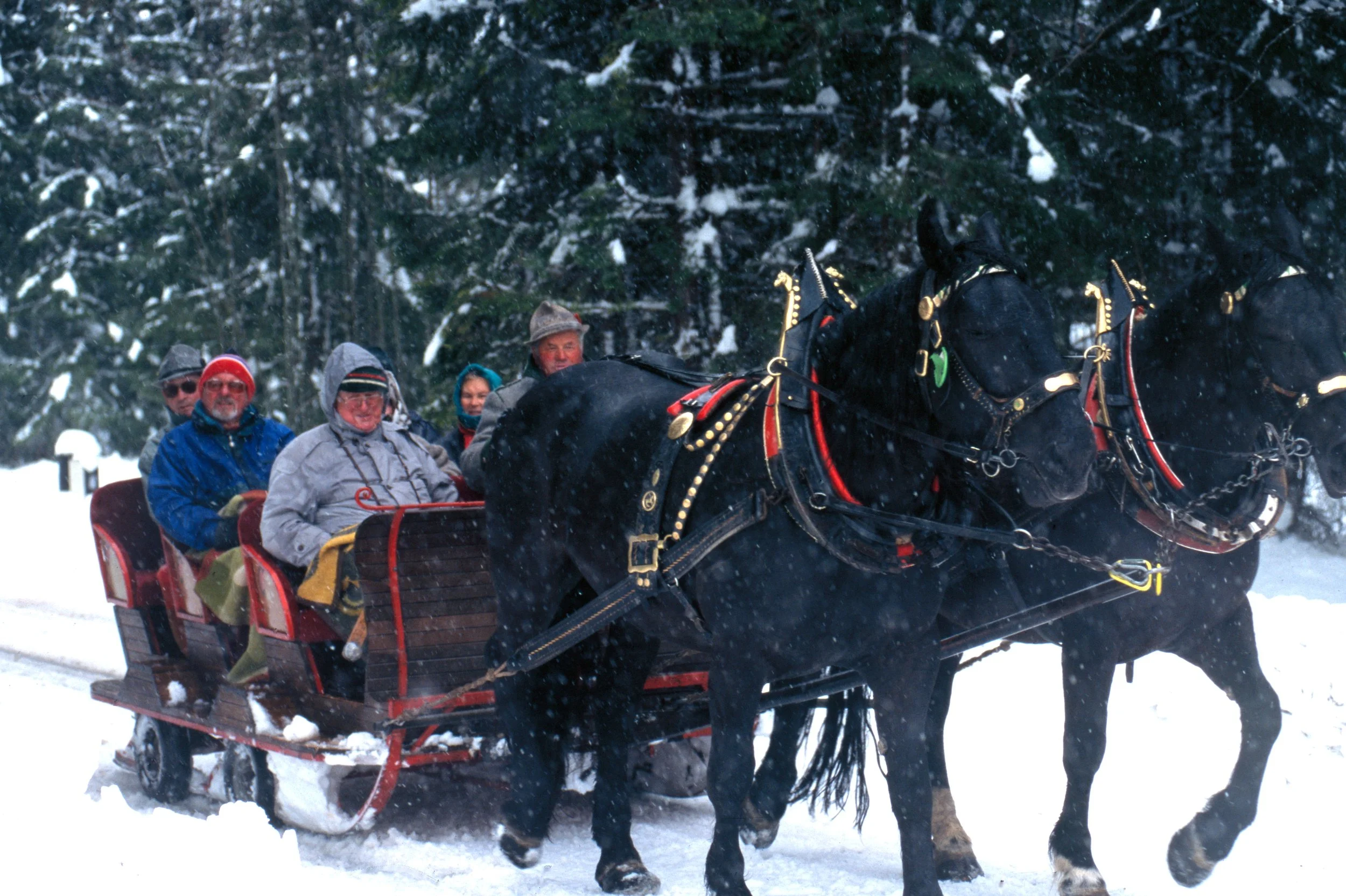
It may sound like a cliche to claim that Schladming is Austria’s best kept secret but in this case it’s true. U.S. Skiers know all about Innsbruck, Kitzbuhel and St. Anton but Schladming? If asked to define it by the way it twists your tongue, most Americans would guess it was either a potato pie, or a cream desert. The truth is, Schladming is a small Austrian village set in the shadow of a huge, four mountain interconnect. Less expensive than the more famous resorts that surround Salzburg--Bad Gastein, Kitzbühel and Saalbach-Hinterglemm, one measure of Schladming’s appeal is, forty five percent of the people who ski here are Austrian. The locals come for the Höhe Tauern’s deep, dry snow and rolling runs, the melody of spoken German, the chance to buy a traditional boiled wool jacket or skirts or to enjoy the horse drawn sleighs, the local schnapps, beer, cuisine and apre accordions. But even this image is too contrived--too travelogue. The best description of Schladming, is the simplest. It’s authentic.
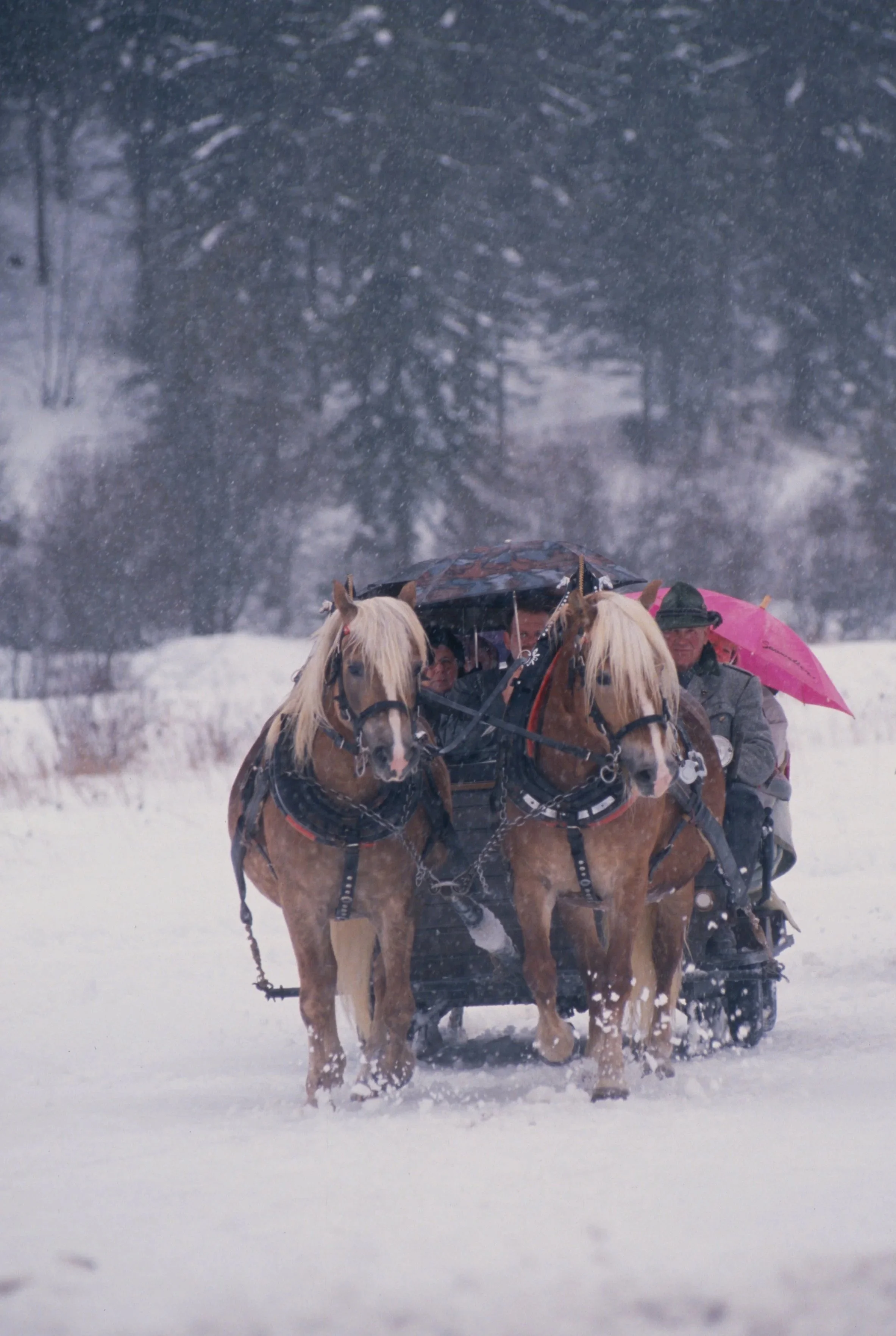
Schladming’s Preferred mode of Transportation
Located in the center of the Dachstein Tauern Region, with access through Salzburg on Swissair, Schladming sits in the deep glaciated Enns Valley that for centuries has served as the main trade route between Salzburg, Graz and Northern Italy. With roughly 4500 inhabitants who are employed in tourism and agriculture, though it prefers to be called a town, Schladming is closer to a village. In fact, if you do not pay close attention to the road signs on Highway 146, or know to look for the twin steeples that rise above the village center, you can easily drive past Schladming.
Though the name “Schladming” is found in a legal transcript dated 1322, Celtic rock carvings discovered in Styria (of which Schladming is a part) pushes local habitation back at least 4000 years. Tin mining helped the village gain an early economic independence and by the 15th century, over 1500 miners worked the deep shafts now hidden in the surrounding forests. To protect itself from outlaws that frequented this main trade route, medieval Schladming was surrounded by a high stone wall. Today that same wall rings the main commercial district where small sport shops, restaurants, bakeries and bars beacon with bright ski suits, incredible smells and music to passing skiers.
Modern Schladming sweeps in a crescent around the Planai’s sheer, Olympic ski stadium. It makes no difference that cars are not allowed in the town’s central business district for you can walk through the old town, or to the lifts in minutes. During the Reformation, the allegiance to Catholicism or Protestantism, varied from village to village in the Enns Valley. To their credit, Schladming’s medieval city fathers allowed both to coexist. Today, two high steeples--one Protestant, one Catholic--grace the old town and walking across worn cobblestones past ancient wooden houses and the remnants of the city wall, I am struck by how little this village has changed. For eight centuries, men in black jackets and women in heavy wool dresses traversed these same narrow streets. Today, neither the architecture, nor dialect has changed--only the fabrics, transportation and the surrounding mountains.
It seems more than just a coincidence that a number of champion skiers come from 50 kilometer circle around Schladming. Helmut Hoflehner, Bernhard Knauss, Hans Knauss, Michael Tritscher and Hermann Maier, the Herminator who flew Lufthansa above Nagano, were all born above the fifty kilometer corridor from Schladming to Flachau. One has to wonder if a lodestone is buried beneath the Dachstein, a huge magnetic generator that, over the past hundred generations has bent the local double helix, producing skiers of massive strength, little fear and cat quick reactions.
Ex Austrian Ski team member, six time U.S. Pro Tour Champion, Bernhard Knauss can trace his family back six generations. Raised in a house that sits on the Planai, Bernhard and his brother, Austrian Ski Team member Hans Knauss were forced to ski to school in all conditions--ice, sleet, zero visibility as well as the brilliant sunshine and deep powder that often blankets this village. Before tourists discovered Schladming, the local folk depended on mining, wood cutting and farming. The back breaking labor instilled a respect for hard work which has been passed from generation to generation. Though Bernhard’s grandfather Fredreich Knauss and father Bernhard senior both ski raced, Bernhard is convinced his success on the U.S. Pro Tour depended more on hard work and a mental toughness, than lodestones, genetic gifts or unwavering good luck.
Bernhard believes Schladming is Austria’s Telluride--not nearly as high as Telluride, not nearly as western or remote but Schladming’s pace resembles the Colorado resort, circa 1980. “It’s the small town atmosphere, the mountains and the skiing that brings people here.” he says.
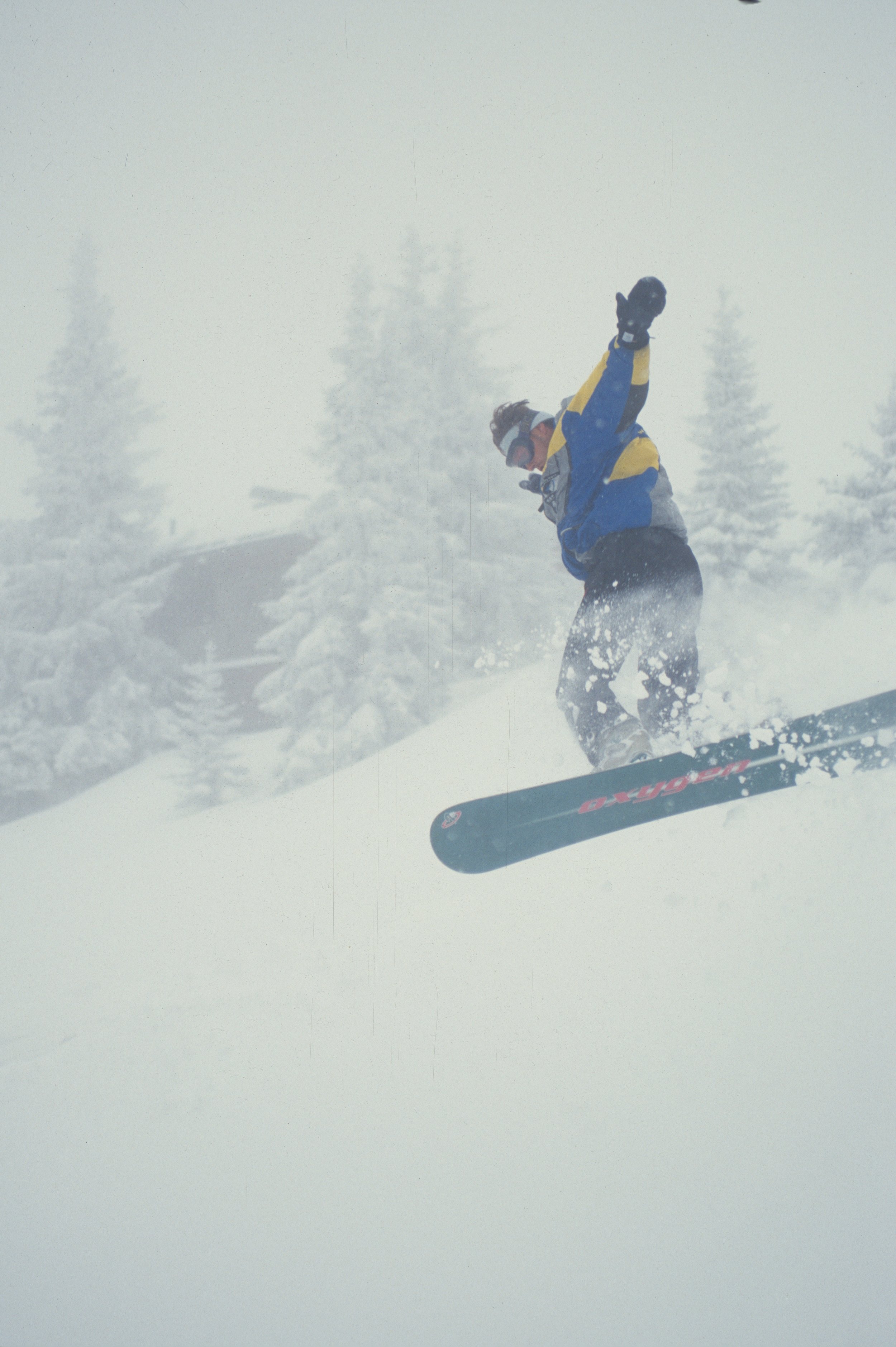
Andreas Hartweger Boarding deep Powder
On my second night in Schladming, I meet Heimo Royer at the Alte Post Hotel. The Alte Post is one of Schladming oldest structures and Heimo introduces me to Sepp Schlömmer the vice-mayor of Schladming, Dr. Wolfgang Erhart a notary public and a world class athlete, Dr. Gerhard Rainer a lawyer and teacher Sepp Jansenberger who are seated around a stammtische (local table). Accepting a glass of "Post-Bräu" a special beer brewed at the hotel from Mark Gruber, the son of the Alte Post’s owner, I savored the small room’s ancient, warm atmosphere. Studying the Alte Post’s weathered architecture and charismatic men, I realized the moment spoke clearly to Schladming's history, culture and character.
Heimo tells me that you must work to find the local bars which sit in cobble stone alleys beneath small signs such as “La Porta,” “Sonderbar” and “Hanglbar.” Once inside, however, Schladming’s night life refuses to turn you loose. From micro brews to the locally distilled schnapps, live music to disco and languages that range from German, English, French and Russian, the nights rage late and wild.
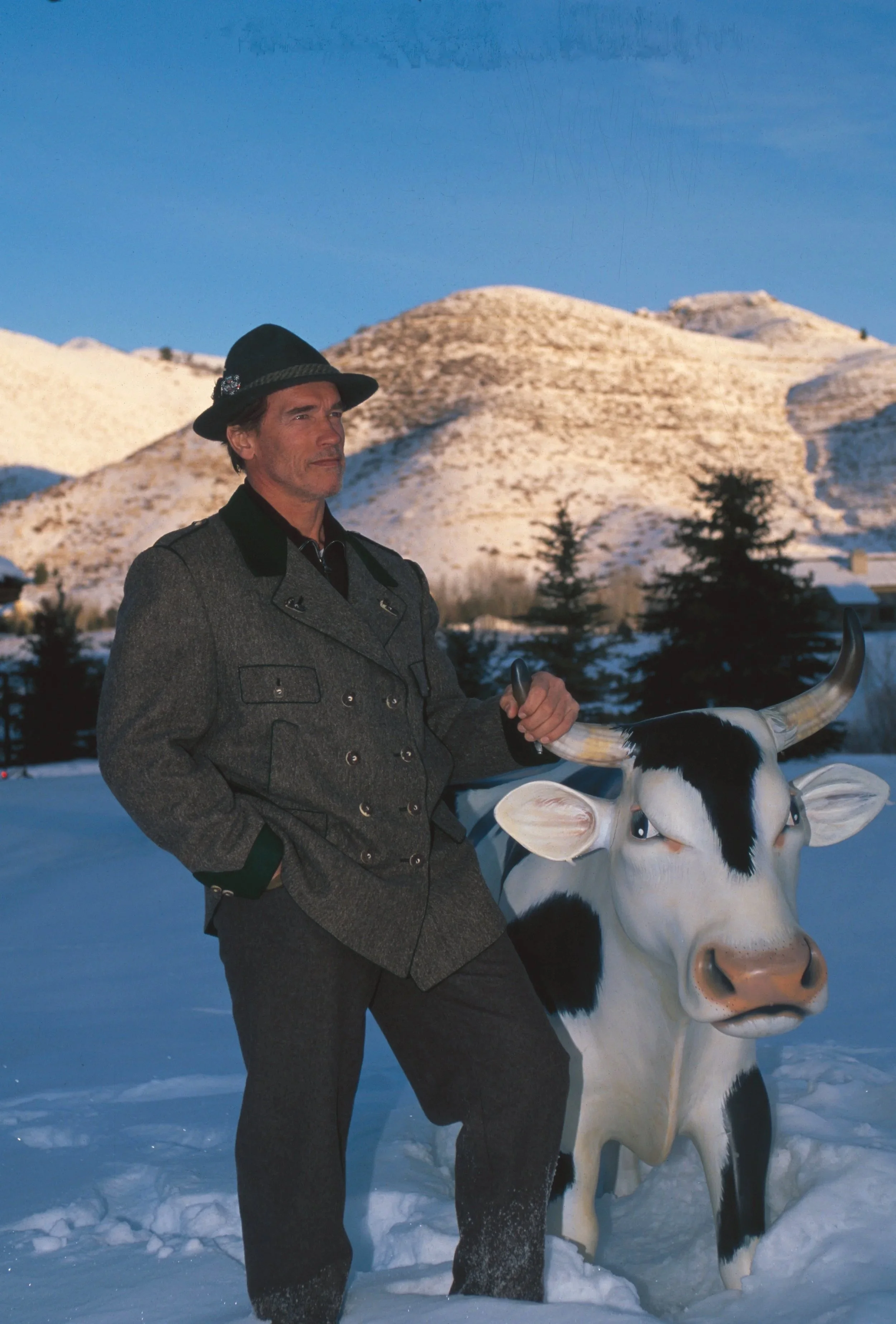
Arnold Schwarzenegger and Country Friend
I am staying at Schladming’s Sport Hotel Royer. Photos on the Royer’s walls reveal that the hotel’s traditional Austrian wood decor, sauna and superb cuisine, appeal to Arnold Schwarzenegger. Born in the nearby Styrian capital of Graz, the Terminator is far more than simply a favorite son in Schladming, he is a Teutonic God.
Schwarzenegger once admitted that, when he was younger, his family could not afford to ski. Now that he can ski anywhere in the world, it comes as no surprise that he loves Schladming.
I meet Marc Ulrich the following morning at the Planai base. Mid twenties, five foot eight and fit in a way that belies a life of mountain biking, skiing and hiking Mark speaks excellent English. While shoe horning his carving board into the Planai gondola, he admits the winter has been difficult to predict. According to the calendar, this should be late spring. In Rogers and Hammerstein’s immortal phrasing, the hills should be alive with music. The storm that has settled over Central Austria however, is maintaining two inches an hour with occasional, Biblical bursts exceeding twice that.
Marc recalls, “This fall we had cold temperatures and snow, followed by high pressure, sun and high temperatures....now this,” he gestures to the torrential flakes swirling around the gondola.
Marc has lived and worked in Schladming for most of his life, boards the Planai daily and now leads me to the FIS course. Fighting a northeast wind and lack of visibility, I find an untracked line next to the trees and follow it down the steep, twisting run to the triple chair that returns to the Schladminger mid station. Turning left off the lift, we ski the aptly name Die Sportliche or “Sporty Run” to the Burgstallalmlift which returns to the Planai Summit. A cold wind is whipping across the ridge, sending streams of snow cascading into the leeward hollows. No one needs to warn us that it is not a good time to go diving off piste and we turn instead down “Die Anspruchsvolle” or the “Challenging Run.”
Over the years, I have amassed a quiver of slaloms, giant slaloms--even a pair of wide waisted Explorers. My advice is, when in Styria, do as the Styrians do--buy a pair of Atomic’s beta carvers. In my case, I borrowed a pair from Josef Neureiter at the Atomic Factory in nearby Altenmarkt. If this red sled resembled two baguette baking pans welded together, the 10.28 Beta Carver proved to be smooth, predictable and responsive.
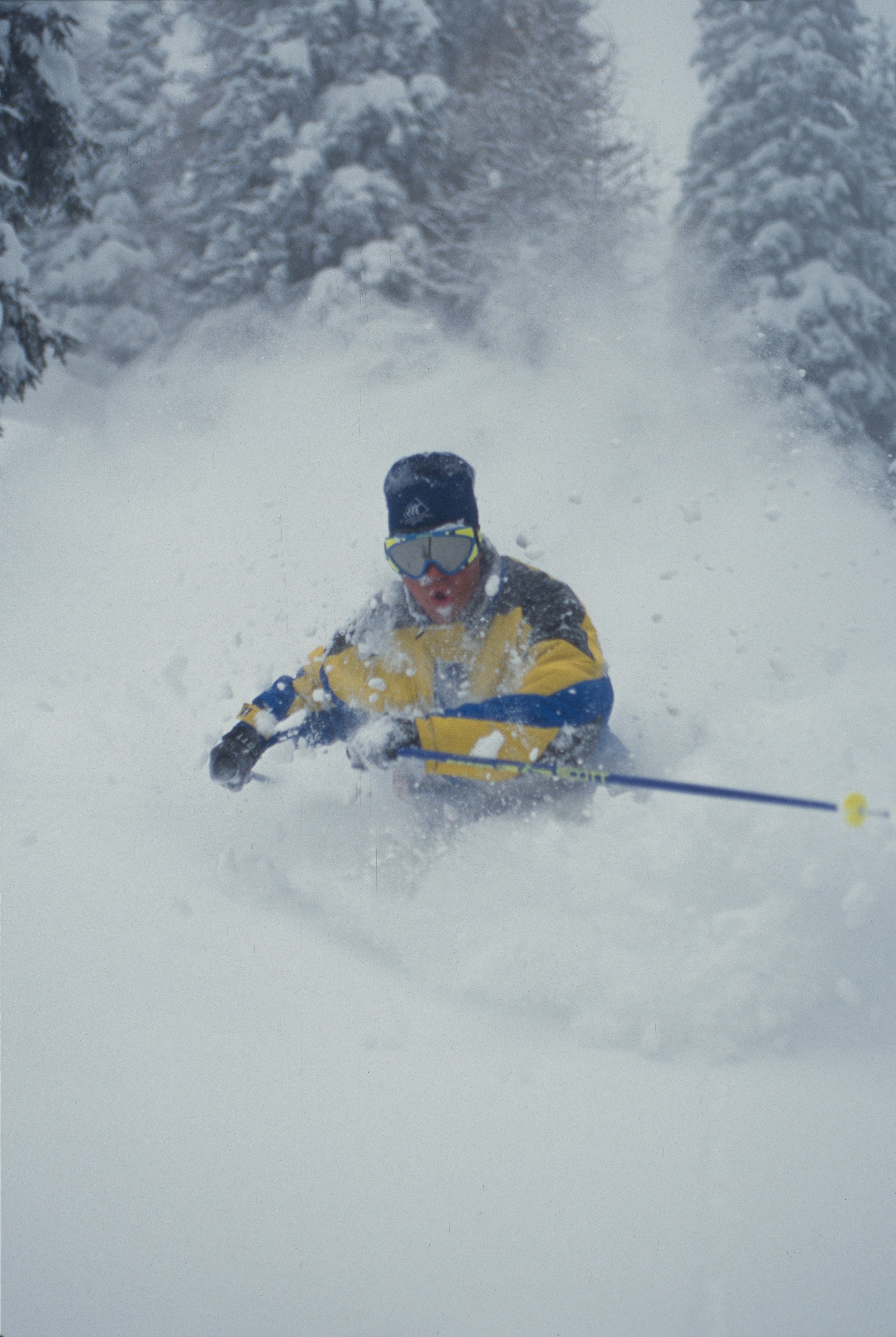
Wilfred Hartweger Living the Good Life
With Marc leading the way down “Die Schwungvolle” or “The Dynamic Run” I pointed the tips down hill and felt the flying snow sweep across my face. At that moment with Austrian skis beneath my boots and “Die Schwungvolle” falling toward the unseen valley floor, I begin to think and ski in German, admittedly a small linguistic step, but the first toward true fluency.
It was still snowing at 9:00 a.m. the following morning when I climbed the winding road from Schladming to Ramsau. Set on a broad, glaciated plateau above the Enns Valley, Ramsau has been inhabited since the 11th century. Farming has flourished here for centuries and Jagers (hunters) who once poached the imperial forest’s mountain goats, bequeathed an outlaw heritage to the local culture. Am Stein still translates to “On the Dachstein,” a tongue in cheek reference to the rampant poaching.
At 9824 feet, the Dachstein is not high by European standards. U.S. skiers will recognize the name from the five buckle racing boot but, if I have dreamed of skiing the Dachstein, the massif’s spectacular south face was hidden by driving snow and impenetrateable clouds. Heinz Prugger, the Director of Tourism, tells me the wind has closed the tram.
“If there was any way, yes of course,” Heinz Prugger apologizes before adding. “But there is no point to standing in a whiteout blizzard. ” Born and raised in Ramsau, Heinz instead offers to show me the 1999 Nordic World Championship venues. Of the over 150 kilometers of track that circle this sunny plateau, “extreme” best describes the World Championship courses that climb into the mountains and stretch across the Ramsau’s rolling meadows. Ramsau is also famous for horse drawn sleighs that slip through the dark forests, Austrian farm houses that offer bed and breakfast and a five hundred year old loden factory, where boiled wool is made into beautiful pants, jackets and slippers.
You must take Highway 146 west from Schladming to reach Reiteralm Ski Area. Catching the Gondelbahn to the Gasselhöhe Mittelstation, I meet Carl Fisbacher the Reiteralm’s mountain manager. Carl speaks excellent English and leads me into the thigh deep powder that fills the treelines next to “Holzerabfahrt.” Descending from the “Sepp’n Jet” detachable quad, this broad, intermediate run is cold, soft and far too deep. As soon as my ski tips drift out of the fall line, I slow to a stop. Turning to look up hill, I hope to see fat round turns. Instead my tracks are more wiggles, gentle bumps in a straight line.
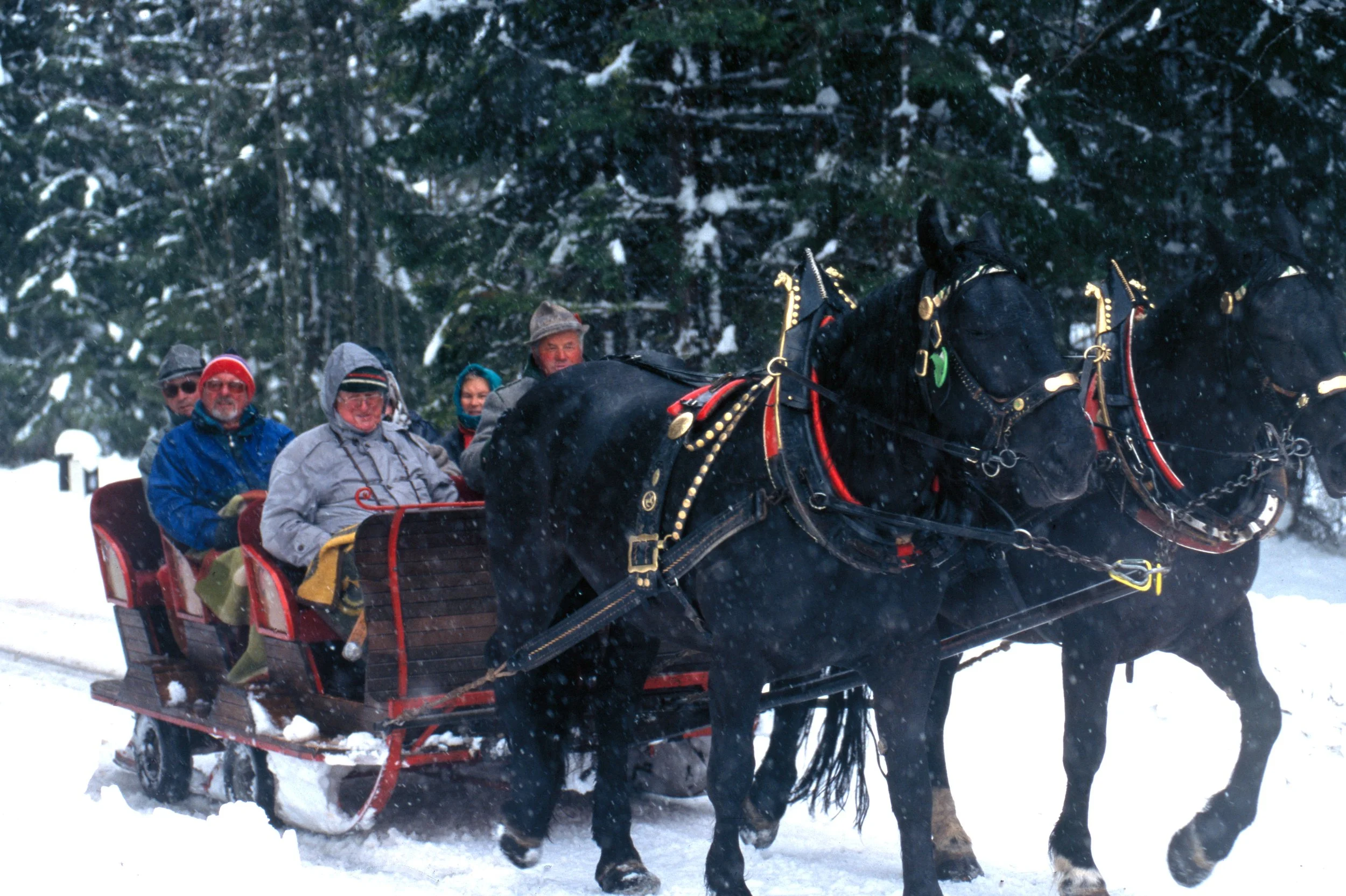
SchladMing Public Transportation
Slightly smaller than Hauser Kaibling or the Planai, Reiteralm’s combination of glades, groomed pistes and steep faces reminded me of Stowe. Carl knew every powder line in Reiteralm but admitted too much snow has fallen in too short a time. Now, when he studied the steep faces off the summit, concern flickered across his face. He described how a slide once fractured off the 6909 foot Rippeteck, cascaded down the valley and took out a mountain restaurant. Miraculously, no one was injured and the restaurant has since been rebuilt in a more protected location.
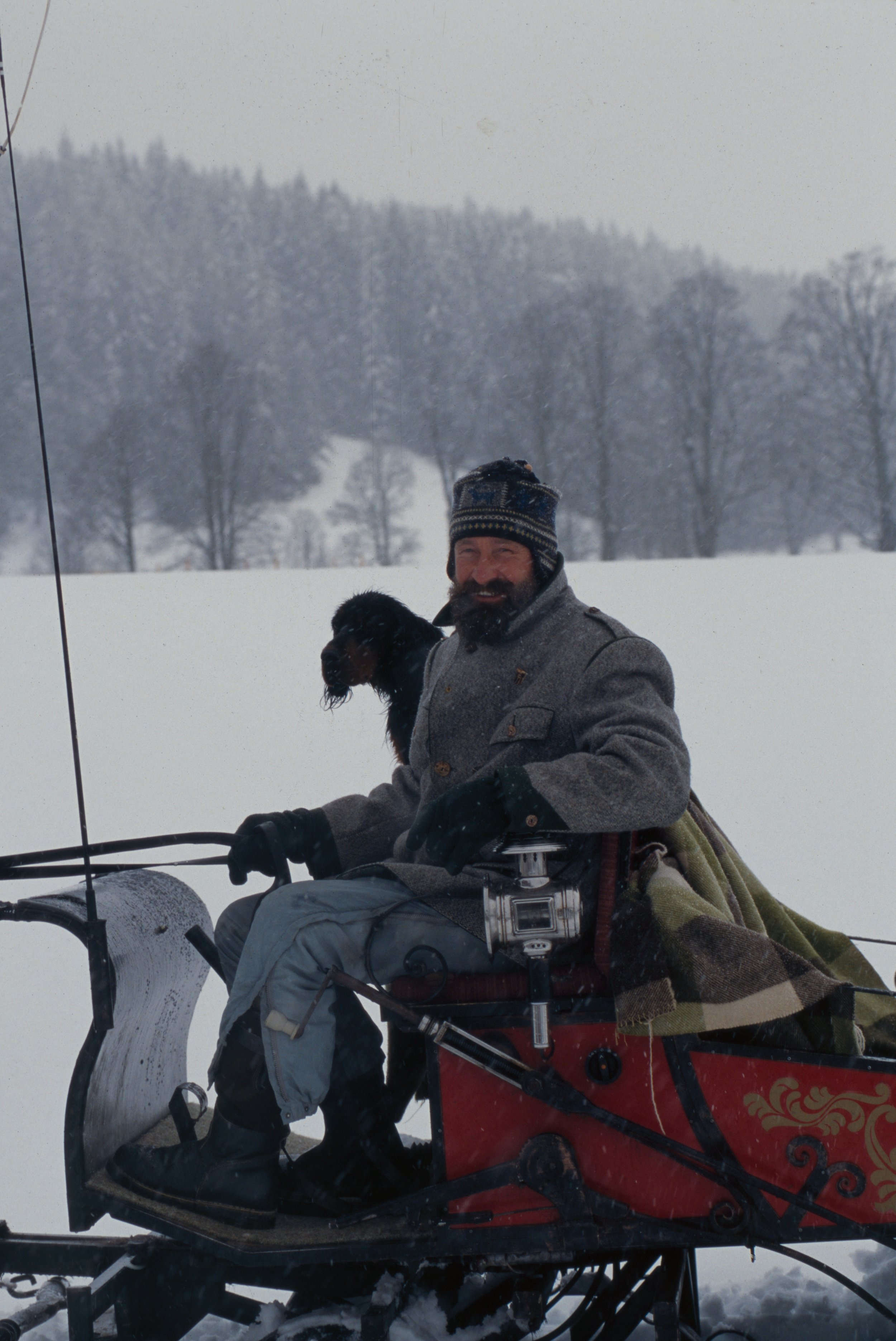
Commuting to Work with Devoted DrahthAar
Added together, the Planai, Hauser Kaibling, Reiteralm and Fageralm ski areas are huge. Carl tells me that in the winter of 1998-1999 a series of detachable quads will join the four in a single long interconnect. Similar, but slightly smaller than France’s Les Trois Vallees or Val d’Isere/Tinges, this interconnect will add high alpine bowls to steep chutes, gladed trails to untracked meadows, quad lifts and gondolas to t-bars. An obvious beauty of the plan is the possibility of skiing area to area--a distance of roughly of 20 kilometers in a single day.
I have to return my borrowed Atomics to the factory in Altenmarkt and luck into a victory party for Hermann Maier. Just returned from Nagano with two gold medals, Hermann is in his element. Raised in Flachau across the valley, Maier is more than a favorite son, he too is a Teutonic God, a living, breathing hero who praises the hundred factory workers who stand cheering in the rain.
It is a measure of Schladming that you can fall in love with a ski resort you never see. And it is true that I can’t really complain about the lack of visibility when each morning heralded a powder day. I just wished I’d stayed in Schladming a little longer.
When I returned home, there was an email waiting from Heimo Royer. “By the way,” he started. “Two days after your departure we got snow like hell and then it cleared. It was absolutely fantastic!”