Hiking the Seven Devils Into Hells Canyon
I first heard about Idaho’s Seven Devils Wilderness Area from Jerry Hughes of Hughes River Adventures. Jerry and I had collaborated on a dozen articles and during a phone call in late spring, he was hoping to add a back country option to his schedule of summer float trips and asked, “Would you be interested in back packing from the Seven Devil’s Wilderness down to Granite Creek in Hells Canyon?”
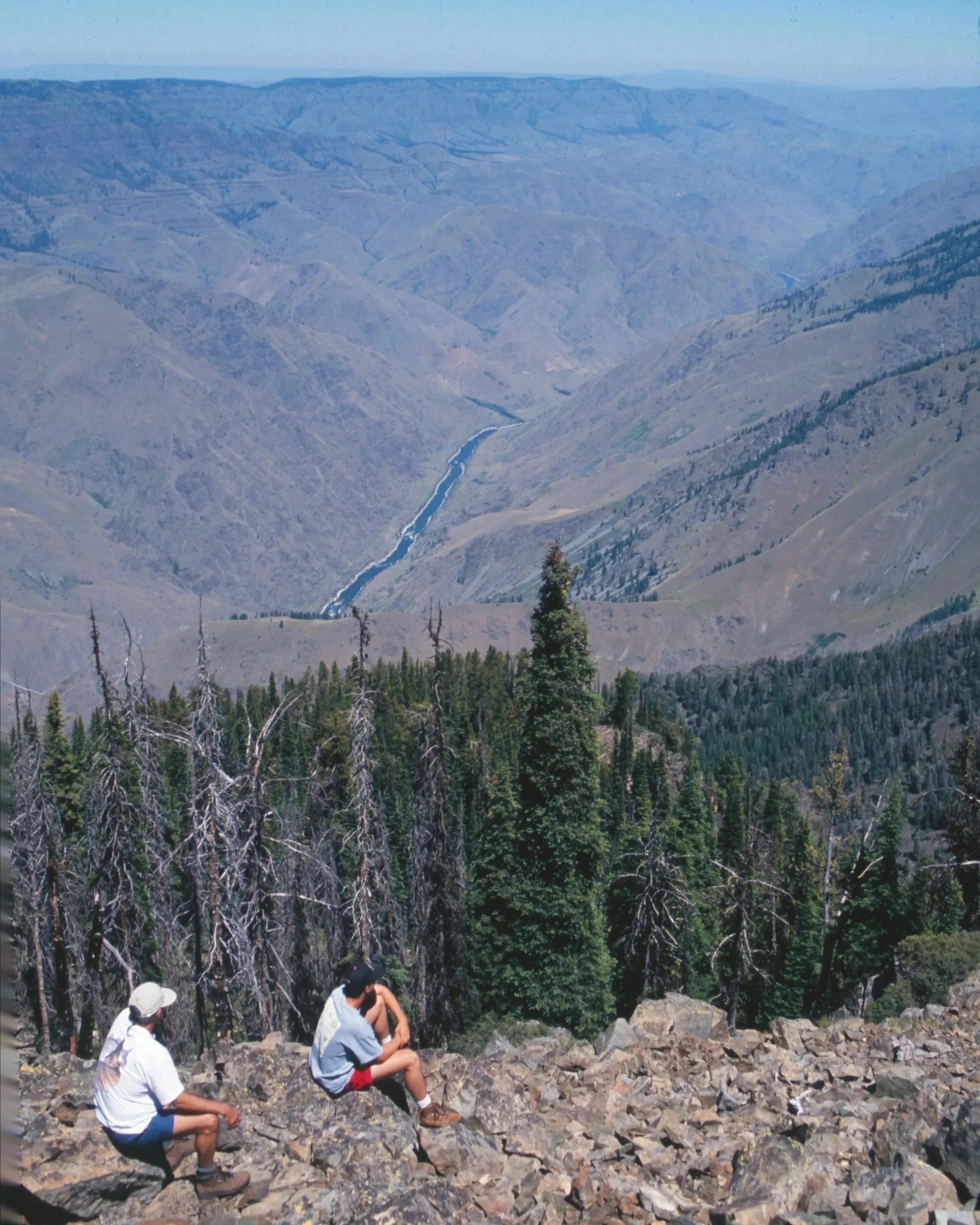
Jim Achison, Jake Warren, Seven Devils, Hells Canyon
Located on the Idaho-Oregon border, The Seven Devil’s He Devil, She Devil, Tower of Babel, the Ogre, The Goblin as well as a dozen other named pinnacles rank among the Western Rockies most remote peaks. And, it was these names, more than the total miles or sobering vertical descent that convinced me back packing through the Seven Devils down to Hell’s Canyon where a raft would be waiting to run the Snake River’s towering rapids, offered a couldn't, wouldn’t, shouldn’t miss life defining adventure.
The Forest Service was updating their Seven Devil’s Wilderness topographical map and the local office in Riggin’s was, unfortunately out of the old one. That left a rough Xeroxed copy with a shaky checked line to mark the trails, elevations and distances. From turnout to Snake River, the Seven Devils Trail to the Snake River traversed twenty-eight miles, ascended five thousand feet through doug fir forest and high mountain lakes, then plummeted off the side of Hells Canyon another six thousand feet down to the Snake’s cold, dam filtered water. Add half a dozen alpine lakes and backpacking from Windy Saddle above Riggins downhill to Granite Creek, couldn’t be that hard!
That’s how, two months later, Jim Atchinson and I found ourselves belted into Hughes River Adventure’s weathered pickup, grinding up the dusty Papoose Creek forest service road.
I met Jake Warren when he was fourteen years old and swamping for Jerry’s river trips. Now twenty-four, he had been born and raised in the foothills of the Seven Devils and during the summers, regularly guided hikers to the isolated Basin, Shelf, Gem and Bernard lakes. He’d hiked down into Hells Canyon before but when we pressed him about the Granite Creek trail, he clearly preferred to stick to the fishing, camping and the Seven Devil’s stunning vistas.
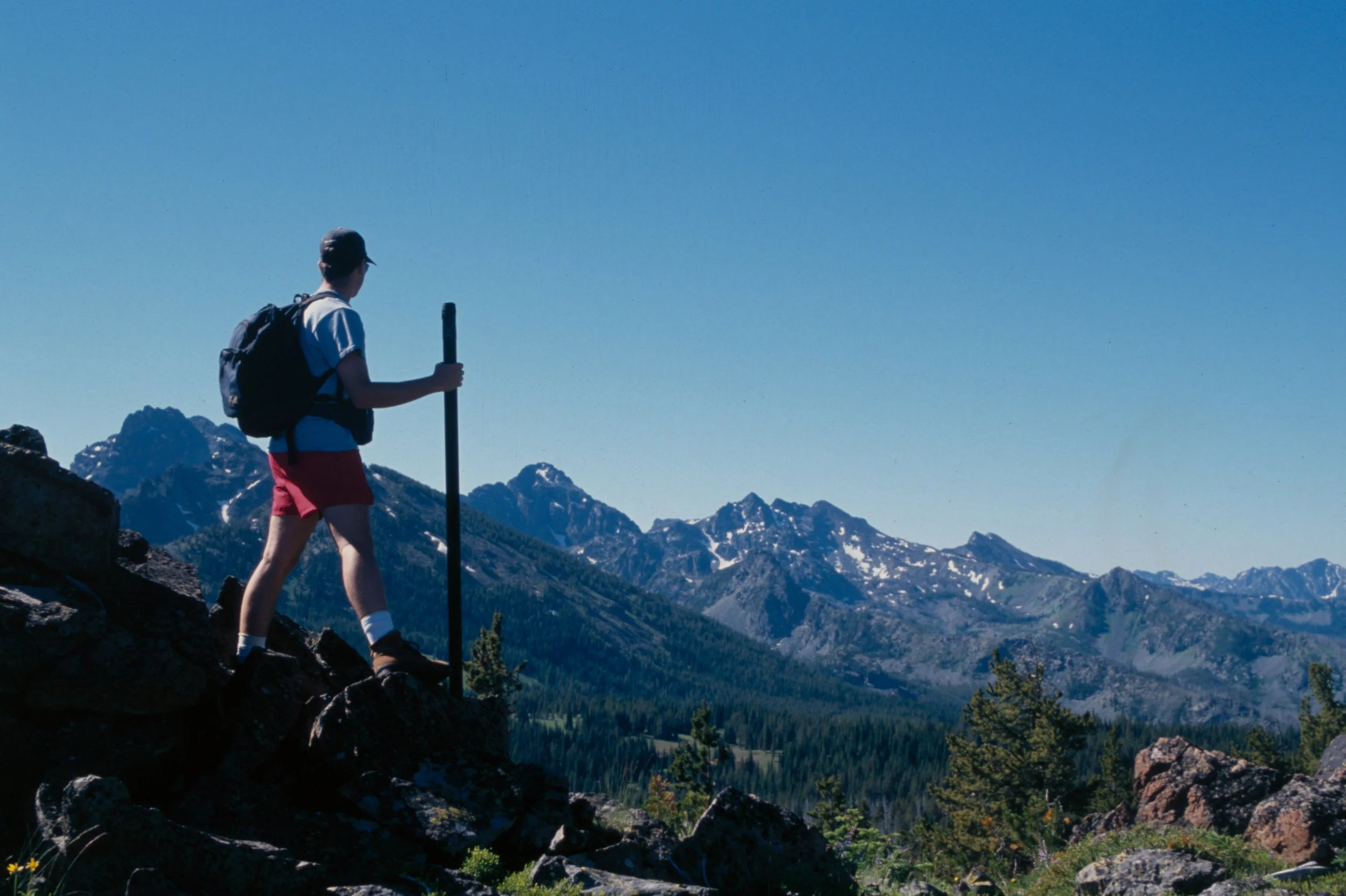
Jake Warren in His Element
Born and raised in Mobile, Alabama, Jim Atchinson admitted that he’d trained for six months. In his early fifties, he had focused on free weights, a stair stepper, bicycling and running through Mobile before dawn. Between juggling full days at his law practice with the need to train for vertical climbs at altitude, Jim’s main problem was Alabama’s winding rivers, boreal forests, verdant farm land and tidal wetlands share little, if any relationship to the Seven Devils soaring heights or brutal heat.
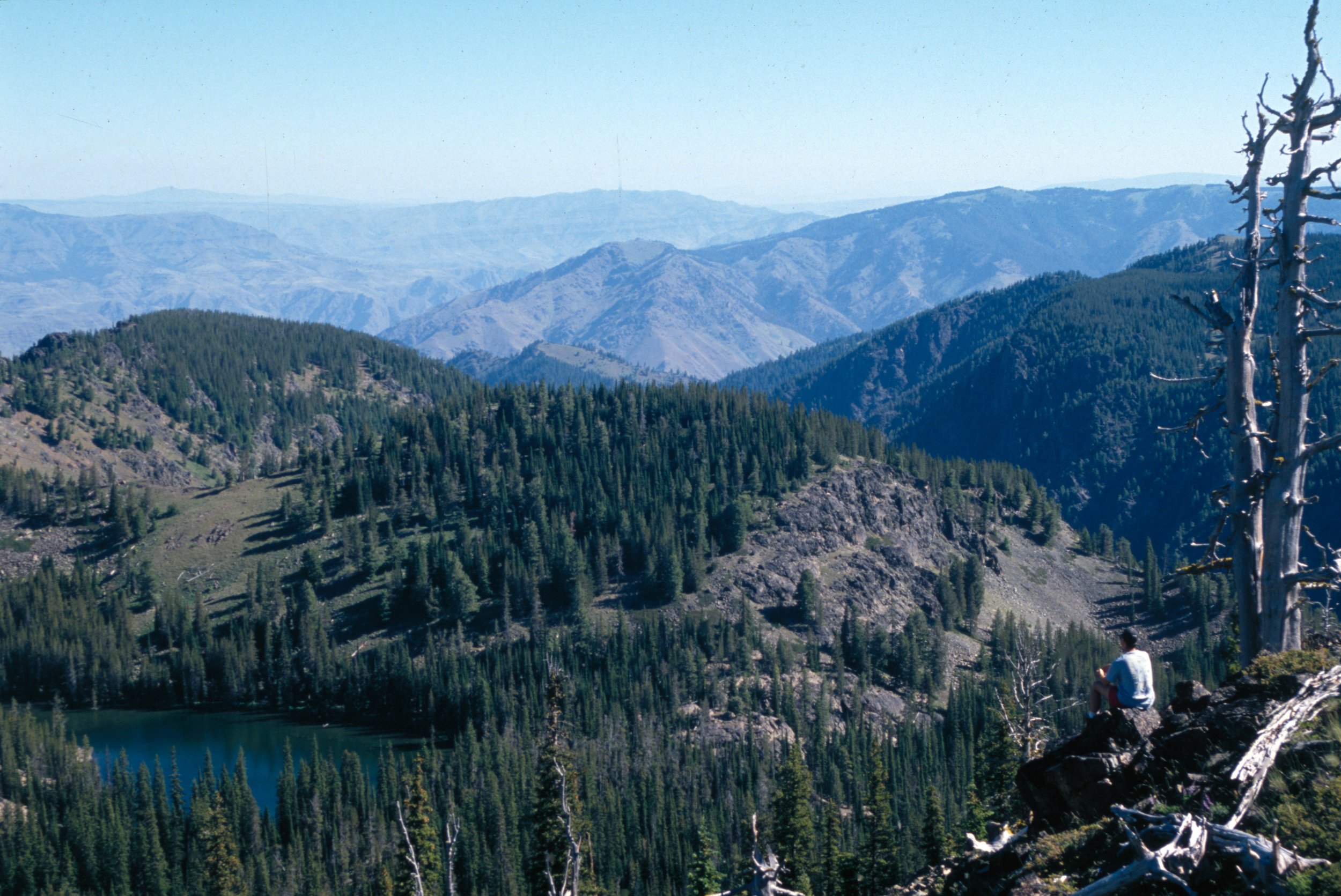
Jake Warren Above Bernard Lake
Between hunting, skiing, hiking and biking, I was in fair shape and figured between my cameras and a thirty-five-pound pack, I shouldn’t have a problem with either the thirty miles or seven thousand vertical feet. In this case, pride came before the Granite Creek trail.
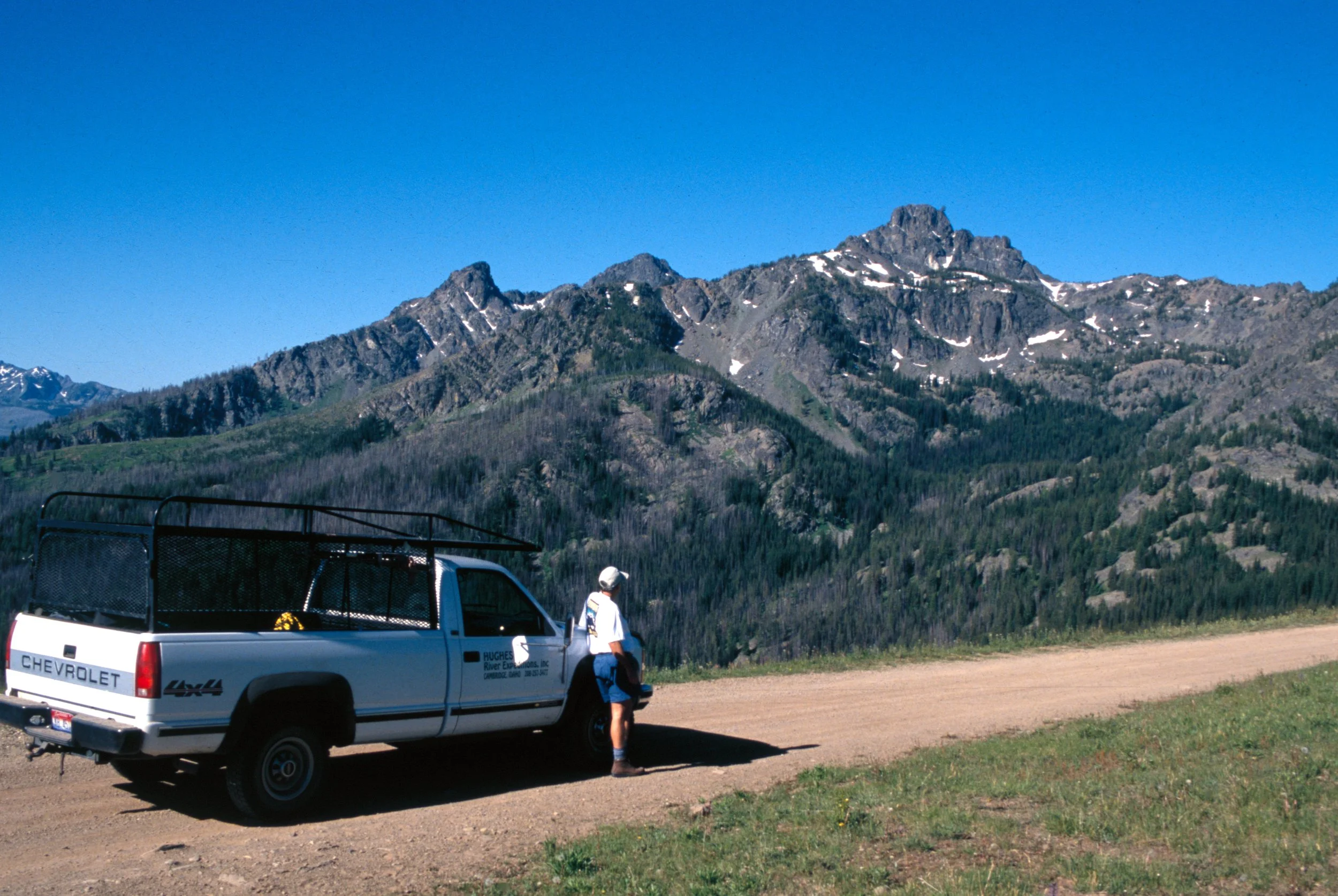
Jim Achison Windy Saddle Seven Devils
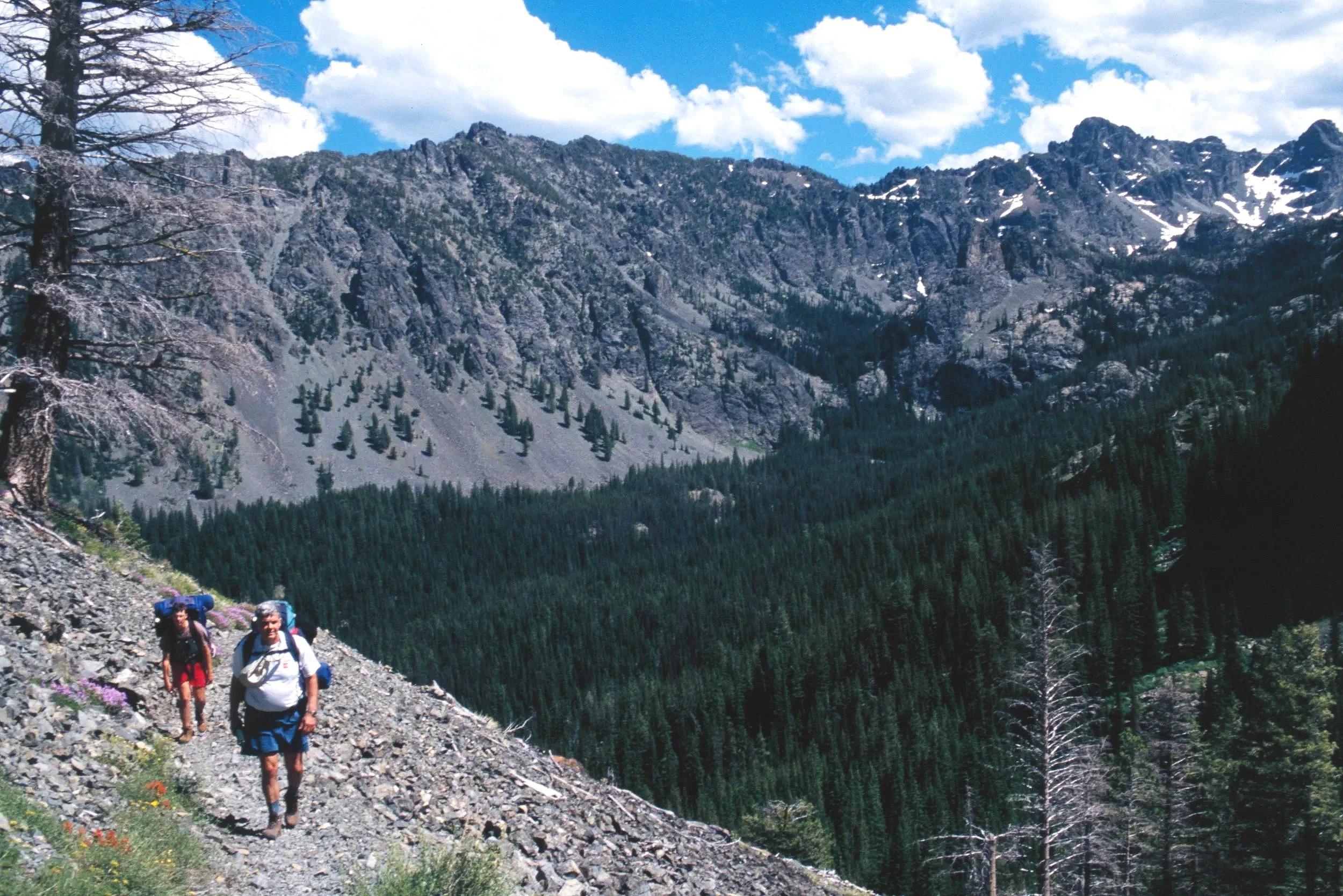
The parking lot at Windy Saddle was deserted when we unloaded our packs, filled our water bottles and, locking the truck, followed the Seven Devils 124 Trail across an open high alpine hillside toward where it would eventually intersect with 40.
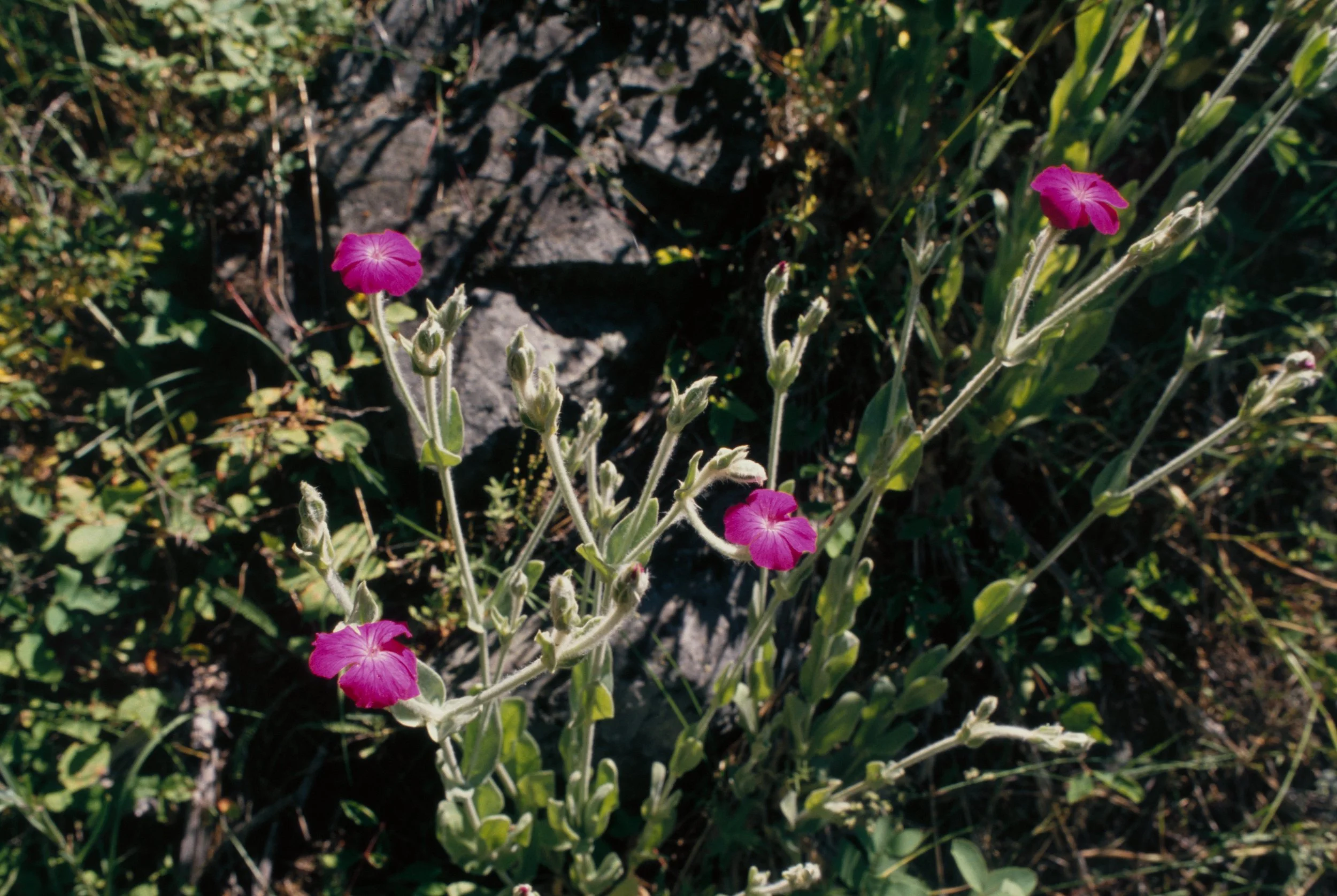
The 124 trail was defined by rock outcroppings and lupine, phlox, Indian paintbrush and phacelia wildflowers. Scrub jays screeched from the douglas fir and yellow bellied marmots whistled from scree fields. We watched a Golden Eagle ride the upslope thermals and flushed a blue grouse that disappeared into a stand of old growth fir.
The 124 trail crossed the East Fork of Sheep Creek before it turned north to a point that opened onto stunning views of the Seven Devils and Snake River Canyon. A descent down a series of switchbacks through alternating fir forests and rock outcroppings eventually brought us to the West Fork of Sheep Creek, from where we climbed the last section to Bernard Lakes.
Lost in thought, I pictured how the homesteaders who settled Hells Canyon would follow this trail. Many would horse pack up Papoose Creek from Riggins on the Salmon River, then cross Windy Saddle to a rough track down Sheep Creek and eventually the trail above the Snake River. Compared to the Forest Service’s maintained trails, it was an exhausting, dangerous journey where the waiting reward was an equally hard life.
We reached Bernard Lake in the early afternoon, set up the tents and while Jake started a fire, I uncased my rod and cast to rising rainbow trout.
It must have been more than just exhausting for Jim Achison to fly from Mobile’s sweet, oxygenated air to Riggins Idaho and then to Windy Saddles seventy-five hundred feet. From there he had hiked seven miles in the blazing heat to Bernard Lakes. To his credit he never complained and proved to be a man of rare insight--an intellect who delighted in puns, stories and when the sun settled into the distant Oregon desert and the cooking fire waned to embers, voiced a remarkable empathy for his clients.
Early morning appeared over Bernard Lake in a spectrum of fading stars and purple and blue tints before the rising sun touched the surrounding peaks.
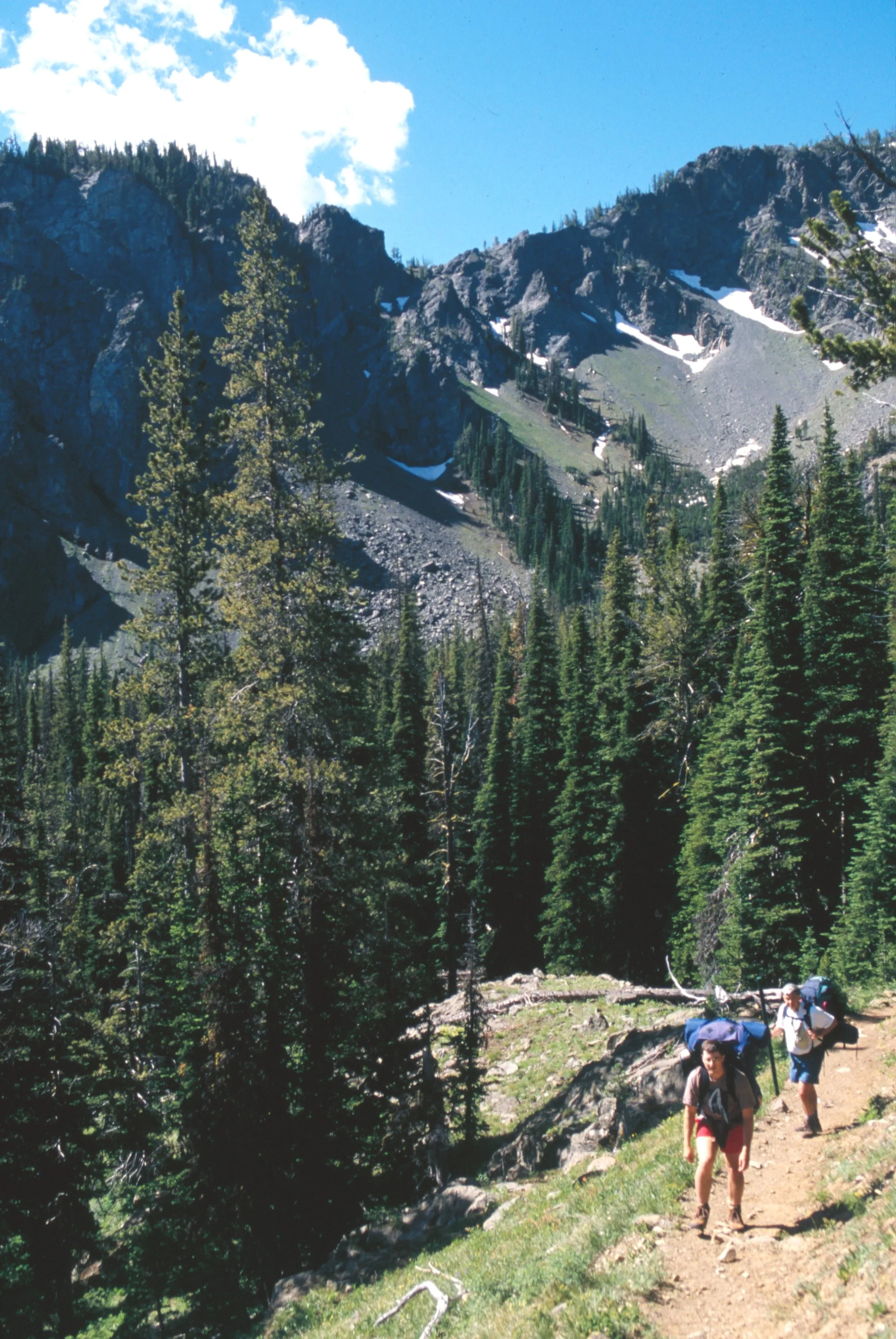
Warren, Atchinson Hike to Bernard Lakes
Jake was up first, brewing coffee and cooking breakfast, before he packed away the cooking utensils and, lacing up his boots, started up the trail to Dry Diggins Lookout.
Between lighting storms and careless campers, summer fires are a constant threat in the wilderness and, erected on a rocky point, the lookout offered two hundred- and eighty-degree views of the Hells Canyon and the Seven Devils wilderness forests, canyons, meadows and rolling hills.
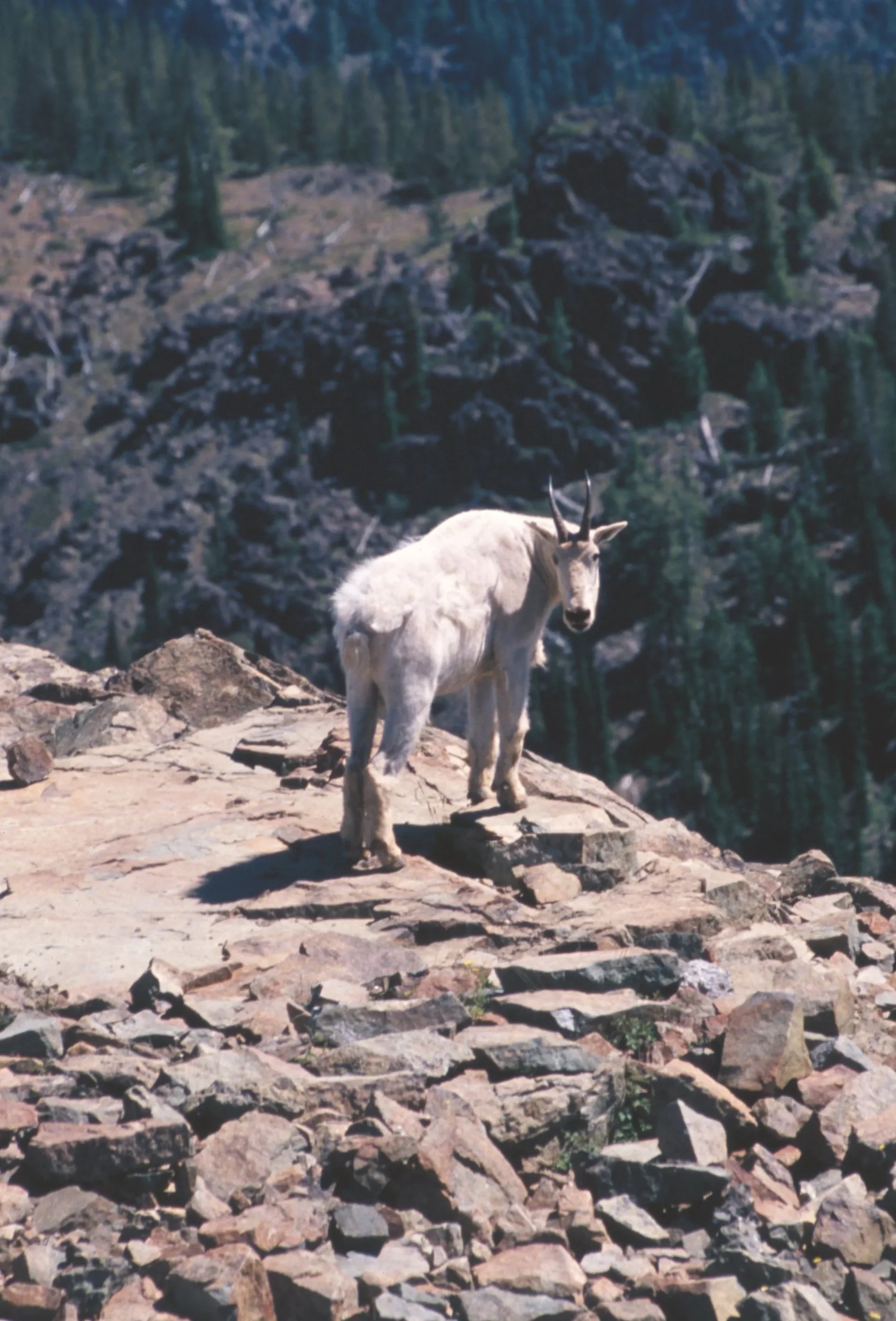
Moutain Goat at Dry Diggings
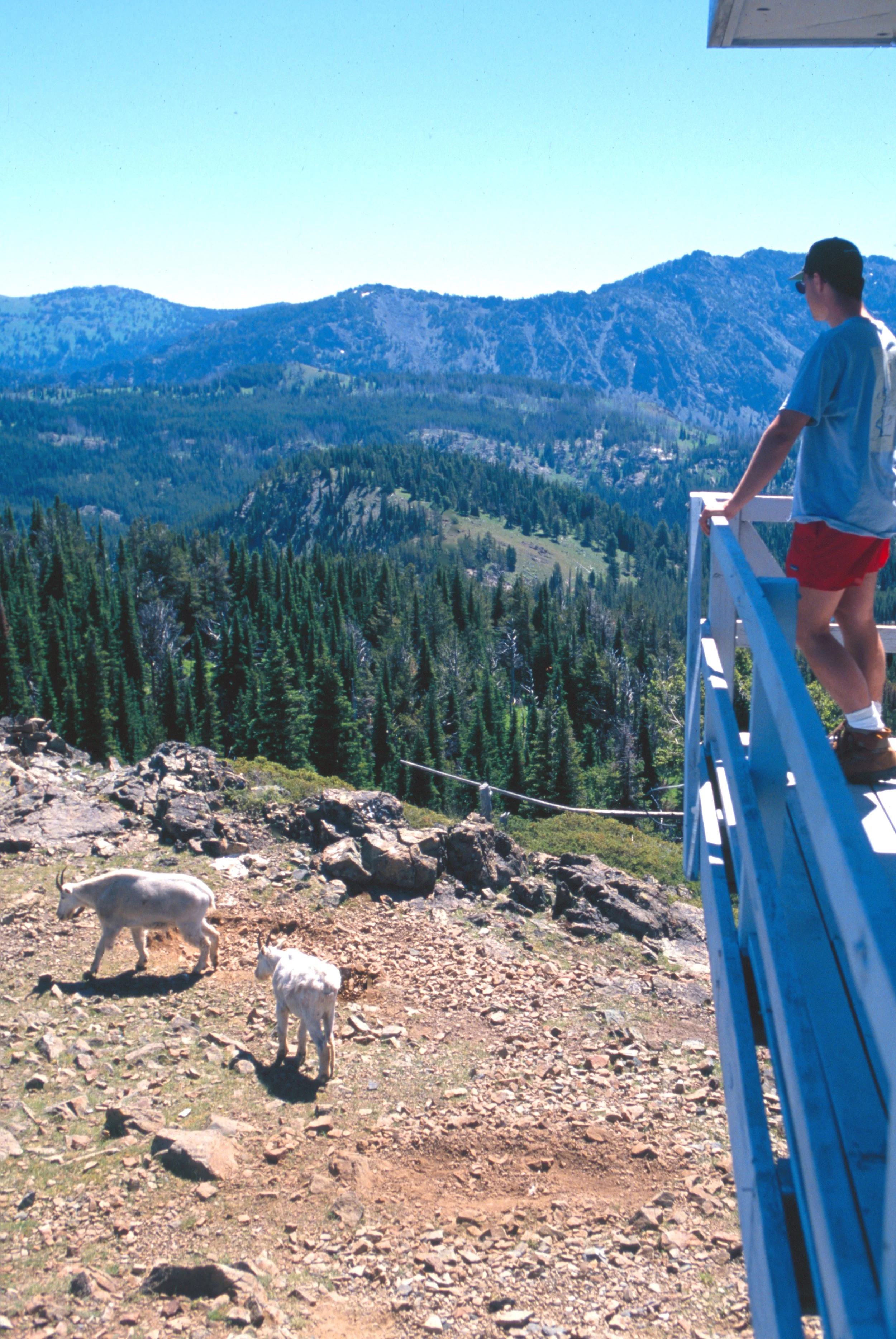
Jake Warren Dry Diggings
We reached Lilly Pad Lake when the afternoon shadows were reaching toward the eastern ridges, shed our packs and hot boots, unpacked our fishing rods and waded into the cool water. A twelve-inch rainbow inhaled my Renegade on my second cast and Jake caught two nice fish before he handed the rod to Jim.
We blundered upon a family of mountain goats that were drawn to a salt lick. Surprisingly tame, they studied us then drifted over the canyon rim and disappeared in the west facing scrub.
By then the heat had settled on the trail and if Jim and I had any thought of fishing that afternoon and camping a second night at Bernard Lake, Jake quietly reminded us that if we planned to meet Hughes tomorrow at Little Granite Creek, we needed to keep moving.
Faced with the third day’s seven-thousand-foot descent to the Snake River, we decided to break camp and follow the trail back to Lilly Pad Lake.
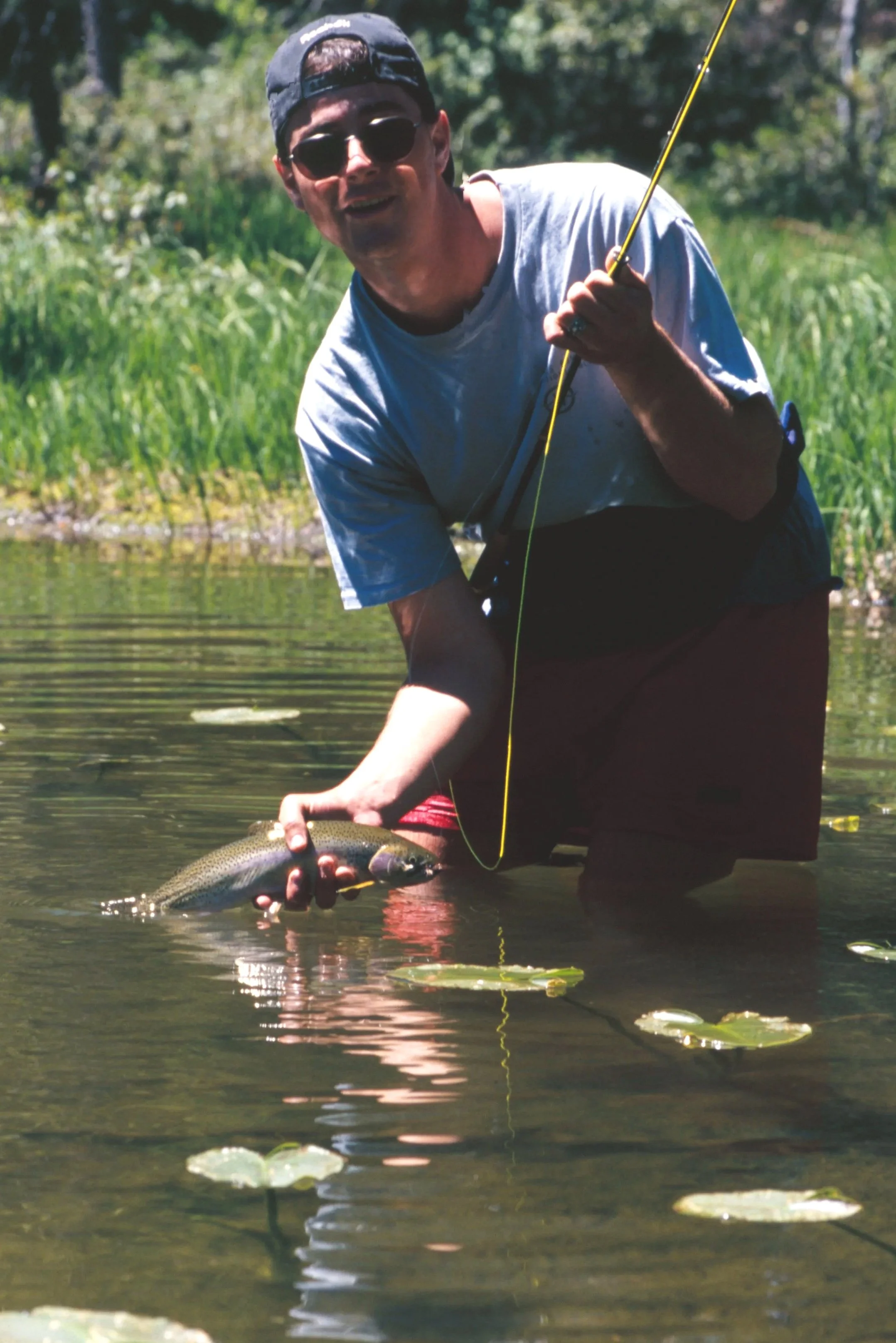
Jake Warren at Lilly Pad Lake
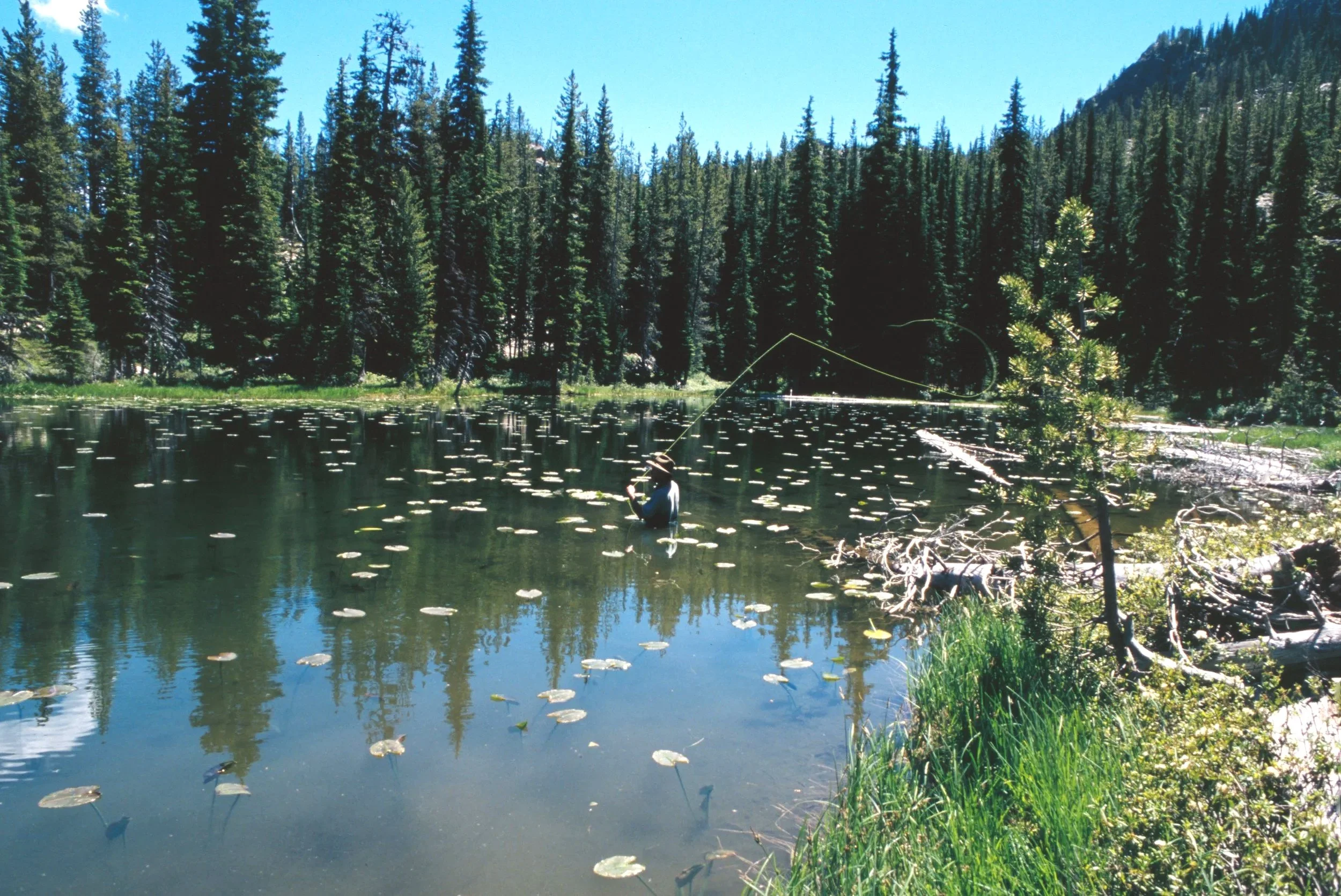
Fly Fishing Lilly Pad Lake
Camping that night under the stars, I listened to the howl of a distant Coyote and remembered reading how Hells Canyon homesteaders’ biggest fears were marauding mountain lions. If theirs was a hard life, looking back from a century and a half later, it also offered the reward of a close family, the beauty and power of the Snake River as well as farming, hunting and fishing for their evening meal.
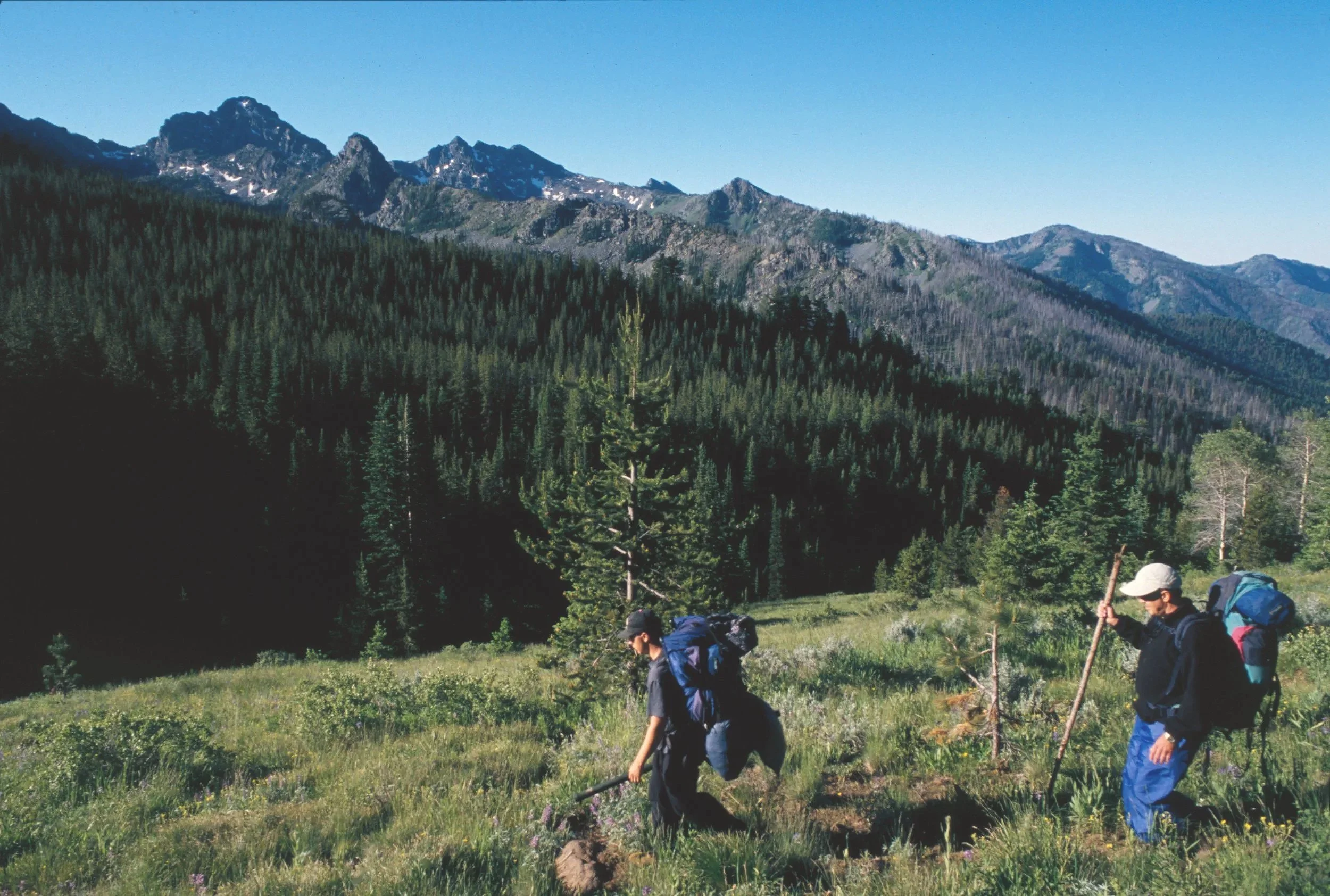
Jake and Jim Start Toward Granite Creek
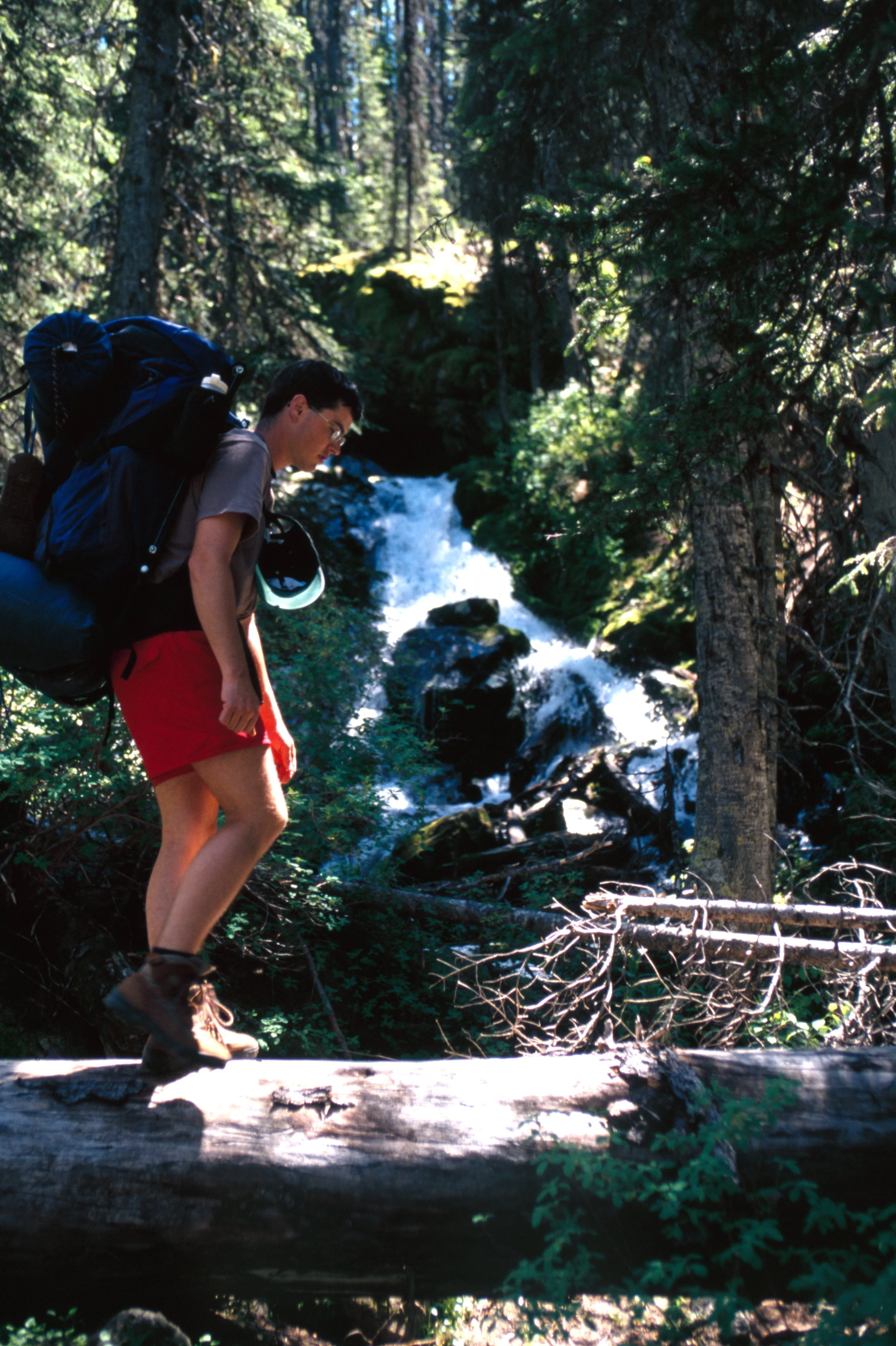
Jake balances across Granite Creek
Neither Jim Achison nor I had read those Previously Published Accounts. I’m not sure they would have made much of a difference if we had. The hardest part wasn’t the switch backs, the dead fall stream crossings or navigating the washouts but in planning this trip, we had made one critical mistake. We figured to source our water from the high country’s, clean springs and had neglected to pack a water filter. Though Granite Creek’s cold water splashed within a few feet of the sweltering trail, the promise of giardia prevented us from taking as much as a sip.
You must be a little crazy to hike barelegged through thickets of poison oak, black berry canes and thick willows all rooted in a primordial two inch stew of moving water, water cress and moss on the hottest day of summer.
Our plan to meet the rafts at noon demanded that we were up and moving shortly after sunrise. From Lilly Pad Lake to Little Granite Creek the trail traversed through an incandescent grass and wildflower meadow. It was only when it bent toward the Snake that the grade increased, and the Seven Devils showed their teeth.
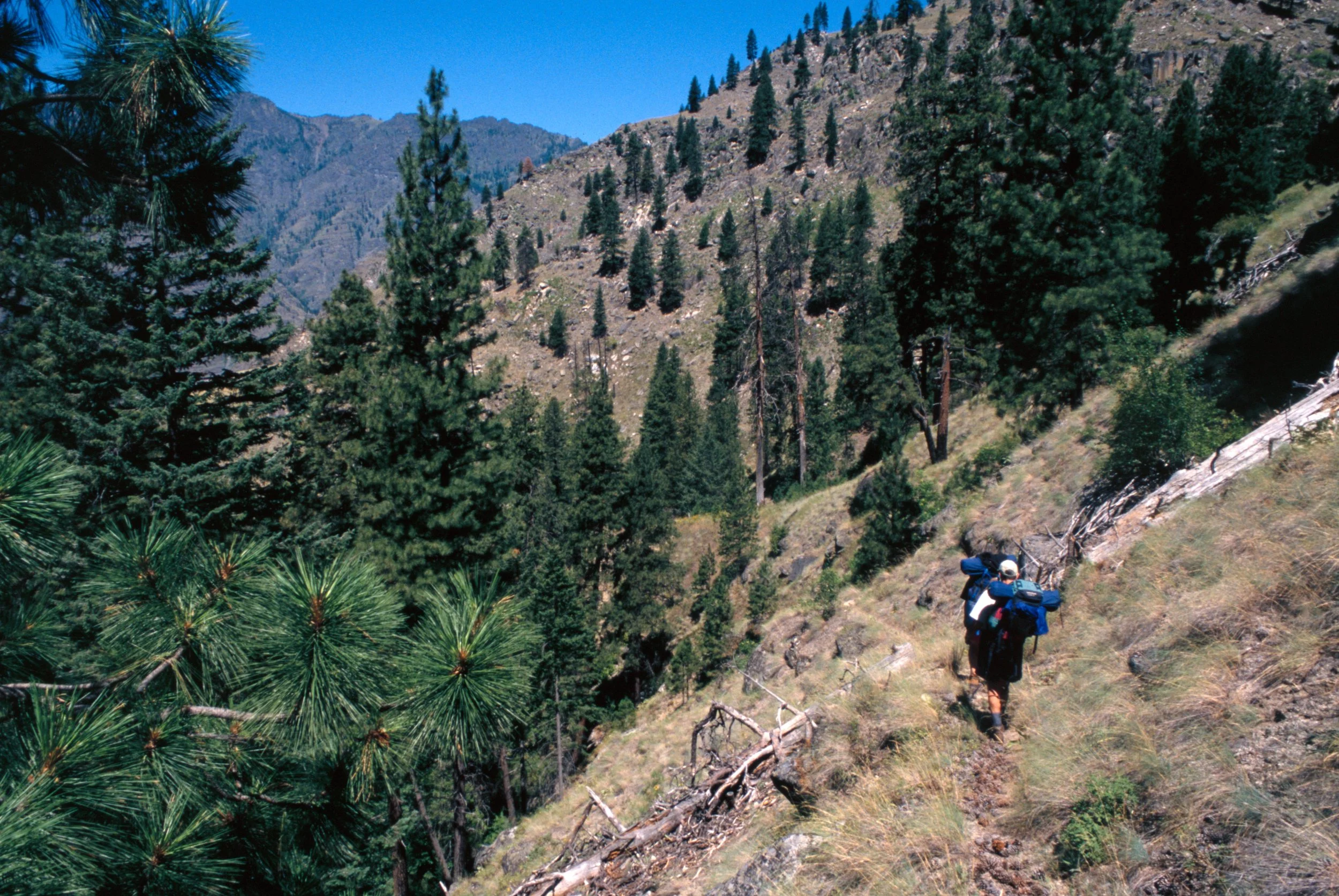
Unless back packers were planning to meet a Snake River oar boat, the trail saw little, if any traffic and Previously Published Accounts claimed that the trail was Not Maintained from Seven Devils down to the Snake.
Old growth Douglas fir had fallen across the narrow canyon, Little Granite Creek had washed out sections of the trail and we were forced to bushwhack up and over the resulting sheer, gravel faces. There is no need to dwell on the jackstrawed fir that blocked the trail, or meandering, ravenous creek.
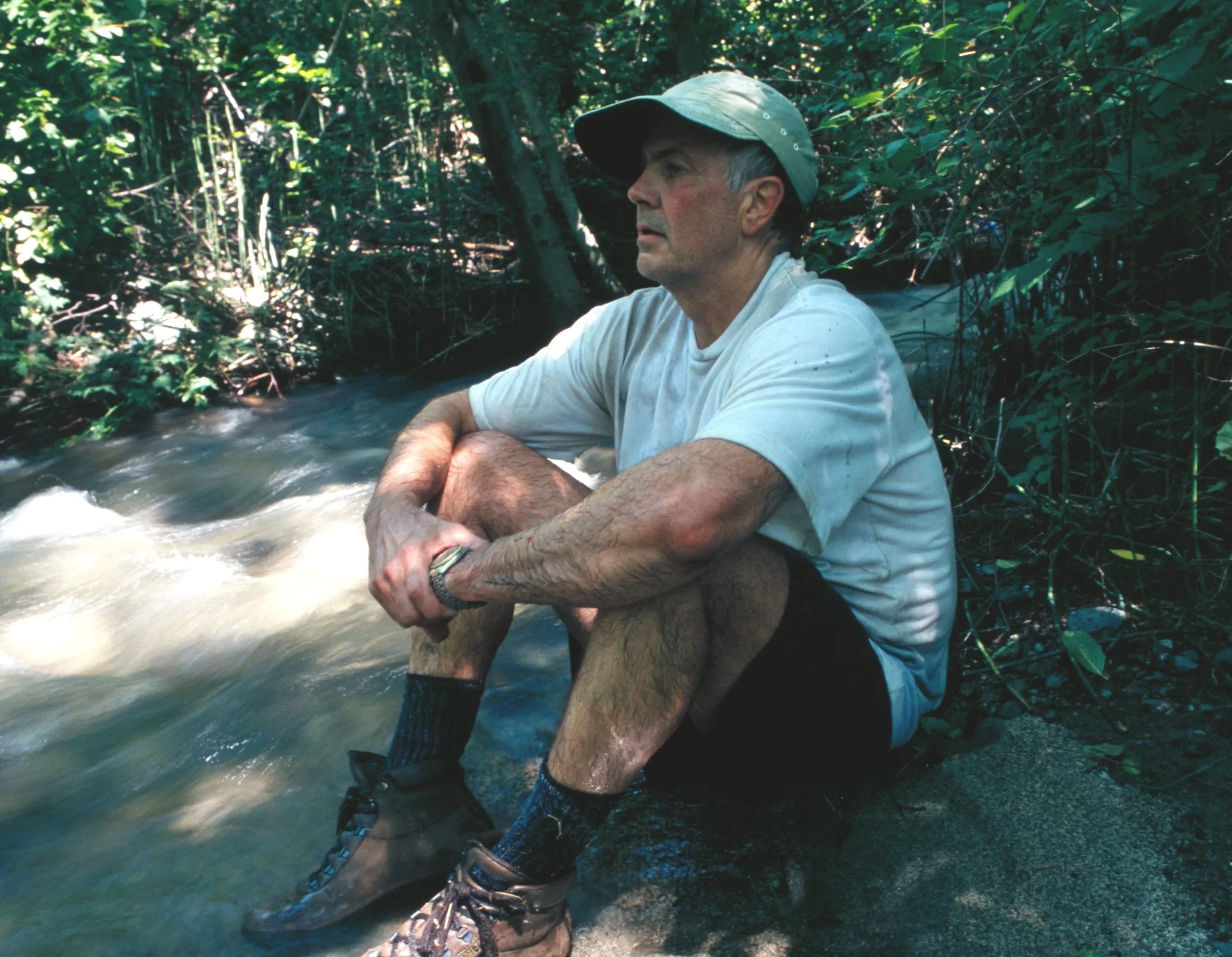
Jim Achison Cooling Off in Granite Creek
One thing the PPAs did mention was the rattle snakes. Rumor, or fact, the sizzling 110 degrees in the shade would drive a range of fauna to this cool oasis. Since this was the only water within two miles, I anticipated the unmistakable buzz that would freeze me in my tracks or send me back peddling into the tangled poison oak.
Late morning found me singing in an untrained tenor sharpened by fear and thirst. I belted out snatches of oldies, pop and even country to an attentive, if uncritical audience. I hoped that as long as my performance was loud, any unseen snakes would sense something, big, dumb and nervous was blundering down the trail. I hoped their simple, reptilian brains would chose to fly instead of fight, allowing me to pass a few unknowing inches from their dull eyes and flicking tongues.
If the snakes were indeed hidden in the poison oak they let us pass without buzzing, or striking, and it was shortly after noon when we walked the last quarter mile into the confluence of Granite Creek and the Snake.
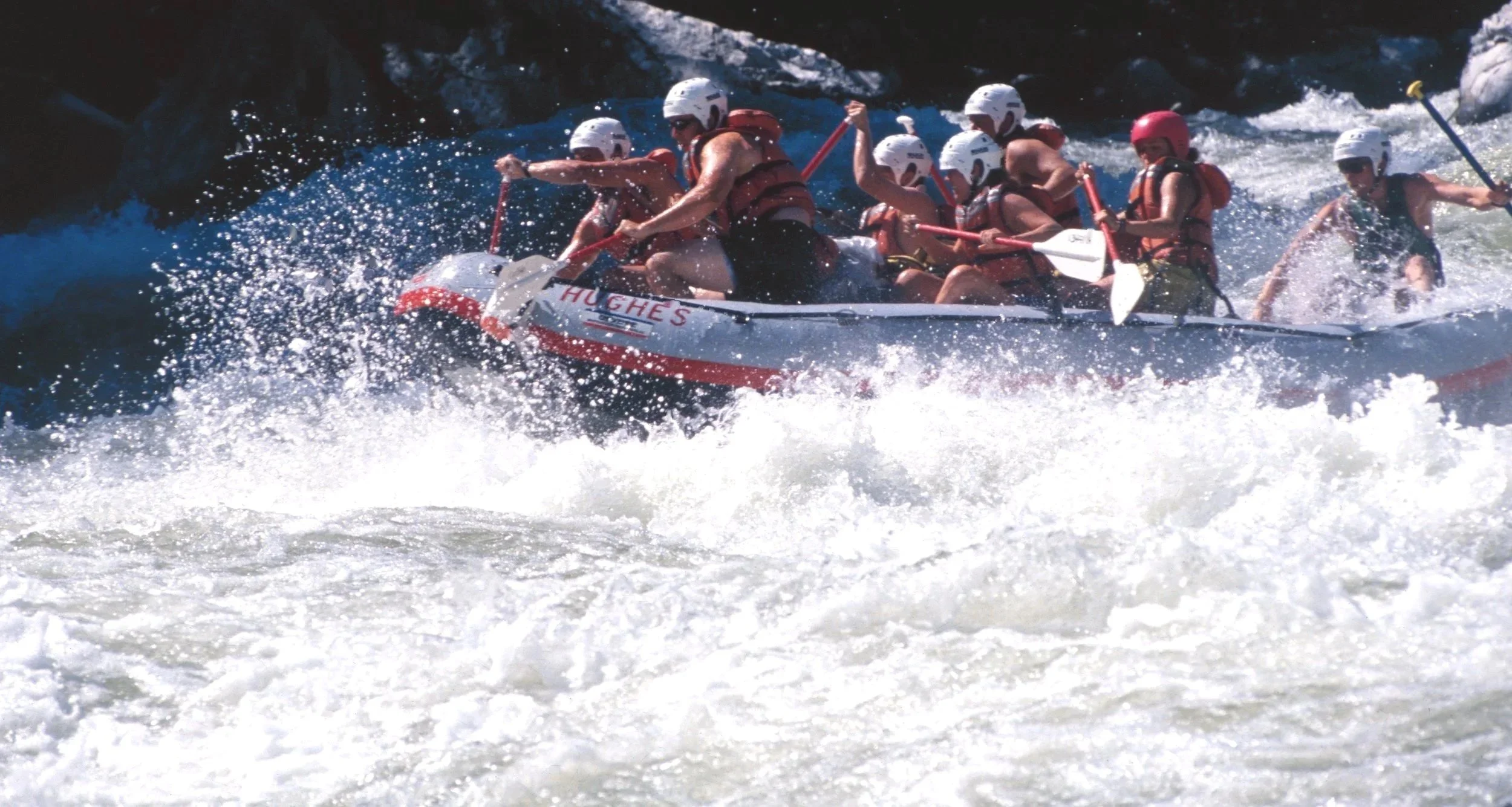
The Hughes River Adventure’s rafters were a contented group, well fed, well hydrated and only slightly burned by the relentless midday sun. They’d been advised we’d be joining them for the remainder of the trip out to Pittsburg Landing. Dropping my pack I accepted a bottle of ice water and studied the surrounding expressions that revealed a mix of wonder, awe and the least respect.
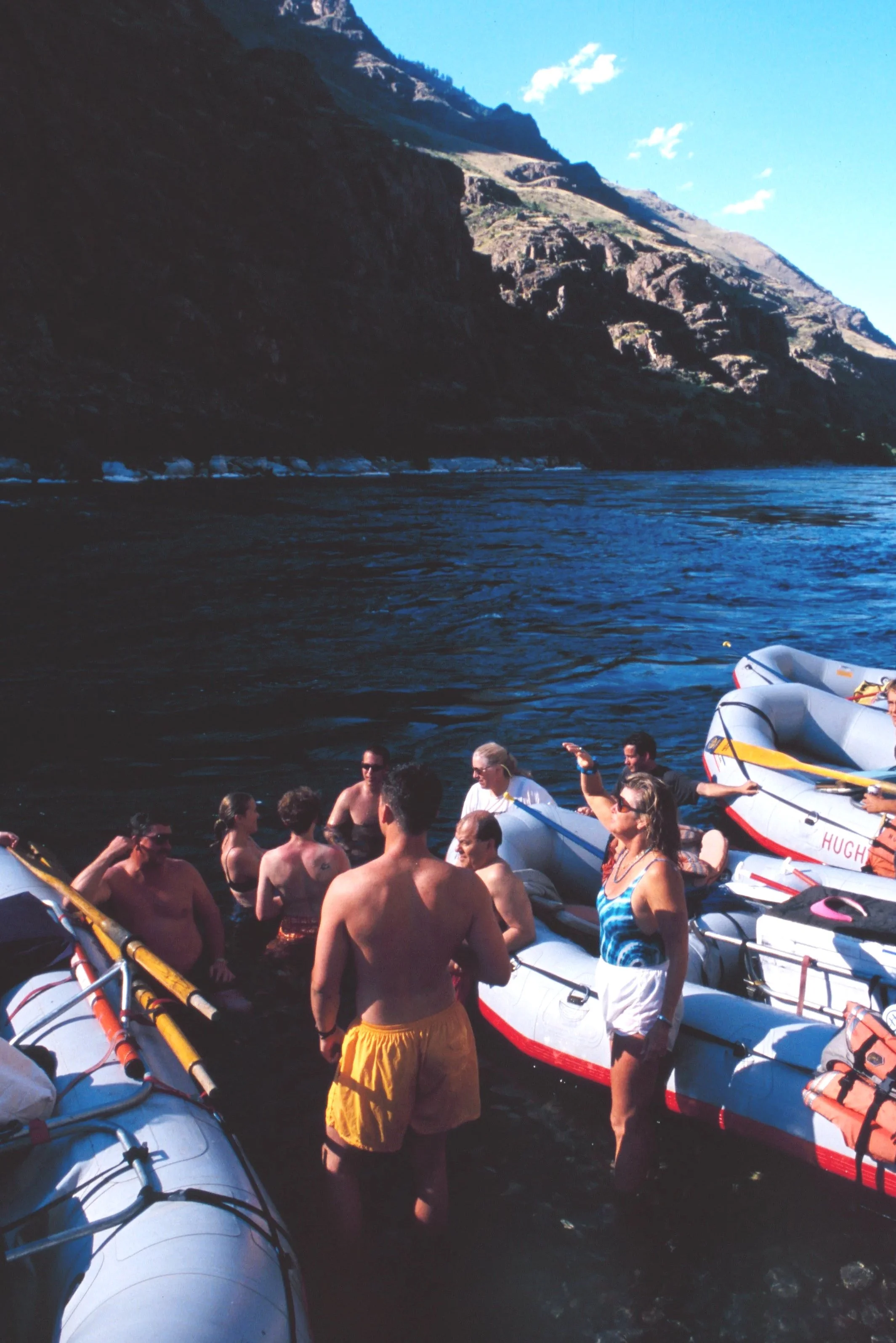
“Challenging,” I replied. From the Seven Devils barren rocky peaks to the Snake’s cold water, the trail traversed virtually every riparian zone, from montane and sub alpine forest, to Hells Canyons sage brush and scrub.
“Would you recommend it to anyone else?”
“In a second.”
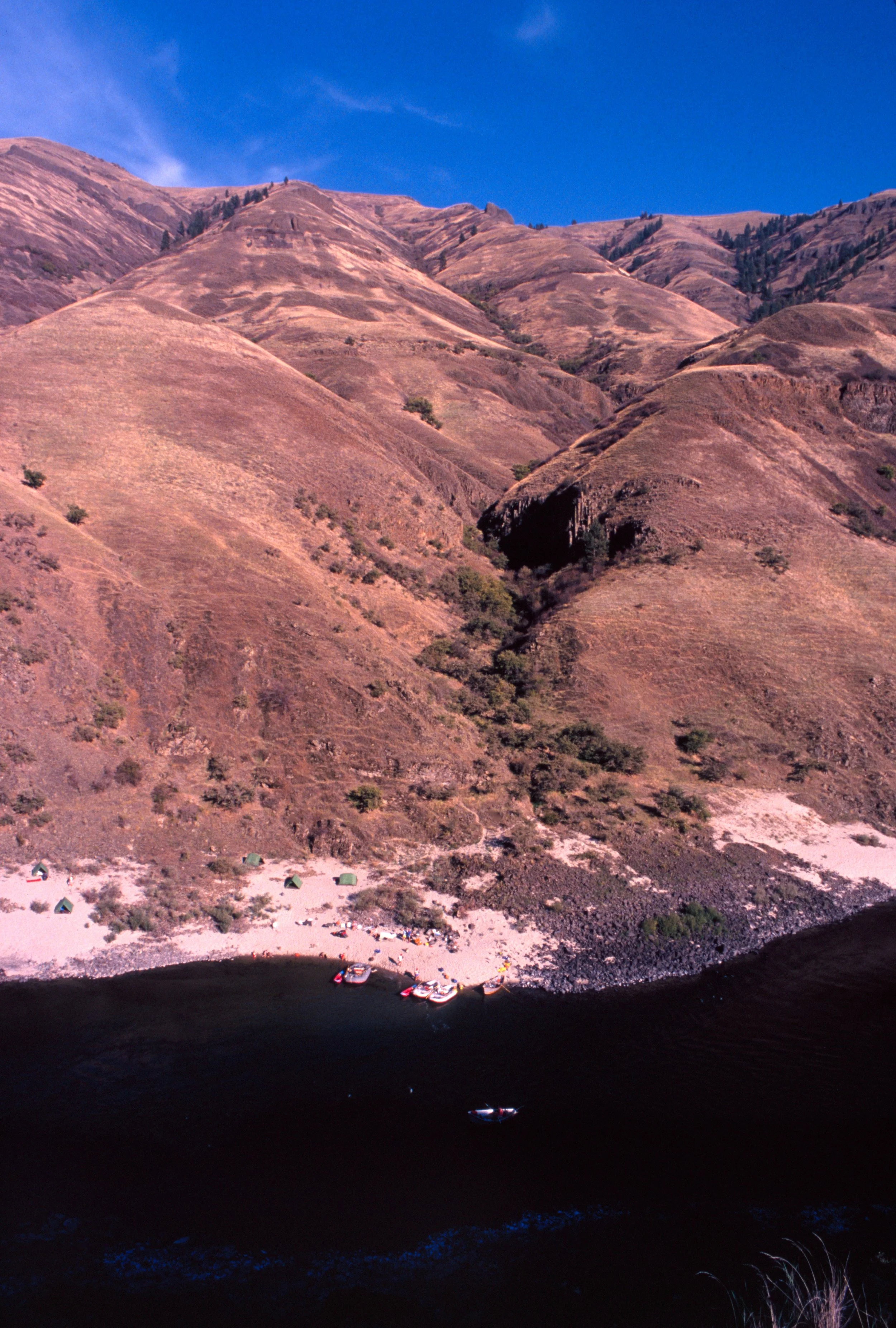
Hells Canyon of The Snake river
Noting my sweat stained shirt and hat, soaking boots, my backpack and cameras a father of two teenaged boys inquired. “So how was it?”