
Trout Junkies
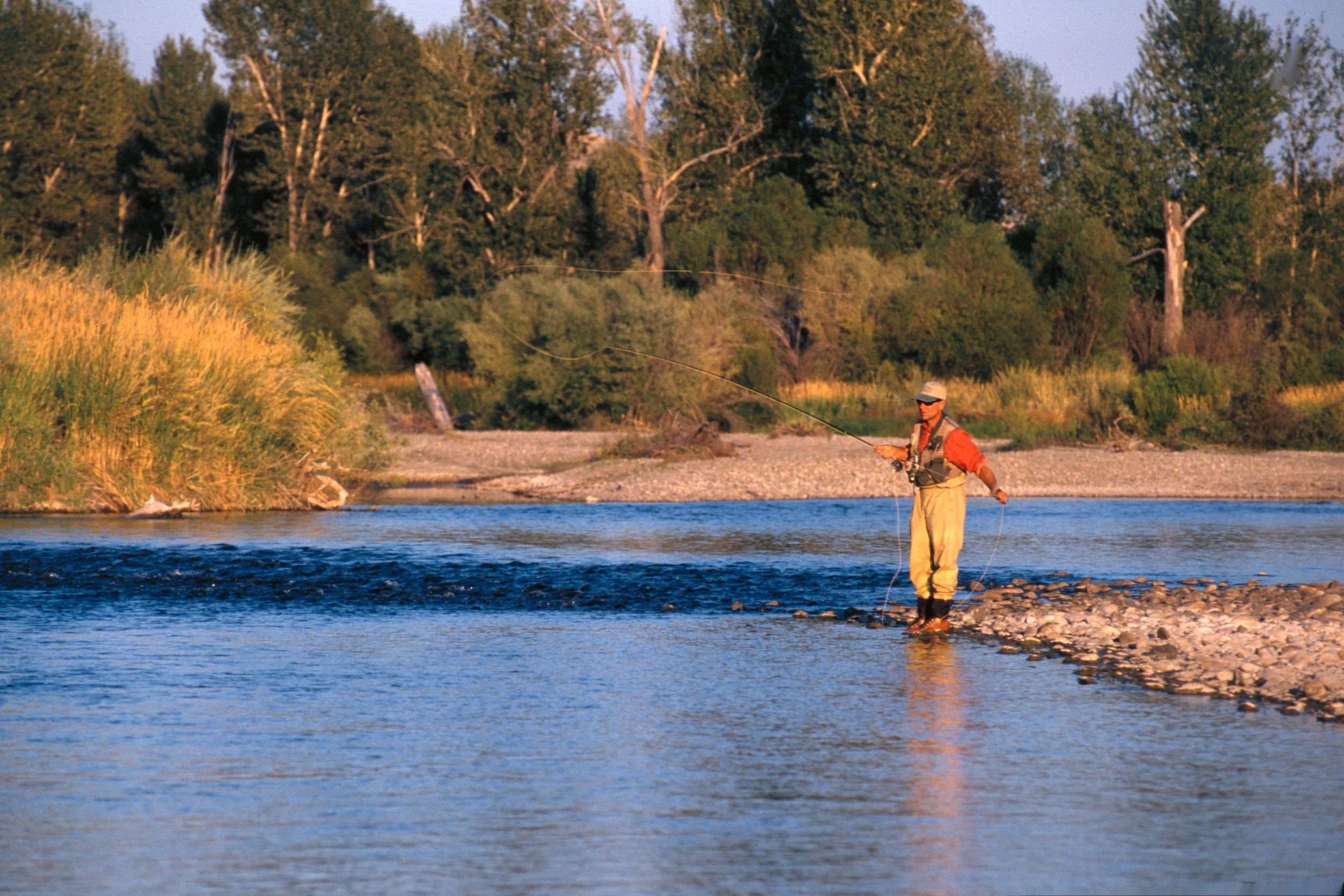
There are men and women living in Idaho, whose blood is part spring water, part clean gray gravel, part long skeins of green cress and part transparent mayfly shucks. Some are blindingly rich, drive forest green Range Rovers filled with quivers of thousand dollar Loomis and Hardy rods, Fin Nor brass reels and enough flies to stock a sport shop. Others are dirt poor, work ten hour days then limp to a free stone river in a rusty pickup and there, fish a frayed fiberglass rod and a woolly worm until the moon casts a silvery reflection across the slow moving water. Rich or poor, neither can be held accountable for their actions for, by any definition, they are junkies, pursuers of fish, who will endure summer heat and winter cold solely for the chance to set a tiny hook in a huge trout.
The ranks of Trout Junkies are filled with anonymous young men and women who, as soon as they wade Idaho’s streams, ponds and lakes, sacrifice colleges and careers upon an altar to trout. Or, graying men and women who, while they raise their children and pursue their careers, dream of spring fed creeks, dimpled rises and the broad, bright backs of rolling rainbows.
Most laws were enacted to preserve the resource, but the truly addicted rarely keep trout anyway, preferring instead to catch and release, in gratitude for a hard fight and a lasting memory.
In some eyes, this deciding between life and death speaks to the soul of trout fishing. Whether trout draw such a fine distinction is unclear. Gratitude, anger and fear are generally attributed to homo sapiens and whether a trout fears for its life, or is simply reacting to the hot pain of the hook, the reel’s drag or the unfamiliar limitation of its movement, is best left to piscatorial philosophers.
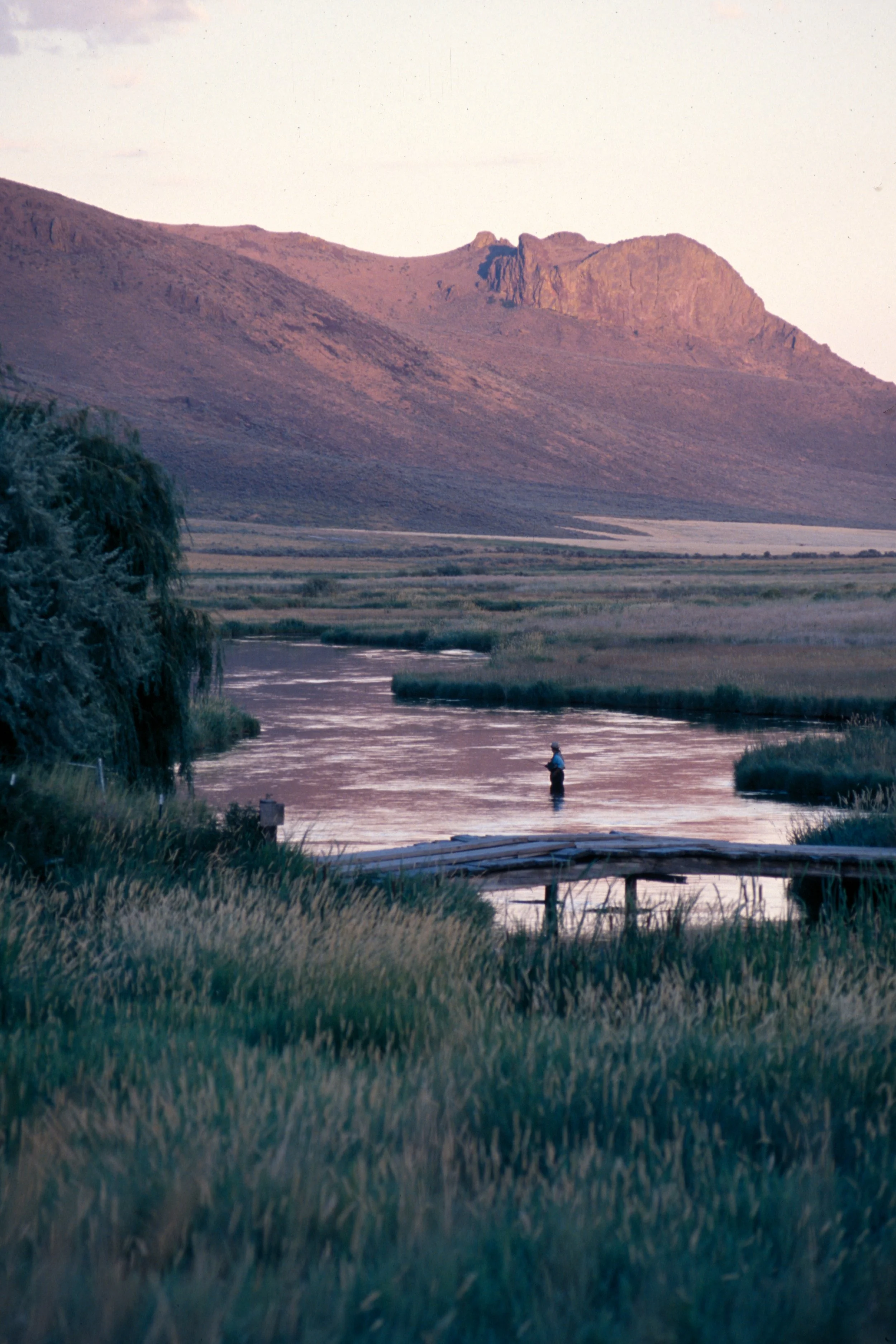
Rick Kapala, Jim Holcomb and Liza Paschall are typical of the breed. Unlike other, more dangerous addictions, they find their fix in quiet streams, swift rivers and bright springs where the water surges out of the earth in clear, chilled currents. No law specifically addresses their obsession, unless one counts the opening and closing of trout season, various bag limits or the restrictions on gear.
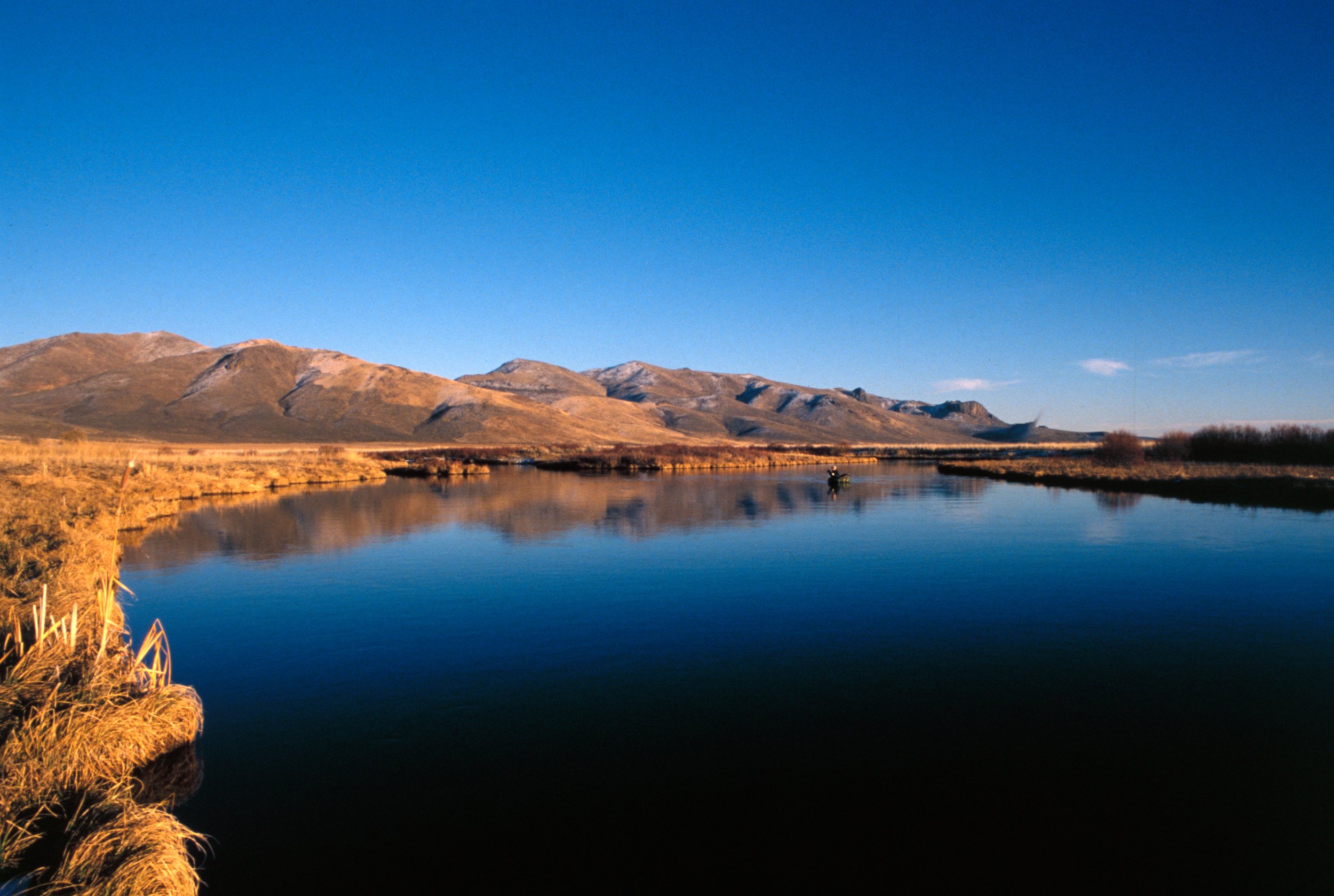
All addicts remember their first fix and Rick Kapala credits his father for introducing him to fishing. He confesses, “I can’t remember a time when I didn’t fish with my dad. From the age of five years on I fished all the time....in fact that’s all I can remember about being a kid.” Years later, while Kapala was working as a back country ranger in Washington’s Olympic National Park, he would carry a pack rod. By then the brilliant rainbows, wolfish browns, the speckled brook trout and spectrum of salmon and steelhead had set a hook deep within him. He remembers, “We were out for ten days at a stretch and during that time I fished every creek and lake I came across.” Kapala admits, “My love of fly fishing has everything to do with the process; the demands of casting, managing your line and fly selection.”
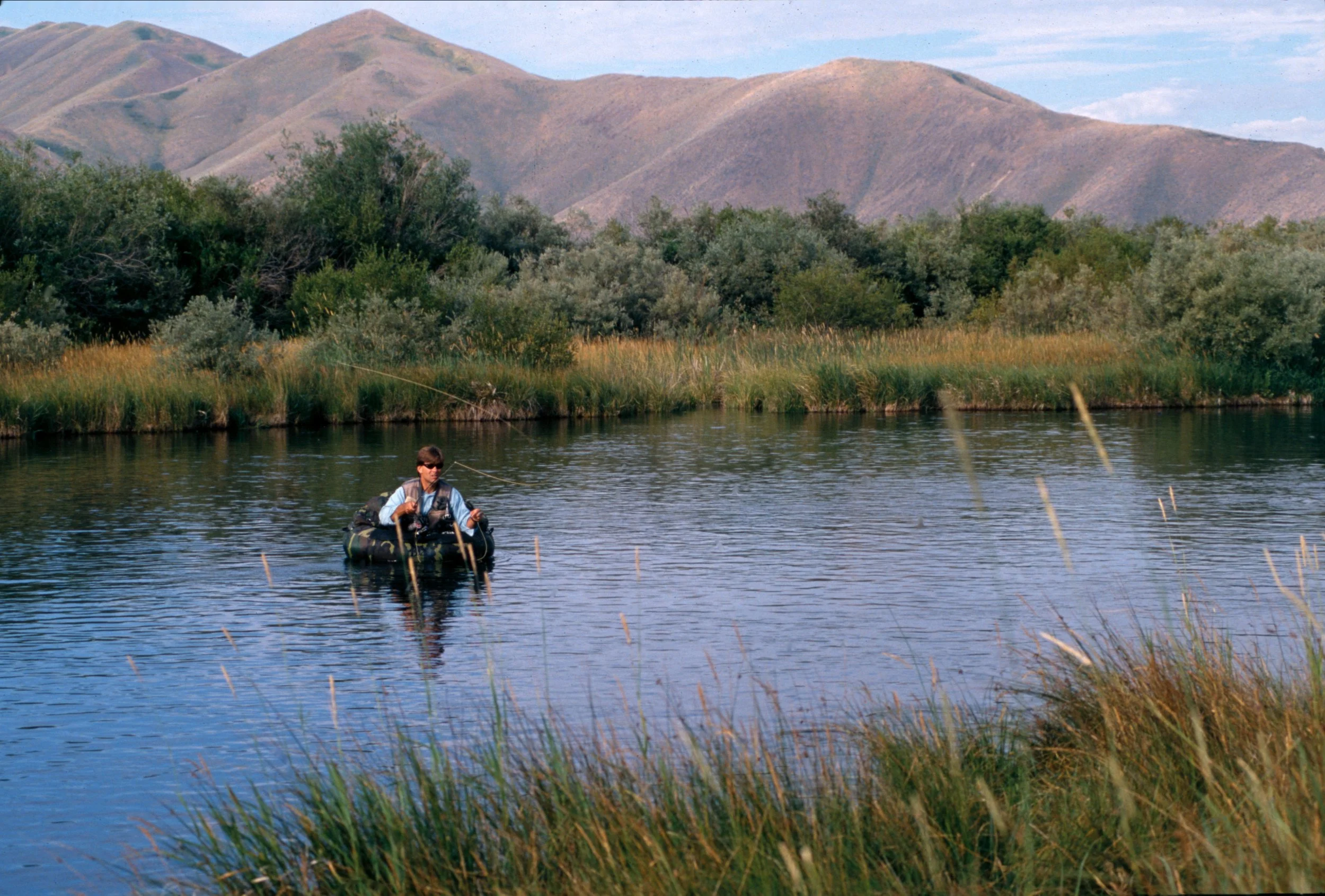
Jim Holcomb was working as a back country ranger in Central Idaho’s White Cloud Mountains when he wandered into Dick Alf’s fly shop. Alfs must have recognized a kindred soul in Holcomb for he sold him a fiberglass rod, a sheet metal reel and half a dozen flies. Holcomb somehow managed to fool, “a bunch of uneducated cutthroats.” However, it wasn’t until the following summer that a trout first hooked itself at Silver Creek’s Point of rocks, then ripped him into the backing. He remembers “I was stripping a dry fly back under water and a huge rainbow hit it.” The moment served as a tide change in his life.
Few addicts will admit they are addicted and this is true enough of Holcomb. In his defense he says, “Even though I need it physically, I wouldn’t say I am addicted.” Then pausing he adds, “But if you talk to my wife you’ll get a different answer.”
In a rare coincidence, Liza Paschall was also working as a ranger in Yosemite when her husband’s grandfather handed her a bamboo rod. She was living at Glacier Point and in the evening, after work, she would fish the Merced River below her home--a habit she continued after she moved to Idaho.
None of the three consider themselves great fishermen. Kapala says, “I fish a lot but consider myself only average and certainly not on a par with Jim Holcomb or Bob Harwood, who in some ways are defined by their fishing.”
Fly fishing has indeed ordered Jim Holcomb’s life. In the past twenty years, he has cast to trout in New Zealand and the far corners of the American West, to steelhead in British Columbia and Siberia as well as Bone Fish in the Bahamas, Tarpon in Florida and Atlantic Salmon in Quebec. During the same period he started Idaho Mud Works and now spends much of his day sitting in front of his pottery wheel, throwing a variety of cups, bowls and plates decorated with bright glazes of brown, rainbow and brook trout. Holcomb loves his work but confesses, “after my family, fishing is far and away my number one passion.” So obsessive is he, that there are times when he wakes in a cold sweat thinking about fish he’s hooked and lost and, when pressed, confesses that if he could not fish, he would sink into a deep depression.
Liza Paschall discovered spring creeks shortly after she moved to Idaho. After work she would fish with Jim Holcomb and Dave Glasscock until stars filled the summer sky. Liza eventually started guiding for Ron Fudge and then Bill Mason. Even the birth of her son Dawson, did not dramatically alter her schedule. When she wanted to fish, which was nearly every day, she simply took her baby along.
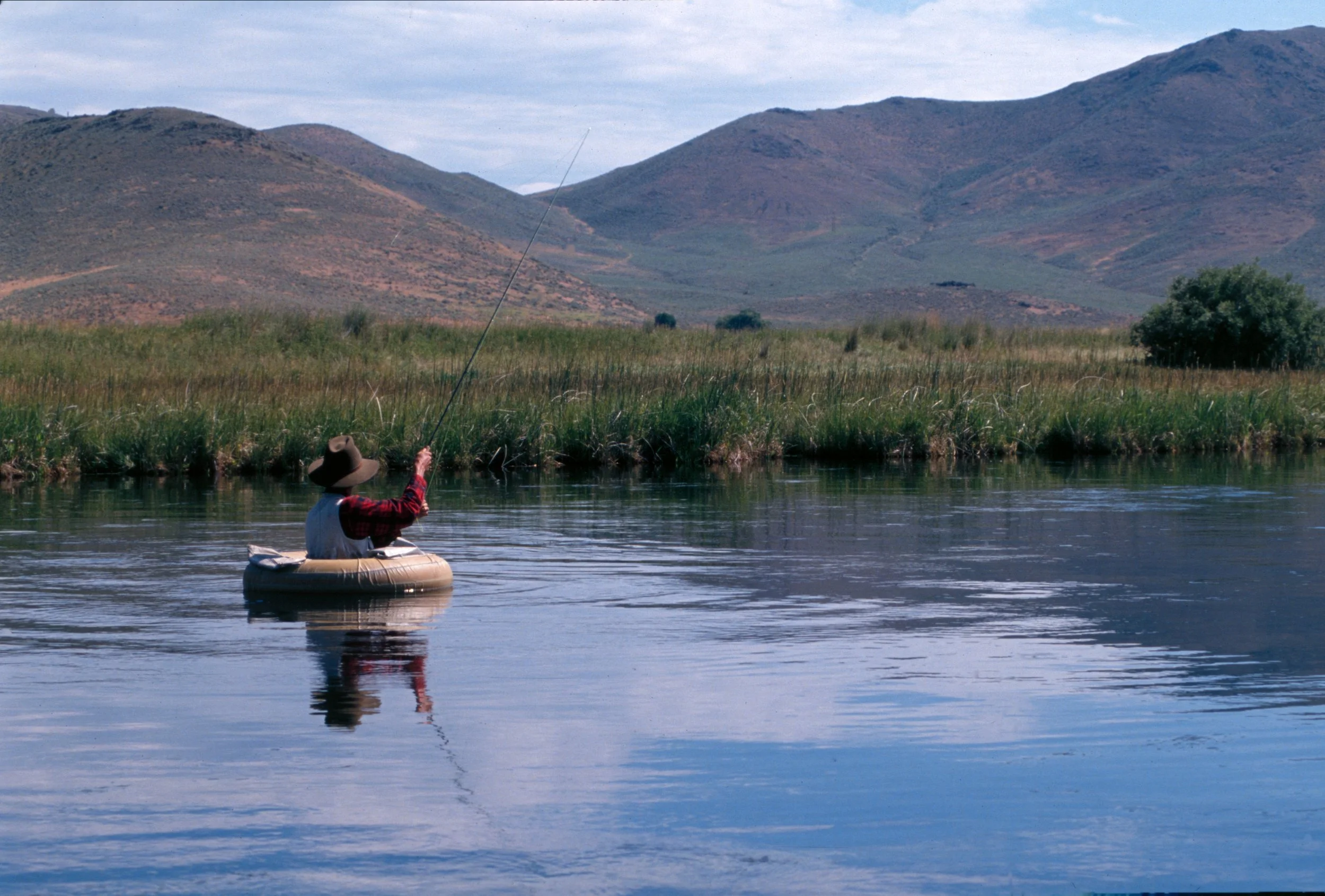
On one of those afternoons, local photographer Dave Wheelock photographed Liza with Dawson in a back pack The moment speaks of a modern Achilles being allegorically dipped in a cold, spring fed creek. Dawson’s eyes reveal a precocious intelligence and one must wonder, if at that young age, he comprehended what Liza was telling him about the habits of big fish and small flies. If, by watching his mother, he learned how to cast a line and how to let it drift. You wonder if those hours on his mother’s back created a genetic memory that will, in time, draw him back to clear, cold pools on fast running streams.
There is, indeed, a Zen to fishing. The fly, the cast, the placement and then the rise and hook set, combine to produce performance art. Little wonder that many of America’s best writers have been moved by this timeless circling between men and trout.
Kapala had almost stopped fishing when he moved from Alaska to Idaho In contrast to the storied paradise popularized in national fishing magazines, Kapala remembers that Alaska’s streams, lakes and rivers were either inaccessible or crowded. “You had a choice of flying into a pristine wilderness, or competing with a hundred other fishermen slinging lead at spawning salmon,” he remembers. In contrast, Kapala discovered that Idaho offered an amazing access and variety.
Though he acknowledges that Silver Creek is an incredible resource, he is drawn to the Wood River’s polished boulder bottom, overhanging willows and cottonwoods, the calls of gold finches, orioles and the myriad insects that live in fast moving water. He notes, “I love to walk along the Wood because, even during the height of summer, you can find a quiet stretch to fish.”
As precise as they are obsessive, Trout Junkies time their comings and goings to the setting sun, rising moon and the ebb and flow of meteorological high and low pressure. And yet, when you ask them if catching a big fish ensures a memorable day, to a person they admit, not always. Liza says, “Everybody is excited when they hook a big fish but the beauty of fishing, is not catching fish, but placing one self in a place where fish live.”
Trout Junkies insist that huge fish belong to the community of man and, in general, do not brag about the big rainbows or browns they have caught. Such bravado is better reserved for the less experienced; anglers who by luck alone, hook a huge fish, bring it to net and then either behave well and turn it loose, or behave badly....the memory of either will become part of the story and certainly influence how FATE regards their future efforts.
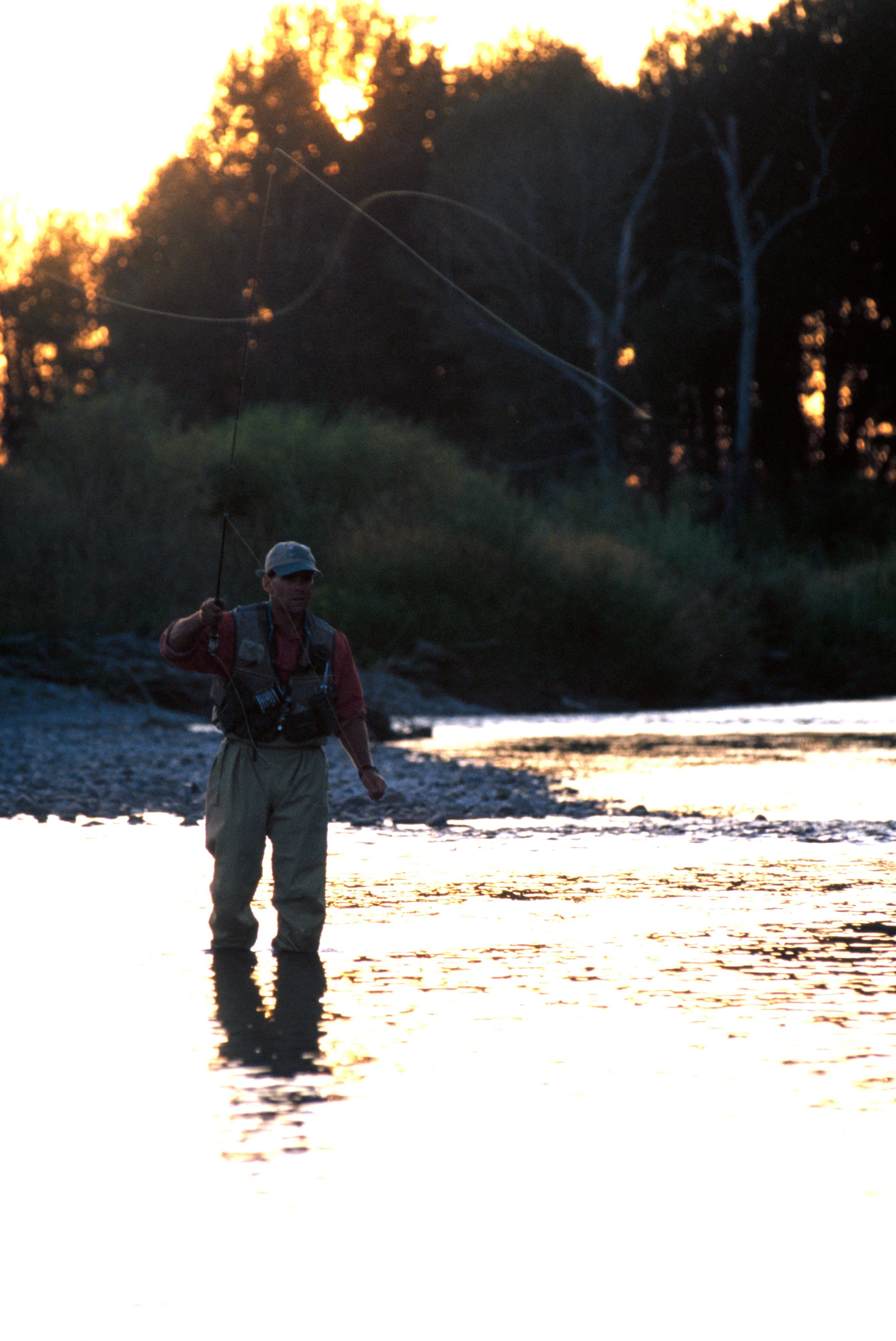
Long before the unexpected success of Robert Redford’s lyric adaptation of Norman Maclean’s, “A River Runs Through It,” the sport was peopled by the hard core, men who cast cane rods laced with silk lines that snaked down to bits of endangered fur, floss and feathers. From polar bears to bird of paradise to jungle cock, the beautiful and rare found their way onto Mustad hooks.
Redford’s movie attracted a new generation to the sport, a development that has put pressure on once secret holes. Liza used to guide and Rick still does and one wonders if leading clients to their secret places and favorite big fish, amounts to a hard compromise? And has the Wood River and Silver Creek lost that sense of isolation and solitude that originally drew them here? Kapala admits that visitors often try fly fishing because it’s a card they have to punch. But he quickly adds that any reason is a good reason, especially if it offers him an opportunity to make a statement about river ecology and catch and release.
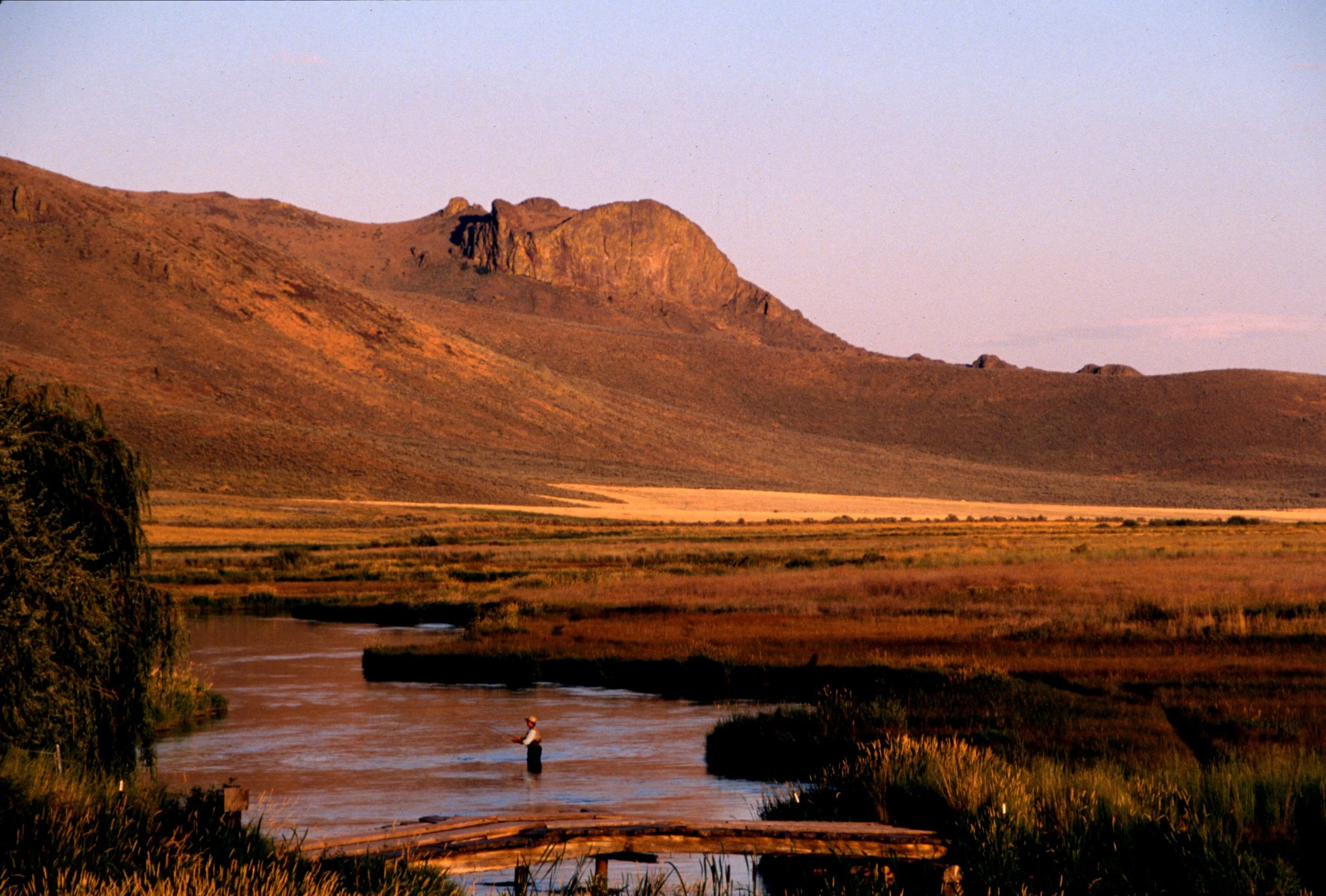
Holcomb's habits have changed as well. If he was once a head hunter who counted big fish as a raison d’etre, with a four year old son demanding his time, he is now happy simply to get out. He laughs when he says, “My son’s approach to fishing often consists of whacking the rod on the ground. That’s ok because Jack Hemingway once told me that he loved to fish because his father refused to take him until he begged to do it. It makes sense to me.”
The relationship between fathers and sons and daughters, speaks to the heart of the sport. Kapala remembers, “When I was thirteen, my dad gave me a Sears fiberglass rod and from that point on, I rarely, if ever lure fished. I must of broken five rods but instead of tearing his hair out, my dad would shrug and say, ‘well, it looks like you need another one.” He pauses, “If nothing else, fishing with my father taught me patience.”
Trout Junkies are hard pressed to define a perfect day. Though Rick Kapala can remember the twelve best fish in his life, he insists a perfect day does not depend on size or numbers. He remembers a moment when a baby beaver appeared in a pond and swam around his waders, totally unafraid. “That one experience made a perfect day,” he says.
Liza is well aware of increased fishing pressure, but admits she simply doesn’t fish in the popular places or during the mid-summer hatches. Like a wild trout that has been pressured by planted hatchery stock, Liza now searches for the back eddies. She muses, “I often fish the less crowded areas where the big fish might not be.” She now travels to fish and concentrates on the shoulder season, spring, fall and even winter on the Wood. Liza stopped guiding when Dawson got older and now teaches fishing classes to women. The change has energized her own passion for the sport. She says, “I think women have a slightly different take on fishing. As a group, they are not obsessed with large trout but with passing through where large trout exist.”
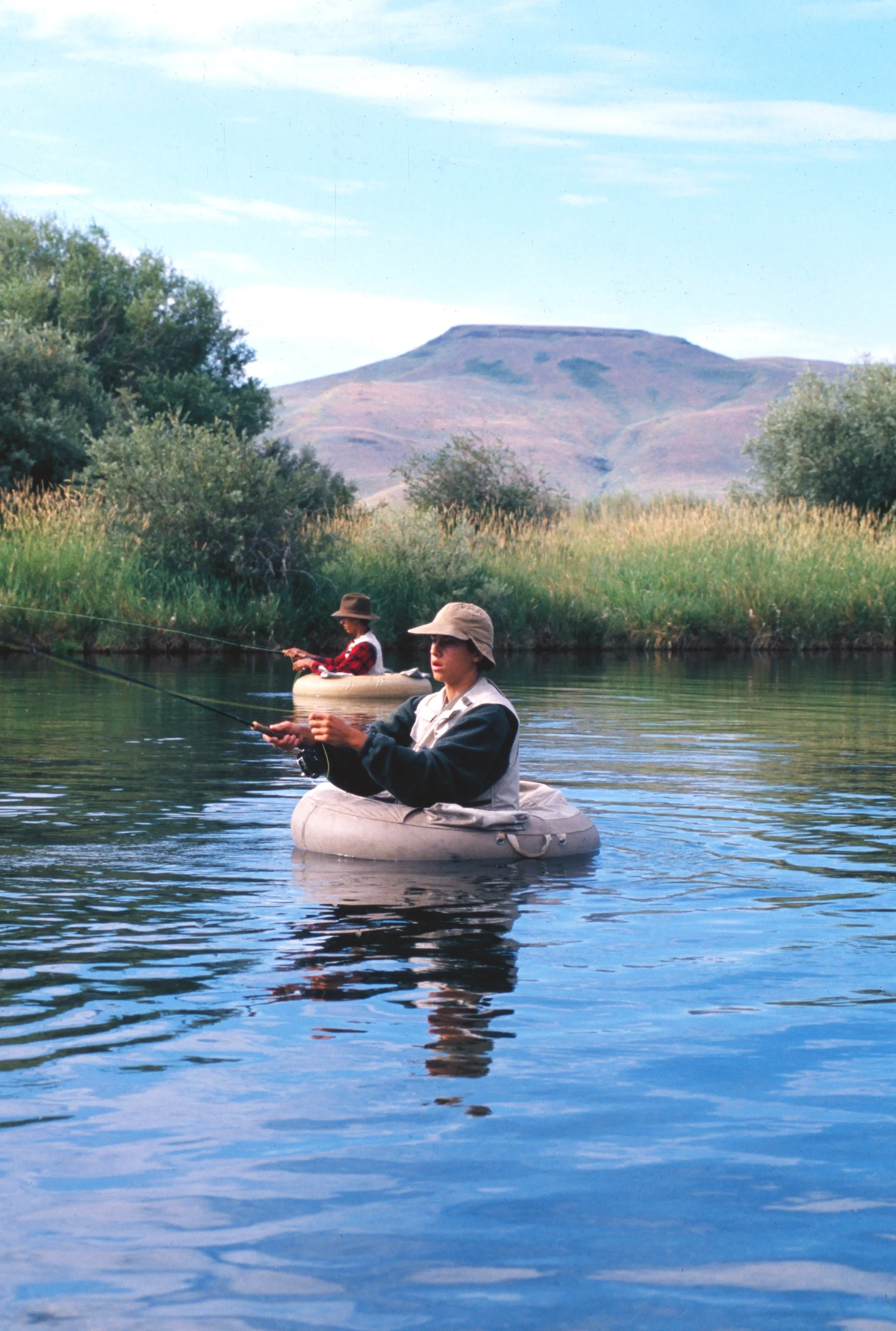
Liza points out that, “Some fish are bigger than others, some of the flies are different but for me it could be how a sunset lights the water, or a flight of ducks passes over head, or simply being on the river.”
For these three, success no longer focuses on hooking big fish, or catching hundreds of fish. It’s simply spending time in a place where fish live. Kapala compares fishing to nordic ski racing. “If you have a hundred races, in ten you will be unbelievably good,” he says. “And in ten you will be unbelievably bad. The other eighty will be about average. However, you have to experience the bad and average days, to value the good ones.”
The toughest question you can ask a Trout Junkie is, if they could only keep one fly in a box full of flies, which one would it be. Whistling softly, Rick Kapala admits, “That’s a hard one......it would be a dry fly, a Parachute Adams.”
Holcomb ponders the question for half a minute before admitting, “That’s a frightening scenario. You spend your life accumulating boxes of flies and then are reduced to one.” He then hesitantly decides, “Perhaps a small Rusty Spinner.”
Liza is equally frustrated. She first groans, then petitions the lord, then admits, “Oh.....that’s too hard, my favorite fly? Ugh, I don’t know,” then hesitates and confesses, “I guess a blue Damsel Fly.” It is only a concidence that the Damsel speaks to Lisa’s femininity.
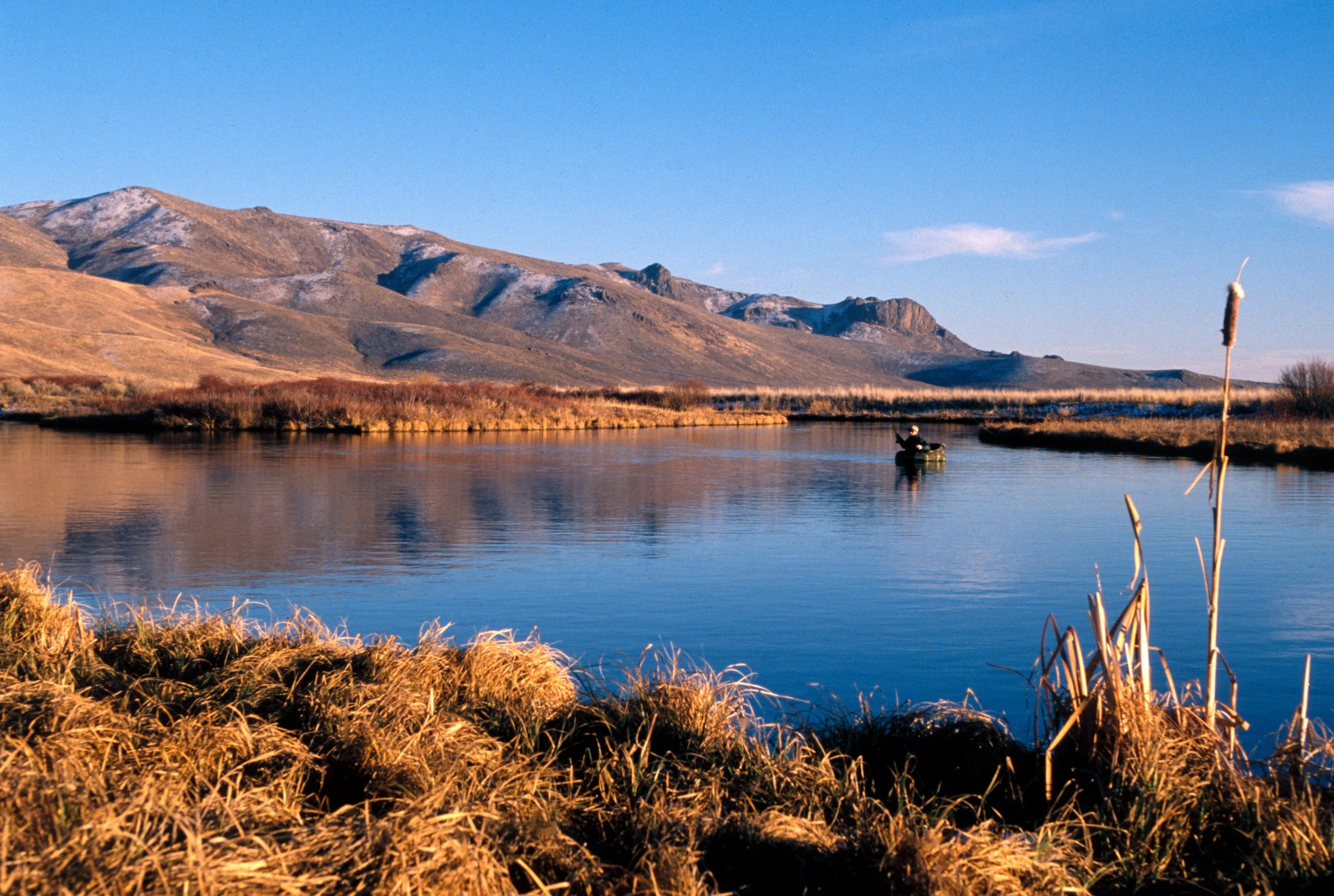
If you live here long enough, you will come to realize Trout Junkies are made, not born. Here you can float tube a placid reservoir and chase browns on an unnamed spring creek. You can hike to alpine lakes and cross Trial Creek Summit and hike high into the Pioneers. You can fish the Wood River from Galena to the desert or bear witness to spring fed creek’s prolific insect hatches, brilliant sunsets and wild trout.
At some point your waders will spring a leak when the hatch is on and the big fish rise fearlessly to the tricos, green drakes and mayflies that dip and dive above the water. Then you will know whether trout fishing is an addiction, or a hobby. The truly addicted will cast to surrounding rises as their waders fill with water. Picture standing on the sinking Titanic, the band playing bravely as the rising water first wets your shoes, then ankles, waist and chest. If you are truly addicted you will fish until hypothermia shakes your legs, chest and teeth. For Trout Junkies, the rising of big fish approximates an alignment of the planets and to abandon a feeding frenzy is as unthinkable as hooking and losing a record rainbow.