Bonito!
It was my Uncle Lee, my mother’s sister Margorie’s husband who invited me to go Bonito fishing in Ensenada, Mexico. My father had suffered a fatal heart attack three years before and looking back I was lucky to have a strong uncle who stepped into fill that void. I never sensed that my Uncle Lee felt sorry for me. It was true he was a man of few, but well-chosen words and while I knew he was shaken by my father’s early death, we were casting sand dabs off a Bodega Bay beach when he said, “Your dad loved you more than you can know.” I waited for his next sentence but my Uncle Lee was never a broadcaster and simply had me hold his rod while he poured a cup of black coffee from a beat to hell Stanley thermos. One sentence nine words, Uncle Lee’s memory on a wind-swept beach provided an anchor to a struggling teenager and then, two decades later, to a father of two sons.
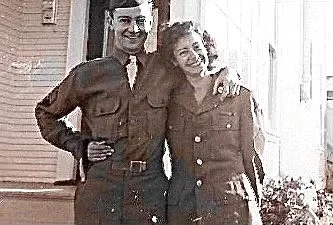
It was my Uncle Lee, my mother’s sister Margorie’s husband who invited me to go Bonito fishing in Ensenada, Mexico.
I can’t recall who exactly invited me to go fishing in Ensenada. I’m sure it was my Uncle Lee’s idea, but my Aunt Marge and my mother were close, and I wasn’t truly offered a choice. My mother believed a road trip with Uncle Lee and cousin Doug would have a positive and lasting effect on her wild, eldest son and the following week drove me from Palo Alto to Martinez. Uncle Lee pointed my cousin Doug and me toward the back seat of his 1961 Galaxy 500 with the 390 cubic inch four-barrel engine then said, “We’ll need to pick up Claude.”
“Claude” proved to be Claude Moore, a local barber who, when Lee mentioned he planned to fish for Bonito in Ensenada signed on for better or worse. We soon learned that while Uncle Lee would handle the driving, Claude was responsible for the entertainment that continued pretty much nonstop from the moment we picked him up at his barber shop south to San Jose where we joined 101 to Gilroy, San Luis Obispo, Santa Barbara, Ventura, Los Angeles and other cities that now blend one into another. Claude’s main topic of conversation was stories he’d heard while cutting hair. I wish handheld tape recorders existed then, for Claude held Doug and me spellbound as the Galaxy held a steady sixty-five miles an hour past California’s almond and prune orchards, cattle ranches and further south the costal range’s grass and oak covered hills. Still six months shy of my sixteenth birthday, I heard about Claude’s golden glove boxer of a son who possessed a wicked right that, when it landed squarely behind his opponent’s left ear, signaled lights out. Claude recalled local men who cheated someone they shouldn’t have and simply disappeared into Suisun Bay He described unfaithful wives, card sharks, swindlers, drunks and pot heads—all woven into a narrative history of Martinez that flowed though Claude’s main street barber shop.
The miles unfolded, the sun settled into the Pacific and it was close to ten o’clock when we checked into a faded motel near the Ensenada’s harbor. Weathered is probably an overstatement but my standards were far lower then and a sagging bed and week-old sheets served for one night. We were up early, ate at the local fishing crew’s restaurant, then headed to the dock. I do not remember the name of the boat, or the captain’s name or any of the crew but because I have an affection for the Mexican culture, refuse to attach titles or names that aren’t true. I do remember they welcomed us with good rods, and a full bait tank.
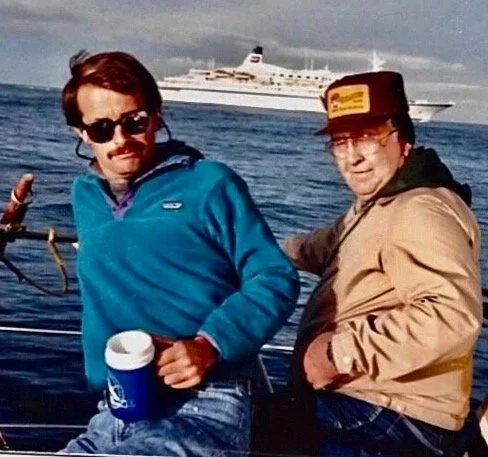
Back then Bonito were not hard to catch. Nor did we have to run far to catch them. Ensenada was still visible when the captain closed the throttle, baited a hook with a live sardine and cast into the dark Pacific. Two turns on the reel handle and he was hooked up. Handing me the rod he ordered Uncle Lee, Doug and Claude to bait up. A minute later we were all fighting fish. One rod crossed another as the small, silver tuna raced from side to side and then, when they tired, were gaffed and lifted into the boat, where they were tossed into a wet burlap bag. Fish followed fish until the bags were full and our arms ached from reeling. Catching thirty Bonito was fun but at some point I began to wonder what we would possibly do with a hundred tuna. And still the fish shivered across the transom until the sun passed above us and our time was up. We reeled in, the captain started the boat, spun the wheel and pointed the bow toward shore.
If I worried still about what would happen to the swollen burlap bags of tuna, the captain had faced that dilemma before and offered an agreeable solution.
“Senores” he addressed Uncle Lee and Claude in a thick but understandable accent. “We will gladly trade your fish for cans of tuna.” The trade proved to be heavily weighted in the captain’s favor but with no way to transport more than four fresh tuna in our ice chest, we were in no position to bargain. And with a case of canned fish locked in the Galaxy’s trunk and the captain and crew waving from the dock, we turned north to Tijuana.
While the fishing made a lasting impression on me, Tijuana too has a hold on my memory. My Uncle Lee booked a hotel off the main street that looked down on Tijuana’s pulsing night life. I do not remember much about the room other than the bed’s sagged, mine had bugs and the open window welcomed the music of both Mariachi Bands and barkers calling to Gringos to savor the delights hidden behind curtained entries to loud bars.
It was all deeply irresistible and after some persistence my Uncle Lee followed us down to the pulsing street. There, a photographer begged us to climb aboard a tired little burro, street vendors invited us to buy a sombrero with Tijuana embroidered across the crown, have our picture taken with a gorgeous twenty year old senorita, try on a pair of cowboy boots, buy a thick leather belt with a faux silver buckle, purchase a beautiful western shirt with pearl snap closures, eat a street stand taco, drink a frosty lemonade…that evening was by far the best shopping experience of my life.
The defining moment, however, occurred when a tough looking hombre blocked our way as we were passing the “Witches Den.” The door was open and a soundtrack I didn’t recognize pumped into the street. Neither Beach Boys nor Beatles, a heavy drumbeat, a hard bass guitar and loud horns supplied a perfect soundtrack for whatever imagined bump and grind occurred just out of sight. “Senores,” the bouncer gestured toward the entry. “Pase adentro!” Then in English, “Step inside. We have dancers, beautiful senoritas, margaritas, whiskey, dancing senoritas, you will not be disappointed…!” And at that moment my Uncle Lee earned my lasting love and eternal gratitude for gently pushing us toward the door.
The bouncer stepped aside, the curtain parted and true to hombre’s word, there were beautiful dancing senoritas, margaritas, whiskey and more. This many decades later, I can’t pass judgement on the beautiful senoritas or margaritas, but in truth I have not forgotten either. And, still six months short of my sixteenth birthday, during the long ride back to Northern California, between listening to Claude Moore’s repeated stories of Martinez and recalling how the beautiful senoritas high kicked across the stage, I had absolutely no doubt it was the best fishing trip of my life.