
The White Clouds
I did not intend to destroy my heels while hiking into Idaho’s White Cloud Mountains, but the rumor of remote alpine lakes filled with huge Cutthroat Trout offered all the reason I needed to overload my backpack and lace on a shin high pair of smoke jumper boots.
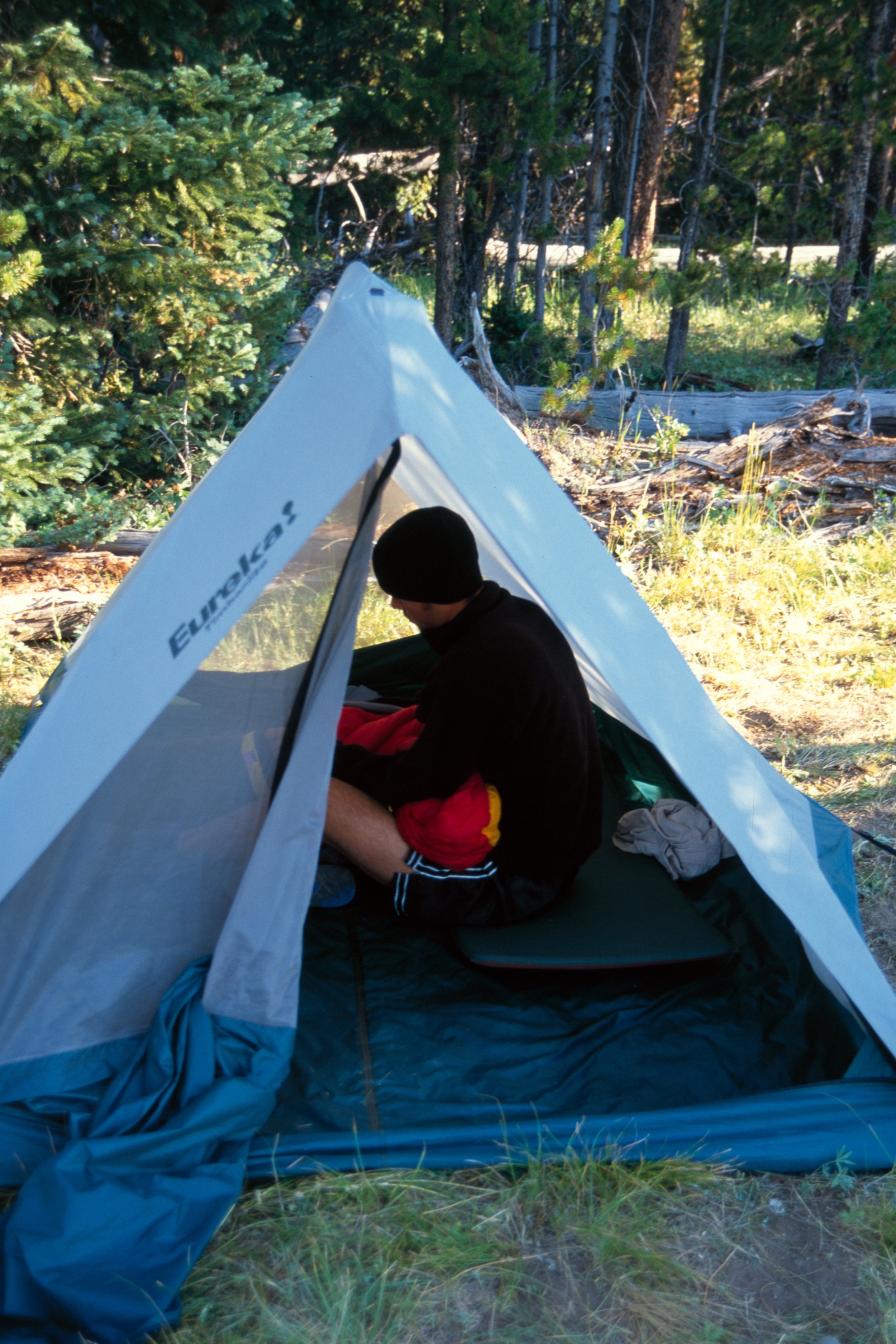
My friend Brian Ballard and I planned to spend the long summer weekend hiking, fishing and sleeping beneath the stars. Studying my new, bull hide boots, Brian commented, “You might want to go with something a bit less extreme.” Ballard had explored the White Clouds before, was well acquainted with the grades and distances, owned a pair of smoke jumpers himself and knew they were durable, if tough to break in. But I was young and confident and, ignoring his warning, started quickly up the trail out of the Livingston Mine.
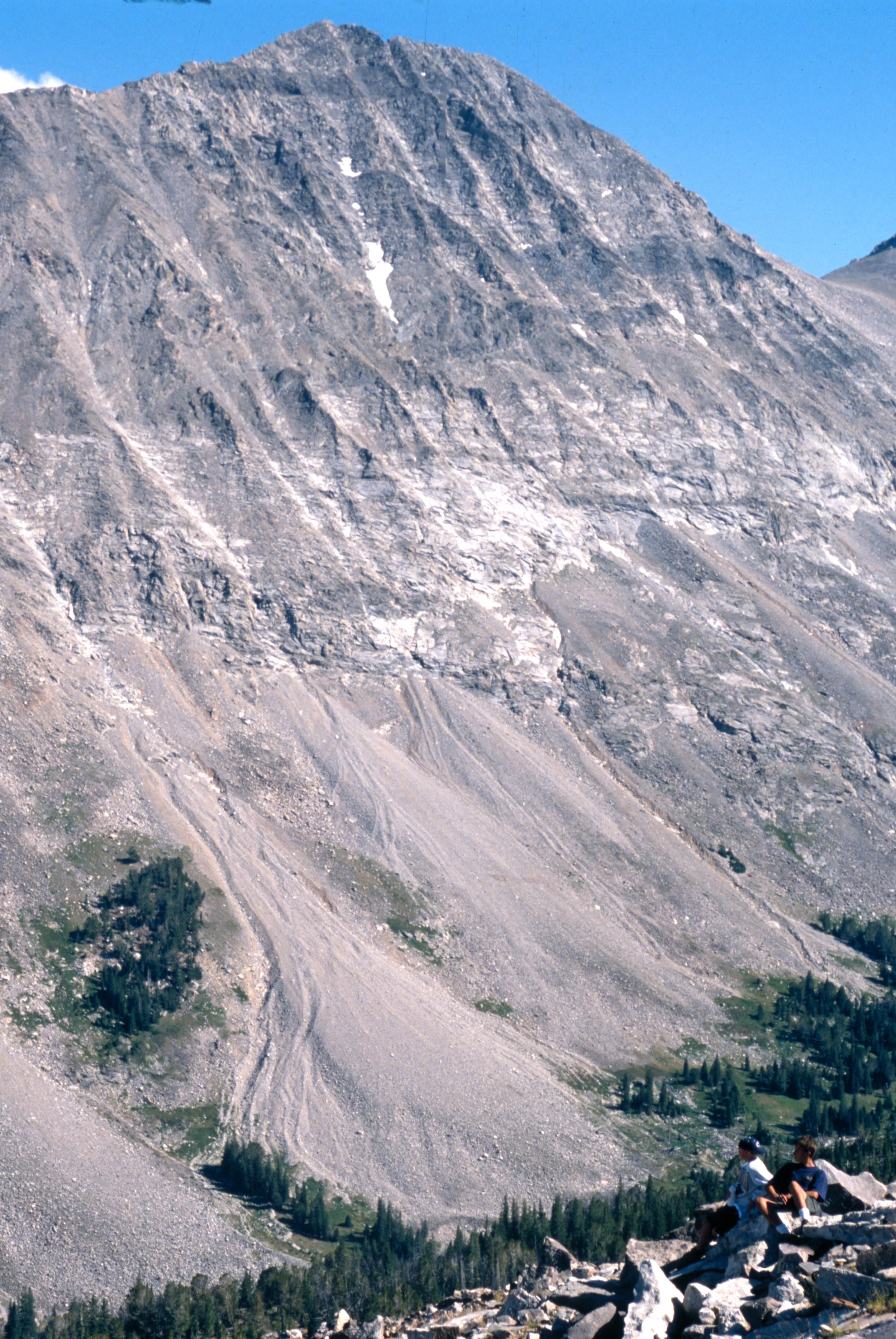
Four hours, ten miles and three thousand vertical feet later, two large, three layer deep blisters covered my heels. Half a dozen others decorated my toes and, as a result, my rapid stride had slowed to a painful limp. In the coming days, in place of climbing to tributary valley lakes, I tried to doctor my pock marked feet by standing in Misery Lake’s clear, cold waters. In spite of my best efforts, when it came time to hike out, I still had to duct tape a pair of shower slaps to my feet. Pictures taken that day of my heels still elicit gales of laughter but the accompanying frames of Castle Peak prove that the White Clouds were worth the sacrifice.
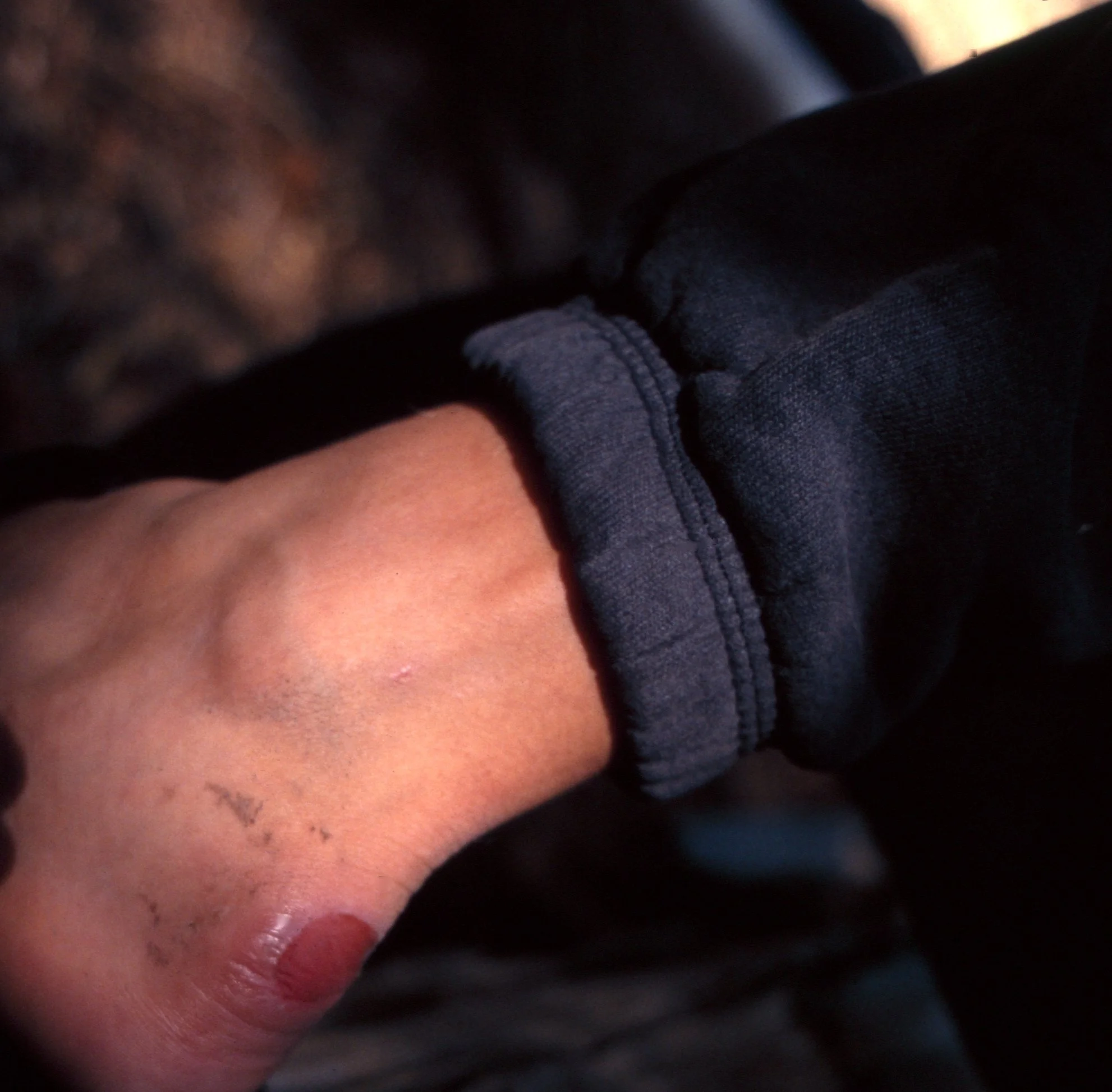
First layer of three deep Blisters
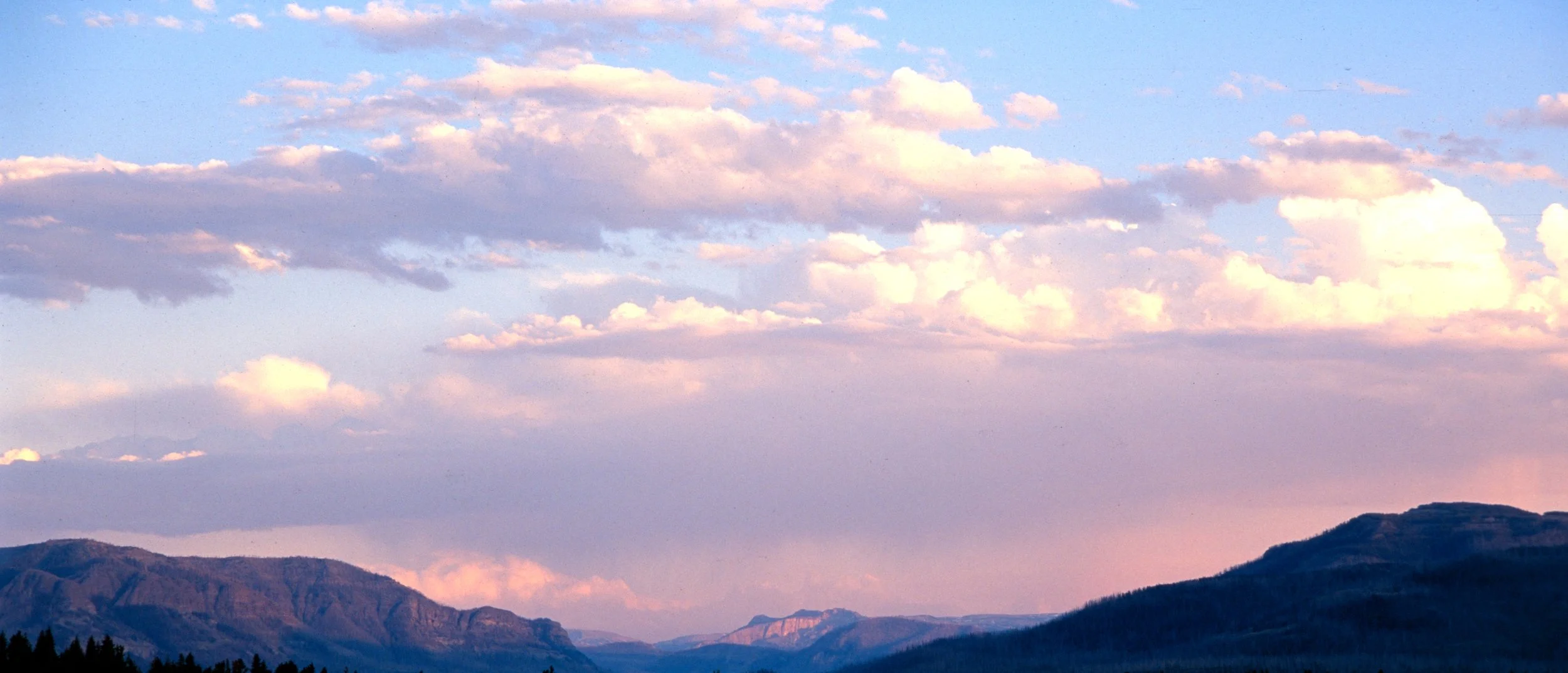
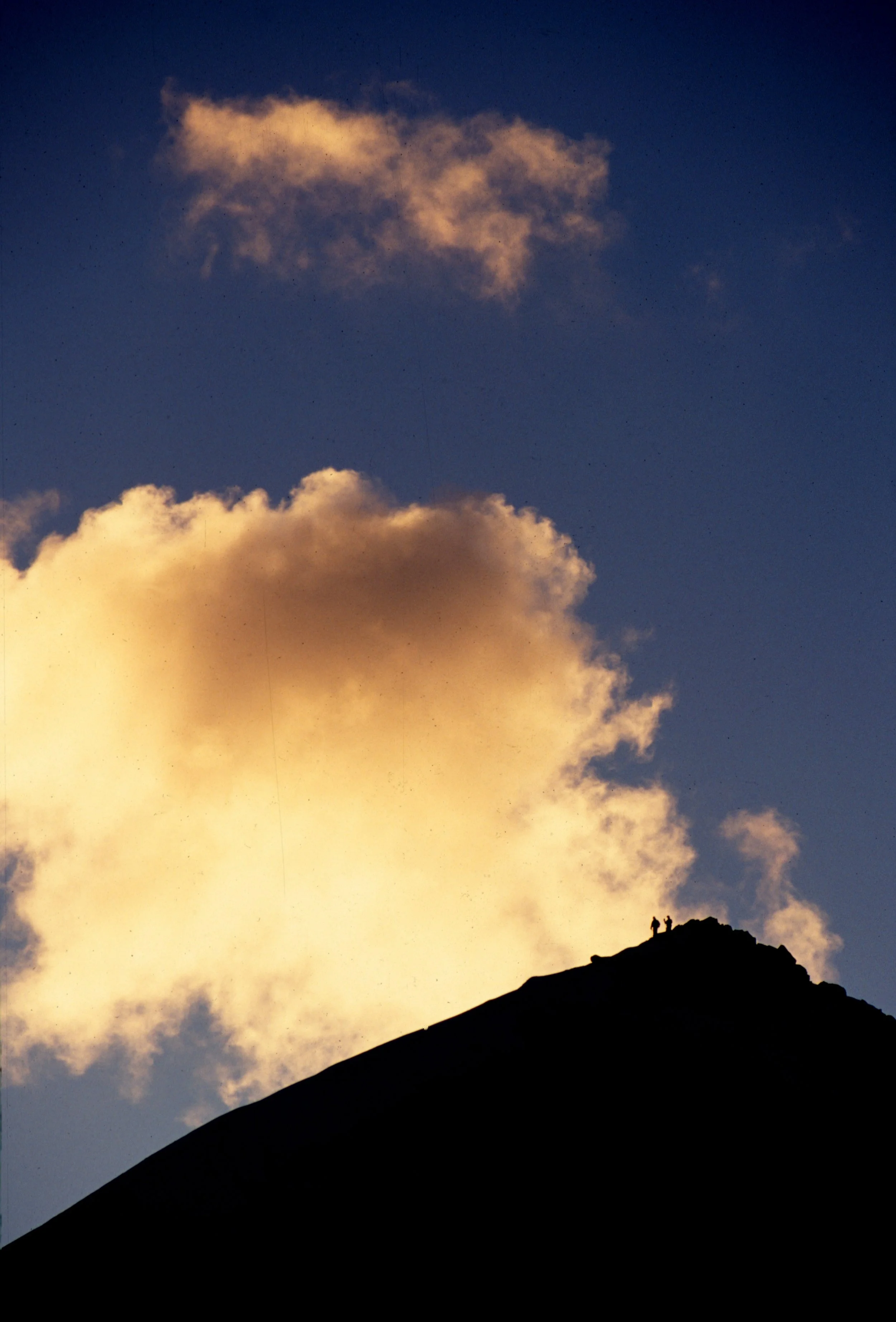
It is easy to see how the White Clouds earned their name. From a distance they mirror the towering thunderheads that dominate Idaho's early summer horizons. When moisture is lifted across the high peaks, the resulting late afternoon cumulus provide vast canvasses for the setting sun’s salmon, yellow and purple light.
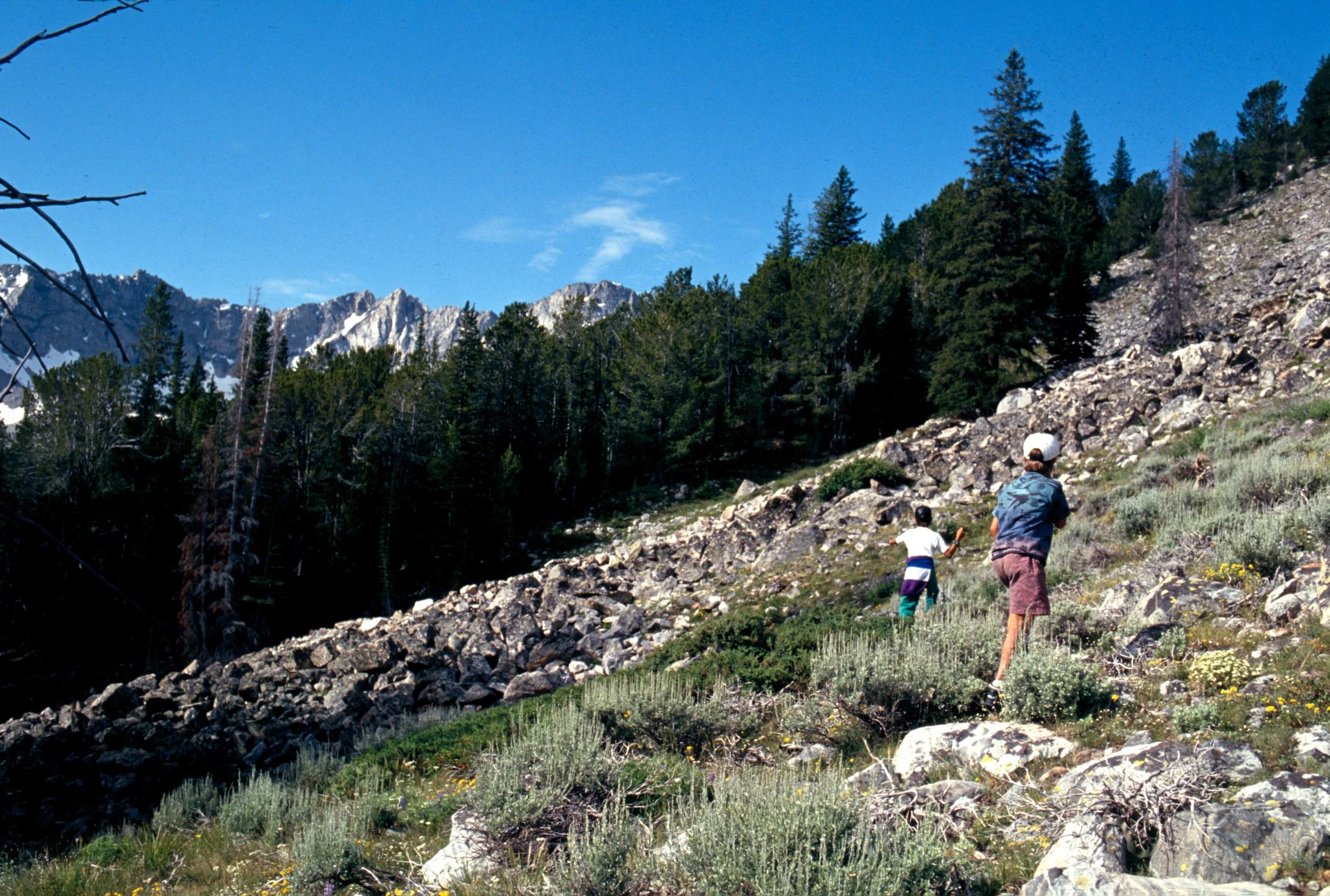
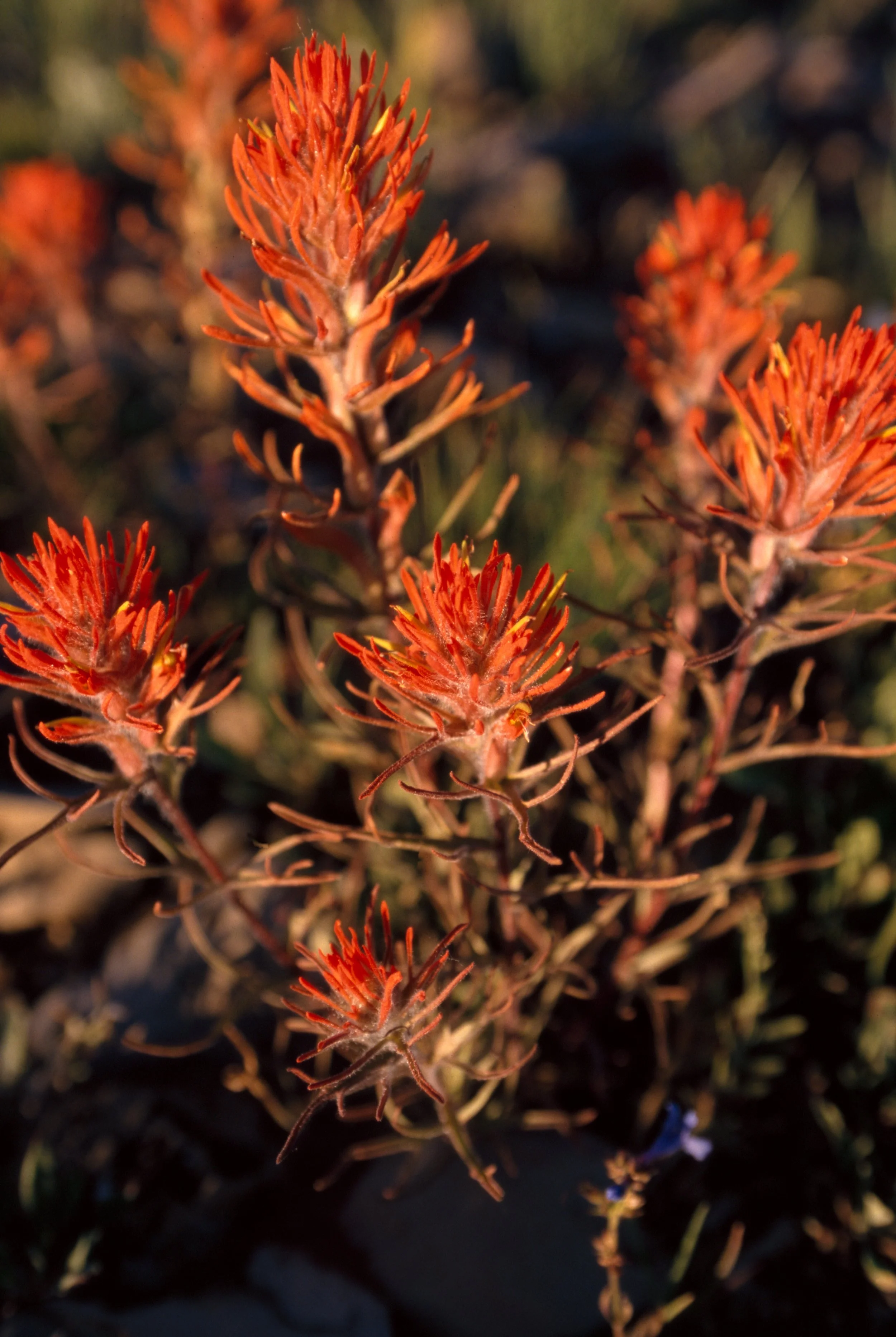
Bordered on the west by the sagebrush and douglas fir covered foothills of the Sawtooth Valley, the Salmon River on the north and the East Fork of the Salmon River Valley on the east, the White Clouds may speak of a summer thunderhead, but like ghosts, many of the individual peaks remain unnamed. On topographical maps, a number of these jagged summits are identified only by their elevation or simply preceded by "WCP" for White Cloud Peak. The action of moving and freezing water has softened this twenty mile mountain range and douglas fir, sage, willows wild flowers fill tributary valleys. Bear, wolves and cougars dominate the top of the food chain with deer, elk sheep and goats serving as prey species.
Rising to the west of the White Clouds, Idaho’s famous Sawtooth Mountains have been scaled, mapped, hiked, skied, named and, in places, developed for fifth wheels, motor homes and other drag along second houses. On a summer day the Sawtooth’s Redfish, Alturas and Petit Lakes boil with sail boats, water skiers and personal water craft. The result, at least in the Sawtooth Valley, is this once pristine wilderness has been tamed, and despite the best efforts of the Sawtooth National Recreation Area, settled with single family vacation homes. Called the Idaho Alps, like their namesake in Western Europe, or closer to the east in Jackson Hole’s Grand Tetons, the Sawtooths are slowly being loved to death.
While the White Clouds are equally as beautiful as the Sawtooths, they are far more inaccessible. Both ranges may lie within the Sawtooth National Recreation Area (SNRA), but rough roads and steep trails serve to protect the White Clouds.
Running north/south thisseries of ten thousand peaks were forged by complex geologic forces. Beginning more than 250 million years ago, limestone was altered by exposure to molten granite, to create calcite-silicate....a relative of marble. Woven within the calc-silicates are faults that contain an alchemy of zinc, fluorite, gold and molybdenum. Like other Central Idaho mountain ranges-- the Boulders, the Smokeys and the Pioneers to the south, gold fired the nineteenth prospectors who studied these distant white peaks and dreamed of striking it rich.
The White Clouds are haunted by men like George Washington Blackman a black miner who in 1875 pioneered mining in the area. Washington Basin, Washington Creek, Washington Peak and Blackman Peak are all named after him. Others who followed would squander their youth in rocky pits during the warm summers and freezing winters. Evidence of their back breaking labor can be seen in gray, pink and yellow tailing piles and the rough roads that fade to valley trails.
For all the White Clouds promised, they never produced a major strike that would have supported even Hailey, Idaho sixty miles to the south. And if they had, the mountains such as the 11,820 foot Castle Peak were arguably too high, too rugged and too distant from major rail heads to justify deep shafts, smelters or roads to transport the ore. Dependent upon mules and wagons, there were other, more accessible ranges where the ore snaked close to the surface.
Those nineteenth century miners have long since disappeared into remote and often unmarked graves, but the White Clouds continue to be threatened by the development of open pit mines, logging and all terrain vehicles that cut new roads into pristine valleys. At this point, laws restricting environmental impacts are haphazard and conservationists can only dream of permanent protection.
Prospectors are now far outnumbered by the back packers and fisherman who follow clear streams to high mountain lakes. Formed by the immense glacial weight of the last ice age, these lakes were gouged out of the bed rock and filled with snow melt. A few sit in isolated cirques, and now, when winter snows melt, their outlets vault over cliffs, or tumble down scree rock walls.
Named Champion, Phyllis, Lightening, Washington as well as dozens of other names plucked from local history, mythology, geology, fiction and literature, or whatever struck the cartographers fancy who painstakingly......and often mistakenly fixed these glaciated pools on the map, they reflect the bright faces of the mountains that erupt from their shore lines. Depending on the time of day, from dawn to dusk, these small alpine mirrors can turn from morning rose, to blue at mid-day to gold as the setting sun’s last rays light the ten thousand foot peaks.
Unless you are a fisherman you might not notice the rings that ripple the still surface. If it weren’t for the clear blue sky the dimples could be mistaken for rain drops. The smaller rings, however, are caused by water borne insects while the larger mark the presence of Cutthroat Trout feeding upon the emergers. Trout grow slowly during Idaho’s long winters and brief summers and an eighteen-inch fish can easily be a dozen years old.
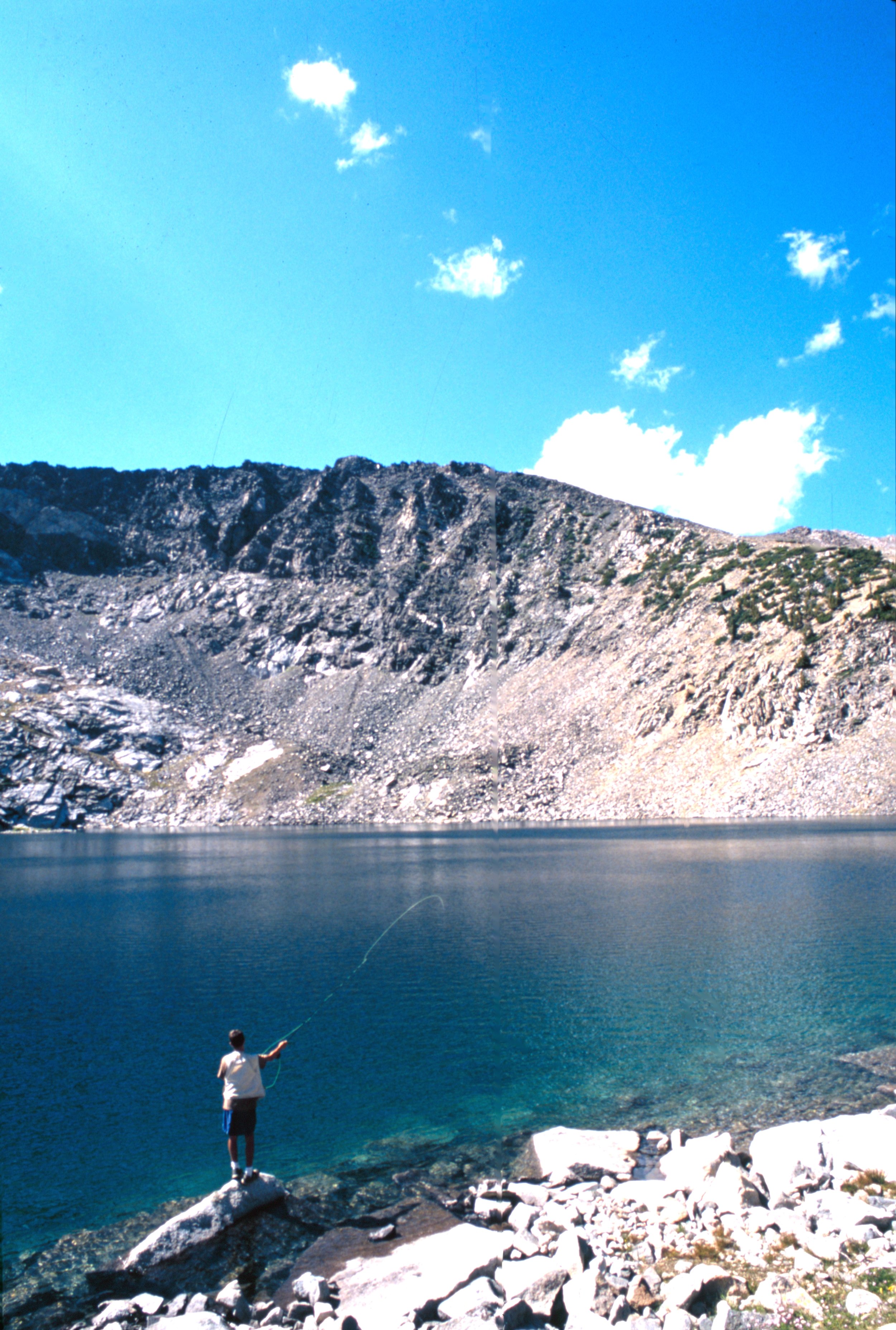
A decade has passed since I soaked my blistered feet in Misery Lake. More than the blisters, however, I remember the fishing. That afternoon, while Brian explored a tributary valley, I assembled my five piece back packing rod, false cast to strip line off the reel and floated a fly across the still surface. I started with a gray and white mosquito pattern, but quickly learned that terrestrial ants, beetles and grasshoppers or caddis and mayfly imitations would also attract trout.
The big fish appeared as silent shadows under the fly, a second before they gently inhaled it with a soft, but audible “slurp.” I remember how the weight gathered in the line as the large cut felt the sting of a barbless hook and fought for the safety of sunken logs, weed beds and lilies. In time the trout’s frantic reaches faded and it slipped into the net. It was a trophy, nineteen inches from tip to tail and heavy in the belly. Stopping to admire its wild color, the red slash beneath its jaw that named it, I removed the fly, and gently released it back into the clear depths where it disappeared against the dark bottom.
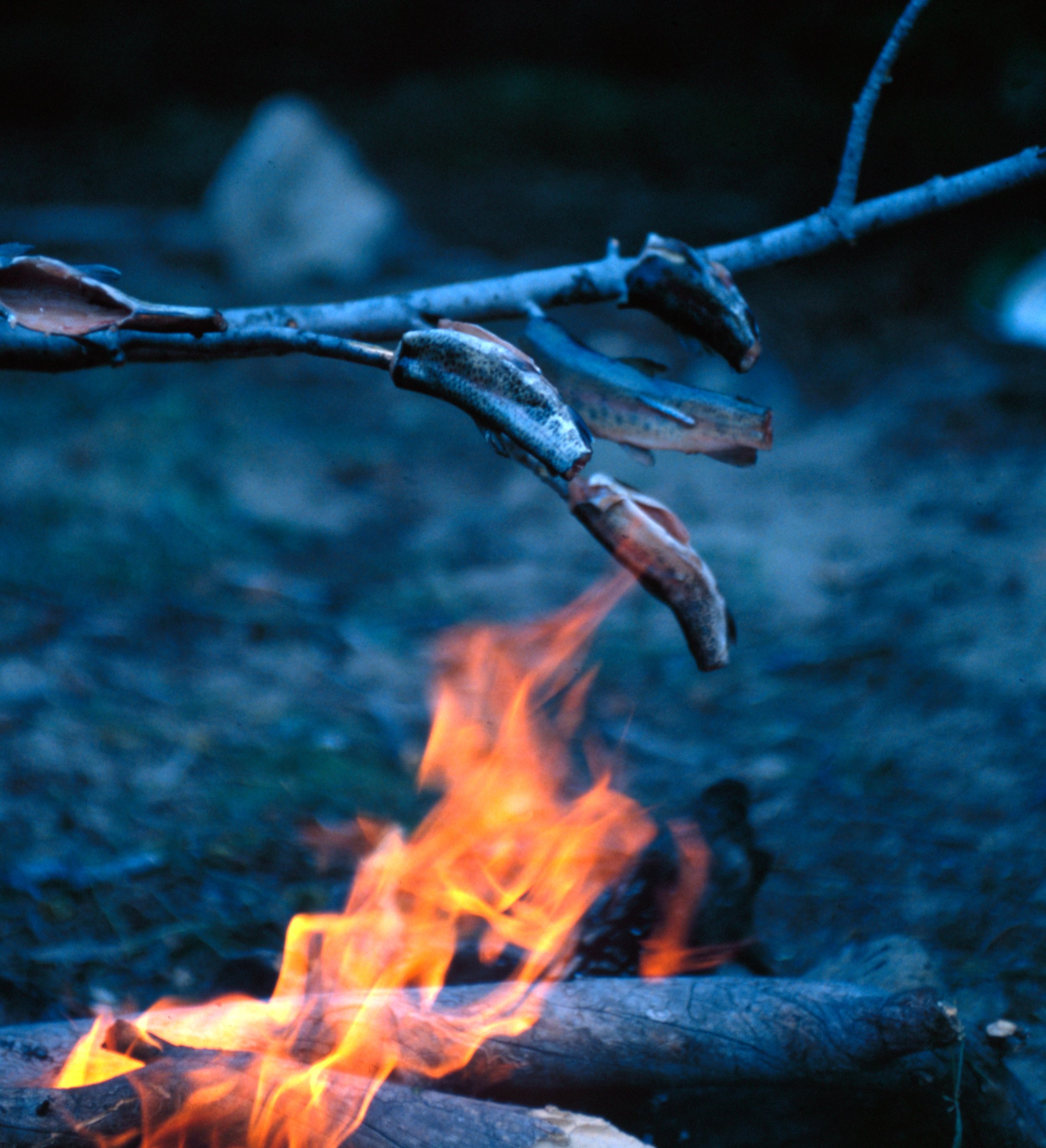
I fished until the evening shadows lengthened, the rises faded and the bats darted across the water. On shore the sparks from a fire swirled into the purple sky and the smell of dinner drifted across the still lake. And late that night I slipped into a sleeping bag beneath bright stars and dreamed not of blisters, but of towering clouds and calm lakes that mirrored high distant peaks.